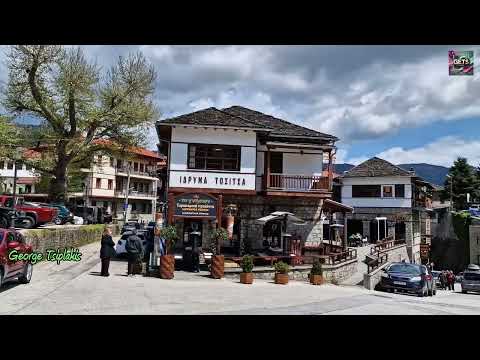
Metsovo climbs a slope in the Pindus mountains of Epirus. It is known for stone and timber houses, a busy square, food and winter visitors, but the town has a deeper story of Vlach speech, pastoral work and benefactors who invested in institutions. The Greek national tourism organisation names the Tositsas, Stournaras and Averoff families among those associated with that history.
From mountain livelihoods to cultural institutions
Livestock and trade across the mountains provided the setting for local food and crafts. Metsovo's cheeses remain a visible expression of that economy. The tourism organisation traces a modern cheesemaking school to 1958, when Evangelos Averoff supported training that joined regional dairy production with techniques learned in Italy. Metsovone and Metsovela are names to look for; their identity rests on specific methods and producers, not simply on being sold in a mountain shop.
The Averoff Gallery, founded in 1988, houses a substantial collection of Greek painting, prints and sculpture from the nineteenth and twentieth centuries. It offers a different way into Metsovo's patronage: wealth was channelled into education and art as well as buildings. A visit to the gallery and a walk around the central square reveal how cultural institutions sit within a working town. Not every traditional-looking facade is the same age, and the Vlach-speaking heritage should be understood as lived culture rather than decoration.
Getting there and staying
Ioannina is a major nearby city connection; roads across the Pindus also link Metsovo with northern Greece. Winter conditions can change the character of those journeys. The town has accommodation, restaurants and food shops, but check opening and prices, especially outside peak seasons. For a possible resident, school, medical care and work beyond tourism need separate investigation. Metsovo stands out because mountain livelihoods, community patronage, art and modern food production remain visible within one small centre.