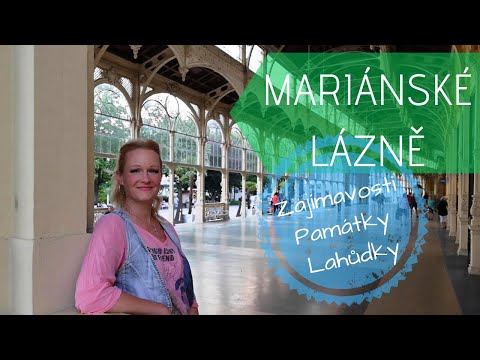
Mariánské Lázně in western Czechia is a spa town largely built in the nineteenth century. Parks, spring pavilions and hotels grew in a valley that municipal history describes as formerly marshy. This is not an ancient Roman town or a medieval castle settlement: its present urban form is the product of modern spa development. In 2021 it became one of the component towns of the UNESCO World Heritage property The Great Spa Towns of Europe.
From mineral water to a new town
Springs in the area were known in the Middle Ages, and the town chronology says they were tested for salt on the order of Ferdinand I in 1528. The resort itself came much later. Between 1805 and 1807, monastery physician Josef Nehr had the first masonry guesthouse, the Golden Ball, built beside the Cross Spring. Karel Kašpar Reitenberger, abbot of Teplá Monastery, established the separate municipality of Mariánské Lázně in 1812. A government decree declared it a public spa in 1818.
From 1819, gardener Václav Skalník, architect Jiří Fischer and builder Anton Thurner helped transform the valley into a landscaped town. Paths, pavilions and houses were arranged for walking between the waters. Goethe visited between 1820 and 1823, and Fryderyk Chopin came in 1836. Those famous guests are evidence of the new resort's international reach, but the people who planned and built the town are equally important to its story. Emperor Franz Joseph I granted town status on 29 May 1865. Railway connections reached Cheb and Prague via Plzeň in 1872; a link with Karlovy Vary followed in 1898.
The UNESCO designation is not limited to one landmark. Mariánské Lázně is one of eleven towns in a cross-border property recognising a European spa culture of mineral water, medical facilities, gardens, hotels, social spaces and transport. Its heritage is therefore spread across the urban landscape. A visitor sees it in a sequence of buildings and green routes rather than at a single museum entrance.
Walking the springs and town
A first walk can follow Hlavní Street through the parks to the Maxím Gorky Colonnade. The municipal guide dates this neo-Baroque structure to 1888–1889. Nearby are the Cross and Karolina springs, the municipal museum and the Singing Fountain. The fountain belongs to a later phase: its first musical performance was in 1986. Check its current programme before planning an evening around it. Chopin House commemorates the composer's visit and has a permanent display. The theatre, churches of different denominations and other spring pavilions convey the breadth of nineteenth-century spa life.
For a longer outing, continue through Skalník Gardens, towards Forest Spring or onto the slopes overlooking town. Individual springs differ in composition and some have seasonal opening. Visitors should follow posted guidance or medical advice rather than assume that every spring is suitable for everyone. Families may also consider the Boheminium miniature park and the cable car. The Kladská nature reserve is another worthwhile trip, although it lies beyond the central spa walking circuit and needs separate travel time.
Where to stay, eat and arrive
Hotels, guesthouses, apartments and spa houses operate in the town itself. The official accommodation catalogue includes Boutique Hotel SwissHouse near the Ferdinand Colonnade, as well as many options closer to the main promenade. Restaurants and cafés are found in the centre and in hotels. Choose a location according to whether you prefer the main colonnade, the railway station or a quieter edge of town; spa bookings can affect availability, so check the actual dates and services.
Mariánské Lázně lies on the Plzeň–Cheb transport corridor and has a railway station. From Prague, trains travel through Plzeň; from Germany, Cheb is a useful gateway, while Karlovy Vary has regional connections. The town's official directions also describe driving from Prague or Nuremberg and transfers from Prague and Karlovy Vary airports. Trolleybuses and buses serve the town, with a cable car as another local option. Confirm direct train services, transfers and the cable car's operating days before departure.