Loudun counted 6,839 residents in 2023. In northern Vienne, its historic centre rises above a broad agricultural landscape, and the town’s most visible landmark still explains its strategic position: the Tour Carrée was built to watch, not to house a lord. From its hilltop setting, the tower connects Loudun’s medieval past with the present-day streets and services gathered below.
A tower whose dates come from the timber
Recent scientific study of the beams, using dendrochronology, places the tower as it survives probably between 1162 and 1185, during the reign of Henry II Plantagenet. The city presents that date as probable, and it is more careful than repeating older foundation stories as certainty. The Tour Carrée was a compact observation point within the town’s former defences. It survived the demolition of much of the fortification in the seventeenth century and has since been restored and reopened to visitors. Walk the nearby lanes as well: Loudun’s appeal lies in the way the tower, old streets, church buildings and open countryside remain close together.
Renaudot’s birthplace and Loudun’s cultural life
The town is also the birthplace of Théophraste Renaudot, born here in 1586. The museum in his family home follows his work as a physician and writer and the development of the Gazette, launched in 1631. Its interpretation gives visitors a human-scale entry into the history of early French journalism. Museums, cultural venues, local shops and public services make Loudun a service centre for nearby villages, while farms and food producers give the surrounding countryside a visible place in the local economy. The town’s markets and cafés are a reason to linger after the monuments rather than treat Loudun as a quick photo stop.
Getting here and planning a day
Loudun is served by regional buses: the municipal travel page lists routes from Poitiers, Thouars, Chinon, Châtellerault and Saumur. This makes it possible to pair a visit with nearby towns, although departures vary by weekday and season. Check the current timetable and the opening times of the tower and museums before setting out. In the centre, allow time to walk between the tower, Renaudot’s house and the older streets; the distances are short, but the views and details reward an unhurried visit.
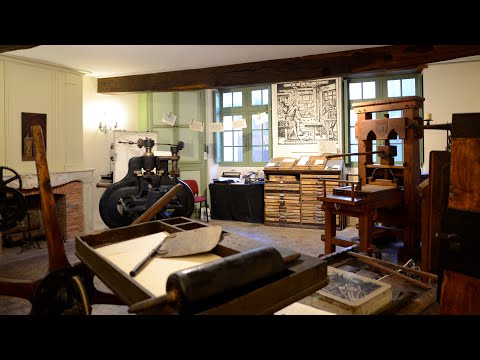 Loudun in three films: Renaudot, nearby heritage and the Tour Carrée
 My Loire Valley places Loudun inside a wider family itinerary rather than presenting the town alone. The report names several nearby stops, so its value is as a regional planning prompt: visitors can use Loudun as one anchor in a day that also explores châteaux and smaller heritage sites across the Vienne.
 La Nouvelle République follows the return of the Tour Carrée to public access after restoration. The report helps explain why the square tower matters as a surviving part of Loudun’s former defensive circuit, while its elevated outlook makes the landscape part of the visit. It is a concise monument story, not a current opening-hours notice.