Turquant is a small Loire-side village where the white tuffeau cliffs are part of the everyday streetscape. The 2023 census counted 566 people in the commune. Between Saumur and Fontevraud-l’Abbaye, its identity comes from the meeting of vineyard slopes, cave dwellings and workshops cut into the rock. The result is a place to explore slowly: not a single monument with a village attached, but a lived-in landscape in which stone, wine and craft still shape local activity.
A village formed in the tuffeau
The municipality traces written evidence of Turquant to the twelfth century: in 1125, a prior named G. de Turcham is recorded as lord of the parish. Its own history page cautions that the place-name’s etymology remains uncertain. Saint-Aubin’s church is attested from the middle of that century; much of the building visible today dates from the fifteenth and sixteenth centuries, and it has been protected as a historic monument since 1967. The pale stone and sculpted forms make a useful starting point before following the lanes beneath the cliffs.
Rock-cut rooms had practical as well as visual value. Today, some former caves and outbuildings house makers: the municipal visitor information names ceramicists, sculptors, glassworkers and other craftspeople. The village’s food history is equally local. A municipal account links the late-nineteenth-century production of pommes tapées—apples dried and flattened by hand—to the hardship faced by winegrowers during the phylloxera crisis. A small museum now presents that technique and its tools. The story is a documented adaptation to economic pressure, not an ancient legend.
Vineyards, crafts and a walk through the village
Winegrowing remains part of the local landscape, alongside workshops, restaurants and visitor accommodation. A four-kilometre interpretation trail begins near the church and connects troglodytic houses, vineyard scenery and tuffeau heritage. The village also promotes cycling and walking routes, including the Loire à Vélo corridor. Guided visits introduce the architecture and the Village Métiers d’Art; the municipality lists seasonal individual visits from April to October, subject to availability, and group tours by reservation. Check opening arrangements before building a day around a workshop or museum.
Coming from Saumur
Turquant is reached by local roads from Saumur and Fontevraud. Ogalo’s summer 2026 visitor network listed a Line 1 stop for the Village Métiers d’Art and Turquant, but that service ran only from 6 July to 31 August 2026; it is not a year-round promise. For a visit outside that period, check the current operator timetable or plan a car or bicycle approach. Once in the village, the historic lanes are best explored on foot, with care on uneven surfaces.
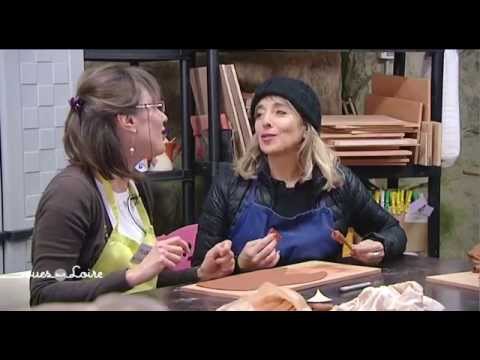 Turquant en trois vidéos : caves, métiers d’art et balade ligérienne
 This episode follows a walk on foot from Saumur to Turquant, giving the village a route-based frame rather than treating it as an isolated stop. It can help a visitor imagine a slower approach through the Loire landscape. The title confirms the journey’s direction, but not current trail conditions, distance or transport schedules, so check those separately before setting out.
 This broader travel video names Saumur, Turquant and Château d’Ussé together, making it useful for planning a regional itinerary that links several Loire Valley stops. Its wider scope is the contrast with the two more Turquant-centered clips. Use it as a visual overview, then verify which sites are open and how to move between them on the day of your visit.