a classical château, formal gardens and a museum of medicine
Hautefort’s château rises above a village with more to offer than a distant view of its towers. Gardens, streets and the former Hôtel-Dieu create a connected Périgord visit involving lordship, classical architecture and care for people in need. The Dordogne commune includes Hautefort and Saint-Agnan, a distinction worth understanding when choosing accommodation.
| Municipal population, 2023 reference | 806 |
|---|---|
| Approximate geographical area of the commune | ≈ 26.64 km² |
Population at 1 January 2023, within municipal boundaries at 1 January 2025; official figure in force from 1 January 2026. The area covers the whole commune, not only the built-up centre.
From fortress to classical residence
The estate has a documented medieval history. In the twelfth century, the troubadour Bertran de Born held Hautefort and took part in the conflicts of his age. The fortress faced a siege by Richard the Lionheart’s forces in 1183.
Later changes transformed its purpose and appearance. During the sixteenth and seventeenth centuries, a prestigious residence gradually replaced the fortress. Architects Nicolas Rambourg and Jacques Maigret contributed to this development. Look at the balance of façades and courtyard as carefully as the towers. Their presence alone does not make the whole complex an unchanged medieval castle.
Fire, rebuilding and preservation
On 30 August 1968, fire devastated the central part of the château. The Baroness de Bastard, already committed to its restoration, undertook another reconstruction with support from donors. A foundation now owns the estate and oversees its preservation and public opening.
That recent history matters when looking at the interiors. Their survival in their present form also reflects deliberate conservation work. An immersive room explores the fire, adding a story of destruction and transmission to the architectural visit. It helps visitors understand the château as a place repeatedly repaired and recreated, rather than a setting that passed through time untouched.
Gardens and views over the village
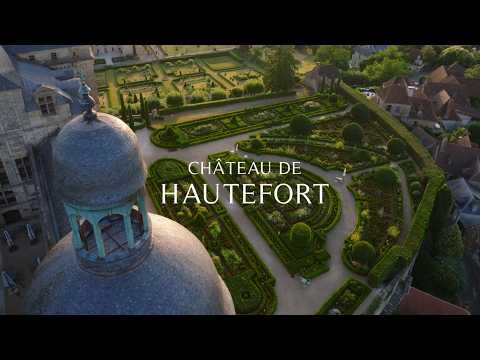
The formal gardens arrange geometric beds, clipped plants and long perspectives around the building. They have changed over time, including nineteenth-century work associated with landscape designer Choulot. Their layout directs attention towards both the château and the surrounding Périgord countryside.
Give them enough time, then walk down into the village. Seeing the houses and the château from different positions makes their relationship clearer. A landscaped park provides another kind of setting. Depending on the season, balance interiors, garden paths and wider walking, checking opening arrangements and which activities are included with admission.
The Hôtel-Dieu and medical collections
The Hôtel-Dieu offers a different perspective from the château’s display of power. Construction began in the seventeenth century at the initiative of Marquis Jacques-François de Hautefort. Its Greek-cross plan arranged the hospital spaces around a central chapel.
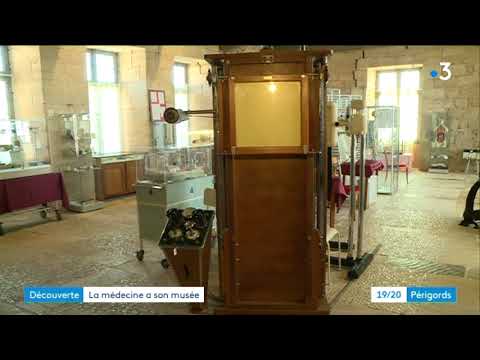
The Museum of the History of Medicine holds more than 6,500 objects, including surgical and dental instruments. The building itself is therefore as significant as the collections. Check access arrangements during restoration work, and allow time to consider how its original organisation related to care, religion and poverty. The visit adds a social dimension that a château tour alone cannot provide.
Accommodation, food and summer leisure
Hôtel Restaurant Au Périgord Noir stands in the Saint-Agnan part of the commune. The operator advertises twenty-five rooms, a swimming pool and a restaurant. It provides an option within Hautefort’s municipal territory, but should not be confused with accommodation immediately below the château.
Confirm meal service and the availability of facilities for your dates. In summer, Aquaparc du Coucou offers a water-based leisure outing around Hautefort with separate opening and admission conditions. It may complement a heritage visit for some families. Check age requirements, supervision and swimming ability before making it part of the programme, rather than assuming that every water attraction suits every visitor.
Getting here and dividing your time
Brive-la-Gaillarde and Périgueux are the main larger-town rail gateways to consider. The tourist office describes onward connections into the area and coach possibilities from Périgueux, some linked to school-day operation. Build an itinerary to the actual accommodation address, rather than stopping your planning at the main railway station.
A well-paced day can combine the château, gardens and village. Add a separate time slot for the museum if medical history interests you. For a longer stay, compare daily journeys from Hautefort and Saint-Agnan. Sharing a commune name does not mean that every service is within walking distance of every property.
Sources
- Fondation du Château de Hautefort : histoire du domaine
- Château de Hautefort : architecture et visite
- Château de Hautefort : mémoire de l’incendie de 1968
- Château de Hautefort : jardins et topiaires
- Château de Hautefort : accès et horaires
- Hôtel-Dieu de Hautefort : histoire de la fondation hospitalière
- Musée d’Histoire de la Médecine : collections
- Hôtel Restaurant Au Périgord Noir : hébergement à Saint-Agnan
- Office de tourisme : Aquaparc du Coucou
- Office de tourisme Vézère Périgord Noir : accès au territoire
- INSEE: official 2023 reference population
- French administrative API: municipal geography and area