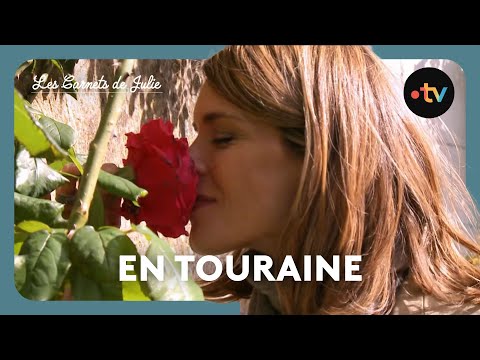
a Touraine village whose streets have become a garden
In Chédigny, roses do more than decorate a square: they climb façades, spill over low walls and connect the streets of the village. This small community in Indre-et-Loire, near Loches and the Indrois valley, has turned its public spaces into a garden while remaining a place where people live. The church, washhouse and pale stone houses provide an older setting for a much more recent landscape project. Visitors come for the flowers, but the village also offers a story of how a rural community changed its surroundings.
| Municipal population, 2023 reference | 566 |
|---|---|
| Area of the commune | ≈ 23.17 km² |
Population at 1 January 2023, within municipal boundaries at 1 January 2025; official figure in force from 1 January 2026. The area covers the whole commune, not only the built-up centre.
A medieval village in an older landscape
Chédigny’s history began long before its gardens. Municipal historical sources preserve several medieval forms of the name, including Chedigniacum in a Marmoutier charter dated 1136. This documentary reference places the community well before the present planting scheme. Archaeological discoveries in the surrounding area reveal earlier occupation, without providing a single foundation date for the village streets.
The Indrois and the former parishes helped organise the territory. Chédigny and Saint-Michel had separate histories within the wider lordship landscape around Loches before the changes of the Revolutionary period. The present village and the hamlets across the commune retain traces of these successive arrangements.
St Pierre-ès-Liens Church brings that longer history into the centre. Its chancel preserves a twelfth-century phase within a building altered over time. A processional staff belonging to the St Vincent confraternity recalls the area’s former wine-growing life. Before its present association with roses, this was a landscape of crops and vineyard workers; buildings and objects preserve activities that have since changed.
How the streets became a garden
The landscape transformation began in the late 1990s, notably from 1998. Work on buried services provided an opportunity to rethink a central street affected by traffic and parked cars. Planting gradually replaced some of the hard surfaces and spread into other streets, combining roses with perennials, shrubs and bulbs.
The effect is best appreciated on foot. A climbing rose uses a house front as support, a border follows a wall, and planting resumes beside the next property. This continuity between architecture and vegetation is the village’s defining quality. It changes through the season: a photograph taken in late May does not represent the whole summer, still less the winter streetscape.
Recognition as a Jardin remarquable applies to this unusual village setting. The streets remain public spaces, with no admission ticket required as there would be for an enclosed garden. The centre is a shared zone where pedestrians have priority and vehicles move slowly. The houses and private gardens remain occupied properties, however; planting beside the road does not give visitors access through a garden gate.
The priest’s garden
The garden behind the former presbytery offers a more intimate experience than the flower-filled streets. Aromatic and medicinal plants, flowers for cutting, trained fruit trees and vegetables reflect the different practical uses of a traditional priest’s garden. Its paths and successive spaces reward attention to cultivation as well as colour.
Restoration of the garden accompanied the reuse of the presbytery for visitor accommodation. The site also hosts horticultural activities and training. Its admission and opening season are separate from a free walk around the village: the municipality advertises a May-to-October visiting season, which should be checked before making a special journey.
Rose season brings more visitors, particularly for the festival usually held at the end of May. Check the programme for the intended year before booking a stay around it. Outside an event, a quieter walk leaves time for the church, washhouse and smaller streets, giving the visit a wider focus than a search for the most spectacular flower display.
Places to stay and eat in Chédigny
Maison Flore occupies the former presbytery on Place de l’Église. It offers four guest rooms, a tea room and bookable brunches. Staying here places visitors in the village itself and close to the garden, subject to its separate opening arrangements. Confirm the services included in the chosen booking rather than assuming that accommodation, brunch and garden admission are the same package.
Le Clos aux Roses also offers guest rooms and a table d’hôtes. Its current information explains that it is not run as a conventional restaurant; meals follow the property’s own reservation arrangements. Secure bicycle storage is advertised, a useful detail for cyclists extending a Loire itinerary. These two addresses provide accommodation within Chédigny, without requiring a return to Loches or another village after the day’s visit.
Garden maintenance, hospitality, small businesses and the agricultural land beyond the centre are different parts of local life. For a longer stay, distinguish a room in the village from accommodation in one of the outlying hamlets. The route to shops and transport can be substantially different even when both addresses use Chédigny.
Arriving through Tours and exploring nearby
Tours and Saint-Pierre-des-Corps station are important gateways to this part of Touraine, with national rail connections including journeys from Paris. Chédigny has no passenger station. Arrange the last leg by road, a booked taxi or a local service actually available on the intended day; the Rémi regional network provides journey-planning information.
Loches is the most natural nearby town for a separate visit to a historic centre and wider services. Chenonceau, Amboise and the gardens at Chaumont are other excursions with their own admission and opening arrangements. A two-day stay can give one day to Chédigny, its garden and surrounding countryside, then another to a nearby site. The village is most rewarding when there is time to walk and observe rather than hurry between a succession of monuments.
Sources
- Commune de Chédigny : village, patrimoine et vie locale
- Bulletin municipal 2023 : recherches sur l’histoire de Chédigny
- Commune de Chédigny : jardin de curé et accès saisonnier
- Commune de Chédigny : plan et services
- Maison Flore : chambres d’hôtes, salon de thé et brunch
- Le Clos aux Roses : chambres, table d’hôtes et accueil des cyclistes
- DRAC Centre-Val de Loire : Jardins remarquables
- Rémi : transports régionaux et préparation du trajet
- Touraine Val de Loire : projet paysager et visite
- Ministère de la Culture : village-jardin de Chédigny
- INSEE: official 2023 reference population
- French administrative API: municipal geography and area