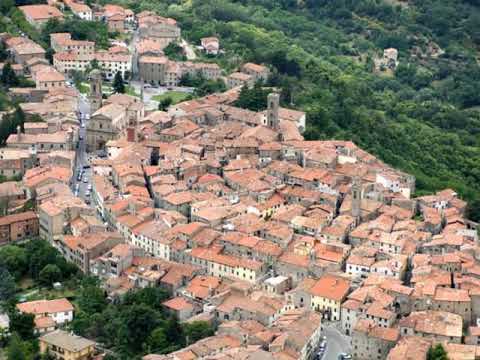
the Nasini painters, Palazzo Nerucci and the Palio below Monte Amiata
Castel del Piano brings together a compact historic centre, everyday town squares and a mountain landscape changing with the seasons. The Nasini painters, Palazzo Nerucci and the Palio provide three ways to understand it. Hamlets towards the Orcia and woodland higher on Amiata add further outings while allowing a stay directly in town.
| Municipal population at 1 January 2026 (estimate) | 4,803 |
|---|---|
| Municipal area at 1 January 2025 | ≈ 67.77 km² |
ISTAT population estimate at 1 January 2026, aligned with the provisional 2025 demographic balance. Area at 1 January 2025, from the classification updated in February 2026. Both figures cover the whole municipality, including outlying settlements, rather than only the historic centre.
A medieval town between abbey and republic
Local history places the territory among San Salvatore abbey’s possessions by the late ninth century. Aldobrandeschi control and the fourteenth-century transition to Siena frame the medieval town’s development. The name alone does not establish a certain Roman foundation.
Following the Sienese state’s end, Castel del Piano entered the grand duchy. Walking reveals successive changes: the enclosed upper settlement, later residences and more open squares. The mountain supplied resources and routes as well as views.
Nasini painting and the churches
The Nasini family, active particularly in the seventeenth and eighteenth centuries, left paintings across Amiata. Castel del Piano’s church of the Opera, or Propositura, presents this work within its religious setting. Allow time for its large canvases and interior rather than treating the building only as a façade.
Madonna delle Grazie, San Leonardo and the small Santissimo Sacramento church add other stops. Passing below the Clock Tower leads into the older area around Piazzetta degli Ortaggi and its loggia. Art and civic architecture remain connected by spaces still used by residents.
Palazzo Nerucci and its collections
The sixteenth-century palace on Piazza Colonna preserves coats of arms and inscriptions associated with public office holders. Administrative and educational uses followed, while today collections, archives and musical activity share the building. It has not remained an exclusively private residence throughout its history.
Painting, prints, sculpture and archaeology include groups acquired through donations and bequests. Portraits, views of the town and family documents introduce local people and change. Confirm current access with the operator: a published summer 2025 schedule should not automatically be applied to the following winter.
A Palio with several historical beginnings
The organiser distinguishes older Madonna delle Grazie festivities from the modern Palio begun in 1968. It also records a decision to hold a race in 1765 and an edition in 1771. These stages trace the development of today’s event.
Borgo, Monumento, Poggio and Storte participate in district life and the procession. The race on Piazza Garibaldi centres on 8 September, with other activities through the year. Accounts of the Madonna painting’s arrival belong to religious tradition, including its miraculous elements.
Hamlets and the higher mountain
Montegiovi and Montenero d’Orcia are separate settlements in the municipality. Montenero’s vine and wine tradition adds another agricultural theme alongside chestnut country. Photographs labelled with the municipal name therefore need not show Castel del Piano’s main streets.
Higher on Amiata are woodland, refuges and outdoor activity areas. Le Macinaie offers stays and activities in this mountain setting, subject to seasonal conditions. Summer walks, cycling and snow outings call for different preparation. Organise the mountain as a separate part of a stay rather than an immediate extension of the church and museum circuit.
Food and overnight choices
Da Venerio is a hotel-restaurant in the centre near Piazza Rosa Tiberi and Via Carducci. Its operator presents rooms and restaurant service including events. Staying here leaves room for an evening and a second day of local visits.
Le Macinaie instead provides accommodation and food on the mountain, changing altitude, surroundings and evening journeys. Check seasonal access, meal times and the chosen room’s facilities. Chestnuts, mushrooms and products from the wine-growing slopes introduce the area through food according to the actual menu and availability.
Connections and an exploratory stay
Autolinee Toscane’s 53A serves Castel del Piano with Arcidosso and other Amiata settlements towards Montepulciano. Arrivals via Grosseto, Siena or Chiusi should compare connections and the final stretch. A car adds flexibility for hamlets; public transport requires a base compatible with the services actually running.
Anyone considering a smaller-town move could test a working week in the main settlement before looking at an isolated property. Shops, services, school or work journeys and winter roads matter alongside views. Museums, music education and district associations reveal activity beyond the busiest visitor season.
Sources
- Regione Toscana: vicende, chiese e frazioni
- Musei di Maremma: raccolte del palazzo
- Gestore: edificio, archivi e attività culturali
- Organizzazione del Palio: documenti e tradizione moderna
- Da Venerio: albergo e ristorante
- Da Venerio: ubicazione nel paese
- Le Macinaie: albergo, ristorante e attività sulla montagna
- Autolinee Toscane: collegamenti sull’Amiata
- ISTAT: resident population estimate, 2026
- ISTAT: classifications and municipal area