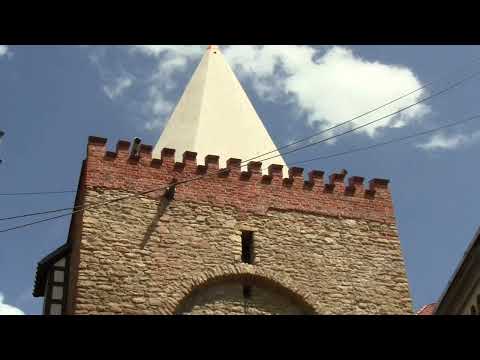
a terraced old town, medieval towers and a museum of making fire
Bystrzyca Kłodzka stands where the Bystrzyca Łomnicka meets the Nysa Kłodzka. Houses and fortifications rise along a high terrace, creating a distinctive skyline in the Kłodzko region. GUS recorded 8,566 town residents and 16,749 across the whole municipality on 30 June 2026. The surrounding municipality extends well beyond the old town into villages and mountain country.
| Municipality | Bystrzyca Kłodzka |
|---|---|
| Whole municipality population, GUS 30 June 2026 | 16,749 |
| Town population within urban boundaries, GUS 30 June 2026 | 8566 |
| Whole municipality area, GUS 1 January 2026 | 338.54 km² |
| Town area, GUS 1 January 2026 | 10.74 km² |
The whole-municipality figure includes other settlements; it is not the population of this individual town or village.
Medieval origins and royal privileges
The town developed through medieval settlement and trade between Bohemia and Silesia. Its foundation is associated with the thirteenth century; a secure document from 1319 concerns a centre already in existence. John of Luxembourg granted privileges that placed it among the royal towns.
The former German name Habelschwerdt and later Polish name reflect successive Czech, German and Polish layers. Hussite attacks, fires and the Thirty Years’ War disrupted commerce and crafts.
Borders and population changed after the Second World War. Match production became an important part of the town’s post-war identity, now documented in its museum.
A market square above the river
Plac Wolności provides a useful orientation point. Later façades and the town hall reflect rebuilding after earlier fires. Side streets descend towards the valley, revealing defensive walls and the tall foundations supporting houses.
The municipal walking route links the square with fortifications, St Michael the Archangel’s church and the former reeve’s residence. This tall defensive building housed the hereditary town official.
Cross to Góra Parkowa for a broader view of the skyline and a walk towards St Florian’s chapel. Slopes and steps form part of this outing.
Water Gate and the defensive towers
The early-fourteenth-century Water Gate once controlled entry with a descending portcullis. Charges were collected on goods brought into town. Its brick upper structure belongs to a later phase.
The Kłodzko Tower stood beside the main northern gate, removed in the nineteenth century. It now provides a viewpoint over the centre, reached by numerous stairs.
The Knights’ Tower was converted into a bell tower for the neighbouring Protestant church in the nineteenth century. Bells associated with a Prussian royal donation survive. Together these structures explain changing uses of the fortifications as well as the defensive circuit itself.
The Philumenist Museum
Opened in 1964 through local initiative, the museum at Mały Rynek 1 occupies former Protestant church and school buildings. Match-factory representatives and town enthusiasts helped establish it.
Philumeny includes collecting match labels and packaging, but the exhibits extend to fire steels, different kinds of lighters and other objects documenting the making and use of fire. International labels also illustrate graphic design and everyday culture.
Educational activities and regional exhibitions broaden the subject. An indoor visit complements the tower walk, particularly in poor weather. Groups should arrange guiding and confirm present opening hours directly.
Underground passages and mountain outings
The Underground Tourist Route on Kupiecka opened in October 2023. Arrange admission through tourist information at Plac Wolności 17 before setting out on the wider walk.
For a longer stay, travel to Spalona pass and follow the blue trail towards Jagodna, where a viewing tower was built in 2019. The trailhead by the pass and mountain refuge is outside Bystrzyca Kłodzka.
Międzygórze and Długopole-Zdrój are separate settlements even though they appear in the same municipal attraction directory. A mountain outing needs different footwear, time and weather preparation from the urban circuit.
Accommodation and meals
Hotel Abis at Strażacka 28 offers rooms with private bathrooms, parking and a restaurant serving Polish and Italian dishes. It is within Bystrzyca Kłodzka and can support a stay combining the town with mountain excursions.
Warsztat Bistro at Plac Wolności 3 provides a central meal stop. Check current opening days and arrangements for larger parties.
Dwór Elizy and its restaurant at Zdrojowa 22 are in Długopole-Zdrój. They suit a different spa-area base rather than a stay beside Bystrzyca’s market. Accommodation in Międzygórze or Spalona likewise involves additional travel.
Rail access from Wrocław and Czechia
Kłodzko is the nearby transport hub, with Wrocław the major city on the northern rail approach. The railway runs through Kłodzko and Bystrzyca towards Międzylesie and Czechia.
Bystrzyca Kłodzka and Bystrzyca Kłodzka Przedmieście are separate stops. Choose according to the accommodation and the actual stopping pattern. For a Czech approach through Lichkov, check the relevant service and any interchange.
Rail access can be valuable for a prospective resident, but compare everyday departures with working or study hours. The hillside setting affects walking routes. A distant village in the same municipality may have very different transport conditions; the statistics table distinguishes the town from that larger area.
Sources and practical information
- Gminny przewodnik: dzieje i architektura, z rozróżnieniem lokacji i wzmianki z 1319 roku
- Centrum Informacji Turystycznej: miejska trasa, podziemia i Góra Parkowa
- CIT: Baszta Kłodzka
- CIT: Baszta Rycerska
- CIT: Brama Wodna
- Muzeum Filumenistyczne: powstanie instytucji w 1964 roku
- Muzeum: kolekcja historii niecenia ognia
- Muzeum: adres Mały Rynek 1
- CIT: Jagodna, trasa ze Spalonej i wieża
- Hotel Abis: pokoje, restauracja i adres
- Dwór Elizy: restauracja w odrębnym Długopolu-Zdroju
- Stowarzyszenie Gmin Uzdrowiskowych RP: Warsztat Bistro
- Koleje Dolnośląskie: rozkład do planowania przyjazdu
- PKP PLK: przebieg linii Wrocław–Kłodzko–Międzylesie–Czechy
- GUS: ludność według gmin, tablica 11, stan na 30 czerwca 2026
- GUS: powierzchnia gmin i miast, tablice 19–20, stan na 1 stycznia 2026