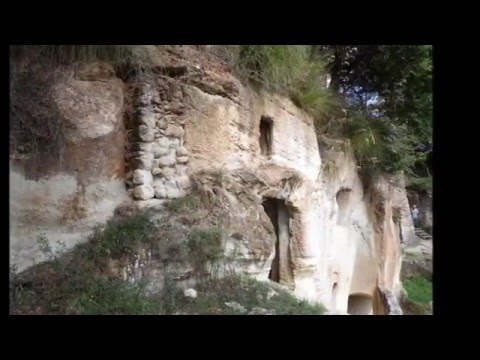
Zungri: the village and the rock-cut settlement of the Sbariati
Zungri stands on the Monte Poro plateau, inland in the province of Vibo Valentia. Travellers coming from the Costa degli Dei find a landscape quite different from the beaches: a small inhabited centre, the valley of the Malopera stream, and the caves of the Sbariati settlement on the slope beside the village. The archaeological site is the main reason to stop, but the visit makes more sense when it also includes the museum and the streets of modern Zungri.
The municipality had 1,813 residents on 1 January 2025, according to the Vibo Valentia provincial health authority's table, which cites ISTAT as its source. This is a figure for the whole municipality, not just the historic centre. Population changes over time, and giving the date and geographical scope prevents a precise figure from becoming a misleading timeless claim.
What is known about the origins
There is no certain foundation date for Zungri or its caves. The municipality describes a settlement covering about 3,000 square metres, built and altered over time. Its earliest traces appear to date from between the eighth and twelfth centuries, while research into the chronology continues. The two possibilities mentioned by the council are a foundation connected with people from the eastern Mediterranean or a productive outpost associated with the nearby Kastron of Mesiano. These are hypotheses, not settled facts. Describing every cave confidently as a Basilian monastery, or claiming a Greek or Roman foundation for the settlement, would go beyond the available evidence.
The site contains dozens of units partly carved into rock and partly built. They were not all simply homes: some spaces have been interpreted as shelters for animals, rooms used in wine and lime production, and stores for grain. Tanks and channels show organised use of water. The complex did not appear in a single building phase; its subsequent changes are part of the story. On the walking route, visitors can see openings, steps and rooms of different sizes, but the site's documentation and guides are the best way to understand the suggested function of each one.
The museum and the living village
The Museum of Rock-Cut and Rural Civilisation opened in 2003 in a former olive mill near the settlement. The Ministry of Culture describes a collection covering domestic life, farming, crafts, weaving and wine. A museum visit helps separate the medieval rock-cut landscape from more recent rural life instead of merging different periods into one story. Published opening information is not always consistent, so ask the municipality whether the museum and a guided cave visit will be accessible on the day you intend to go.
The village also has the sanctuary of the Madonna della Neve. The municipality records that the former parish church was destroyed in the earthquake of 8 September 1905; a lane near the small Madonna di Lourdes chapel leads towards the rock-cut area. This physical link between the present village and the caves makes a walking itinerary natural. The church and square are reminders that Zungri is a living community, not merely an archaeological park.
Planning a visit
The ground at the settlement is uneven and includes steps. Wear suitable shoes and allow enough time for the descent; it is more rewarding than a quick photograph stop. The council's page says guided visits are by reservation, so check access and arrangements before travelling. From the village you can look across the valley, then return to the centre for the museum and a walk through the surrounding streets.
Tropea, Briatico and Vibo Valentia are useful reference points for approaching from the coast or inland. By car, leave the coastal road towards Tropea and climb onto the plateau in the direction of Zungri; from Vibo Valentia, follow the provincial roads across Monte Poro. Travellers without a car should verify current bus schedules and possible changes. A short distance on a map does not guarantee a frequent public transport service.
Belvedere Residence is a documented bed and breakfast with a restaurant in Zungri; confirm accommodation and meal service directly. Tropea and other coastal towns provide additional places to stay and eat. Even so, Zungri deserves a visit in its own right. The caves, museum, sanctuary and inland landscape tell a part of Calabria's history that the coast alone cannot show.