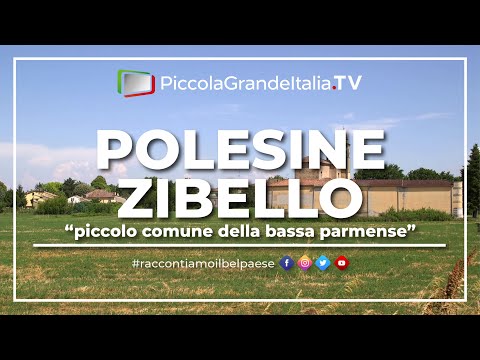
Zibello: the Pallavicino town beside the Po
Zibello rewards a walk that begins in Piazza Garibaldi. The portico of Palazzo Pallavicino, the theatre upstairs, the church of Santi Gervasio e Protasio and the streets leading towards the river embankment tell a story larger than the town's famous cured meat. Zibello stands in the lowland of the province of Parma, Emilia-Romagna, close to the Po. It ceased to be a separate municipality in 2016 and is now part of Polesine Zibello, formed by a merger with Polesine Parmense. That matters when reading population figures or choosing accommodation.
The Province of Parma records 3,120 residents for the municipality of Polesine Zibello in its 2025 population table. The figure covers the whole municipality, not just Zibello village. The municipal site places the area roughly 35 kilometres from Parma, 27 from Cremona and 30 from Piacenza. This flat landscape is crossed by canals and roads shaped in part by older courses of the river. Humidity, winter fog and the nearby Po remain part of the setting rather than mere scenery for a food trip.
Ancient traces and a medieval lordship
The municipality reports pre-Roman and Roman finds across the territory of present-day Polesine Zibello, including evidence of Roman land division. Those finds do not establish a year when today's village was founded, or show that it was itself a Roman town. Zibello's documented development as a fortified centre belongs to the Middle Ages. In 1249 Emperor Frederick II granted Zibello and other local lands to Uberto Pallavicino. In the following centuries the village gained importance within the Pallavicino holdings, particularly as the neighbouring centre of Pieve declined.
In the fifteenth century Rolando il Magnifico reorganised the family's small state and its laws, known as the Statuti Pallavicini. After his death, his son Giovan Francesco made Zibello the centre of his own lordship. The municipality records the area's transfer to Parma's political administration in 1499 and a long sixteenth-century dispute between the Pallavicino and Rangoni families. The abolition of feudal structures under Napoleon altered the territory again. Zibello's main square still reflects this political history; the village did not grow simply because of its modern food reputation.
Palazzo Pallavicino and the village streets
Palazzo Pallavicino frames the square with a long brick arcade carried by octagonal columns. The municipality identifies an older, Gothic-influenced part that once housed the podestà and a Renaissance part. Decoration on some capitals refers to local events, including the plague of 1630 and floods of the Po. Upstairs, Marquis Antonio Pallavicino opened a theatre in 1804. Works in 1827 gave it boxes and the horseshoe plan associated with Italian theatres. Check current access arrangements for the interior; the open arcade is the easiest part of the building to appreciate at any time.
The parish church of Santi Gervasio e Protasio is another central landmark. A walk can continue past the former Dominican convent and towards the embankment. The municipality also recalls the small church of San Luigi Gonzaga near the Po as a place visited by writer Giovannino Guareschi. Together, the square, churches and river show how local power, worship and the changing waterway shaped the settlement.
Culatello and a nearby museum
Culatello di Zibello DOP is a protected product made within a defined area of the Parma lowlands that extends beyond Zibello village. The Emilia-Romagna regional authority describes preparation, salting, tying and a minimum ageing period of ten months in suitable rooms. A visit to Zibello gives context to the tradition, but the product's name does not mean every piece was made in the historic centre. The Museo del Culatello is at Antica Corte Pallavicina in nearby Polesine Parmense, within the same municipality; it is a separate excursion rather than a museum on Zibello's square.
For a meal or overnight stay in Zibello, the municipality names Locanda Leon d'Oro by Palazzo Pallavicino as a local point of contact; check its current services and opening directly. Visit Emilia lists restaurants and rooms at Antica Corte Pallavicina in Polesine Parmense. Busseto and Parma provide wider accommodation choices. Booking ahead helps when planning food visits, and addresses should be checked carefully because the DOP and the municipality both cover more than the village.
Getting there
Parma, Cremona and Piacenza are the main regional starting points. Drivers follow the provincial road network towards Polesine Zibello and Busseto. From the village, the Po embankments offer walking and cycling possibilities, subject to conditions and local signs. A day can begin at the palazzo and theatre, continue through the churches and end by the river; reaching the Culatello museum requires a separate trip to Polesine Parmense. Check opening times before leaving so that an otherwise good itinerary does not end at a closed door.