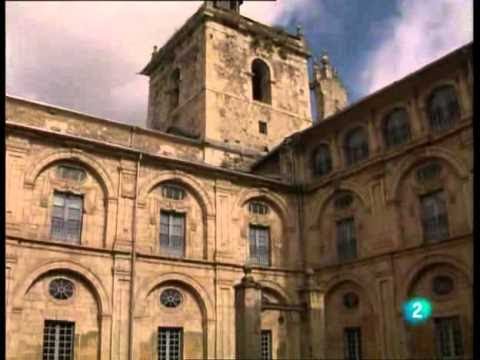
Villafranca del Bierzo lies on the Camino Francés at the western edge of El Bierzo. Pilgrims arrive before the route climbs towards Galicia, but the town deserves more than a hurried stamp in a passport. Churches, a castle-palace and the Calle del Agua give the small centre a particularly rich sequence of buildings and public spaces.
Gateway on the Camino
The church of Santiago dates from the late twelfth century. Its northern doorway, the Puerta del Perdón, has a special place in pilgrimage history: under defined jubilee conditions, pilgrims unable to continue to Santiago de Compostela because of illness or accident could receive the relevant spiritual grace here. The municipality explains the conditions, so the doorway should not be described as an automatic substitute for completing the route. The church stands at the entrance to town, making it a natural first stop.
Beyond it, the castle of the Marquises, the collegiate church of Santa María, San Nicolás el Real and convent buildings show Villafranca’s later religious and noble life. Calle del Agua has long connected travellers, homes and institutions. Spain’s national tourism office identifies the old centre as protected heritage. From the town one can continue towards Pereje and the Valcarce valley, or spend an unhurried afternoon tracing the streets before the next Camino stage.
Sleep, eat and continue west
Villafranca has pilgrim lodging, guesthouses, hotels and restaurants, though availability changes with the Camino season. Ponferrada is the closest substantial transport reference in El Bierzo; León and Lugo are larger points on opposite sides of the mountains. Check present bus services and road conditions before travel. An overnight stop lets walkers recover and non-pilgrims explore without crowds. The route towards O Cebreiro climbs significantly; choose it according to the weather and your planned stage rather than assuming a flat continuation.