Vertus is the historic centre of Blancs-Coteaux, on the southern edge of Champagne’s Côte des Blancs. The settlement sits where vineyard slopes meet the open chalk plain, a setting that has linked its streets to winegrowing for generations. In the 2023 census, Blancs-Coteaux had 3,080 municipal residents across four former communes; that figure is for the whole new municipality, not Vertus alone. Since 2018, Vertus has been a delegated commune and remains its administrative centre.
A walk through a layered town
The municipality’s one-hour historical walk uses 17 panels to guide visitors through lanes, squares and surviving landmarks. The route offers a useful way to read a place whose present-day vineyard identity sits beside a much older civic history. The town’s own heritage account describes a Gallo-Roman regional centre and relates the name Vertus to a pagan deity called Virotus. That is the mairie’s account of local origins; it should be treated as a municipal historical tradition rather than a settled archaeological conclusion. The documented medieval story is clearer: the Counts of Champagne endowed religious houses here, and the town says its walls were built in 1080.
Look for the former Hôtel-Dieu, founded in 1210 under Blanche of Navarre, Countess of Champagne, and the historic Hôtel de Ville, once associated with the Dames Régentes and their school for girls. The church of Saint-Martin, old wash places, vaulted passages and traces of the former fortifications reward a slow circuit. Some buildings changed function or disappeared over centuries, so the panels help connect separate fragments instead of presenting Vertus as a preserved medieval set.
Vines, cooperatives and visitor life
Champagne is not scenery added around the town: it is a central part of the local economy. Blancs-Coteaux’s business information lists winegrowers and the La Goutte d’Or cooperative, whose members work vineyards in and around Vertus. The limestone and chalk landscape of the Côte des Blancs is especially associated with Chardonnay, and the surrounding slopes make vineyard paths a natural extension of the town walk. In town, local shops and services remain part of the visit; check current opening hours before planning a tasting, cellar visit or meal, since producers receive visitors by appointment and schedules vary by season.
Getting there from Épernay
Mouvéo’s current network lists line 11 between Épernay and Vertus, terminating at Maison de la Santé. The operator also runs a zonal demand-responsive service for the wider Vertus area that connects passengers to that regular line; it requires advance booking and a return reservation where needed. Épernay is therefore the practical rail and coach gateway. Check the current line 11 timetable, service days and connection from the station before travelling, especially on Sundays and public holidays. Once in Vertus, the historic centre and its interpretation walk are best explored on foot.
 Vertus en trois vidéos : le bourg et le vignoble de la Côte des Blancs
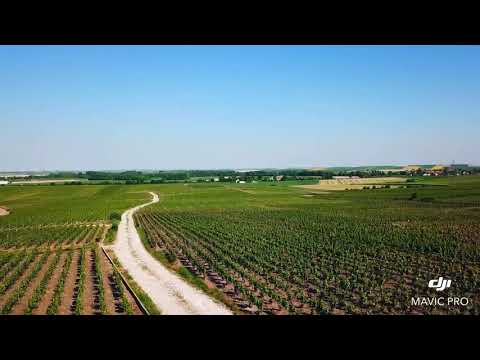 Champagne COLIN’s vineyard film names the Côte des Blancs and Vertus directly, making it the clearest agricultural companion in this set. Its subject complements the article’s account of winegrowing as part of local life, rather than as a decorative backdrop. Viewers planning a cellar visit should contact a producer directly; the film itself does not establish current appointment availability.
 This third recording is explicitly labelled with Vertus and the Côte des Blancs. It offers another place-focused perspective alongside a town introduction and a grower’s vineyard feature. The three clips are not substitutes for a walk through the 17-panel circuit: pair them with the municipal route and confirm current conditions with local hosts before arranging a visit.