Storuman is a small inland centre in Swedish Lapland, set beside Lake Storuman and at the meeting point of road, rail and forest country. Its everyday scale contrasts with the long routes that pass through it: the town is a practical base for regional services and a starting point for walks along the lake or journeys west toward the mountains. Storuman Municipality had 5,543 registered residents on 31 December 2025. That figure covers the entire municipality, not the built-up locality alone.
A railway settlement with older roots
The municipality traces the town's origin to Luspen, once a small village in Stensele parish. Storuman became a municipalsamhälle in 1936, but its rapid twentieth-century growth followed the railway. Inlandsbanan reached the area in 1923; the municipality also points to Umeälven hydropower development in the 1950s as a second force behind expansion. The name of the town and municipality comes from the lake that links this large inland region.
That history still shapes Storuman's role. The railway and the E12 and E45 corridors meet here, and Inlandsbanan describes the town as a freight-logistics node serving the forest economy, including roundwood and forest fuel. Public services, local trade, tourism and transport sit alongside that industrial connection. Storuman feels less like a resort than a working centre that helps people reach the surrounding villages, lakes and mountain districts.
Look over the lake, then follow its edge
Utsikten is the clearest place to read the landscape. A lookout tower above town faces across Lake Storuman toward the mountain country around Hemavan and Tärnaby. You can reach it by car, bicycle or on foot; the small café in the cottage is only occasionally open, so check before counting on refreshments. Down by the water, Badsjön is the town's swimming area, with beaches, jetties, a diving platform and family facilities described in the local visitor guide.
Luspholmarna adds a quieter cultural stop: several small islands on the lake are linked by bridges and roads, and the Kåtaholmen homestead area includes a local museum and an old bakery that can be booked. A lakeside promenade and the church path toward Stensele make shorter outings possible without a car. Four kilometres southeast, Stensele's large wooden church, completed in 1886, is a substantial nearby landmark; check its current visiting arrangements before going inside.
Seasonal outdoor routes and practical travel
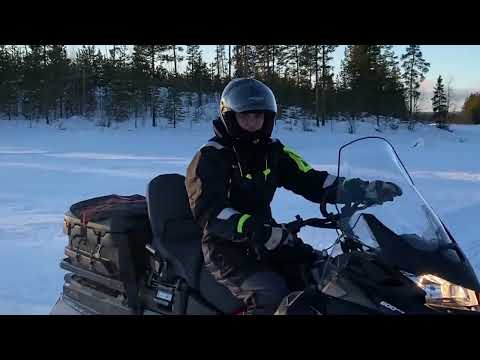
In winter, the municipality lists about 14 kilometres of prepared, illuminated ski tracks on Stenseleberget, with loops of four and six kilometres. When the ice is safe, a separate trail may be prepared along Uman for roughly 13 kilometres toward Laisbäck. These are seasonal facilities, not fixed year-round routes: confirm snow, ice and grooming conditions before setting out. The surrounding visitor area also offers fishing, cycling and canoeing, with local permits and access rules to check in advance.
Storuman lies on the E12, known as Blå vägen, and the E45. Regional bus line 31 runs along the Hemavan–Storuman–Lycksele–Umeå corridor; the municipality warns that local public transport can be limited and some services are organized around school travel. Inlandsbanan passenger trains are seasonal: its 2026 summer timetable ran from 16 June to 12 August, and dates change by year. The visitor information point at Storumans Camping offers in-person service during the warmer months, with phone and online contact outside that season. Confirm every departure, opening time and trail condition before travel.