Arvidsjaur is a working inland town with several histories visible within an easy walk: a compact centre, a Sámi church town, a parish church and a railway settlement, all set among lakes and forest. The local Sámi name Árviesjávrie appears in municipal material. Statistics Sweden counted 4,448 people in the statistical built-up locality on 31 December 2023, across 437 hectares of land (4.37 km²). That figure describes the continuous tätort, not the much larger municipality whose farms, villages and wilderness extend far beyond the town.
From church and trade to a planned centre
Arvidsjaur’s documented early story is tied to church gatherings and trade in Sámi country. The municipality’s history compilation records the parish in 1607 and 57 church huts together with 16 birkarls’ trading huts around the church that year. The older church place lay by Gamla Prästgården. Municipal heritage material dates Lappstaden’s establishment there to 1606 and records its move to the present town when a new church was built in 1826. The dates describe a process of institutional expansion into Sápmi as well as a local meeting place: the municipal survey notes that church, trade and state control were closely linked. It is better to read this history in that context than as a picturesque origin tale.
The present centre formed in later layers. Municipal documentation describes an 1884 plan, followed by growth through the 1920s and 1930s. Forestry and sawmilling shaped work and buildings, and the railway brought a station district and new commercial streets. Those strands explain why the town feels both practical and culturally layered: it was never only a visitor stop, but the service centre for a vast inland area.
Lappstaden: a living Sámi heritage site
The most distinctive historic ensemble is Lappstaden, the preserved forest-Sámi church town. Its privately owned buildings include roughly thirty timber kåtor and about fifty raised storehouses called häbren. Municipal heritage documentation identifies some buildings as dating from the eighteenth century and describes the square-plan timber walls, traditional roof coverings and open spaces between structures. The arrangement reflects both overnight stays during church and market gatherings and the need to store seasonal belongings. Lappstaden is protected as a listed building monument; visitors should respect that it remains a Sámi place and that its structures are privately owned.
Local visitor information describes the recurring Storstämningshelgen in late August as a Sámi church gathering in the town. It is a meaningful occasion rather than a guaranteed daily performance for visitors; dates and access can vary. The nearby Arvidsjaur church, inaugurated in 1903 and the fifth church on the site according to the Swedish Church, gives another angle on the town’s long ecclesiastical history. Check with the parish before planning an interior visit.
Everyday services, forest work and winter testing
Arvidsjaur remains a municipal seat, with local shops, cafés, accommodation and public services serving residents as well as travellers. Its economic story also reaches beyond retail. Municipal heritage sources point to the importance of forestry and sawmills, while a Swedish Government inquiry documents the growth of vehicle testing in the northern interior through local enterprise. In winter, engineering teams and test drivers use the region’s cold conditions; this is a seasonal industry, not an open-access attraction. Visitor services and outdoor businesses add another seasonal strand.
For a slower visit, Visit Arvidsjaur lists the Gamla Prästgården local-history museum and walks beginning around town, including paths near the lake and forest. The museum brings local objects and community history together; opening days are not uniform through the year. Arvidsjaur church, Lappstaden and the old museum grounds are best approached as working heritage places, with care for worship, private property and Sámi cultural protocols.
Silvervägen, Inlandsbanan and nearby nature
Riksväg 95, the Silvervägen, passes through Arvidsjaur on its westward journey toward Arjeplog and the Norwegian border. The published regional itinerary gives the Arvidsjaur–Arjeplog leg as about 86 kilometres; farther west the road opens toward mountain landscapes. The E45 and the inland rail corridor provide other north–south connections. Inlandsbanan’s current travel material includes Arvidsjaur among its stops, but train journeys are seasonal and route-specific, so check the operator’s timetable rather than assuming a daily service.
Just outside the town, forest, lake and low-mountain landscapes make short walks possible without turning the centre into a wilderness expedition. Visit Arvidsjaur’s Swedish trail listings include the central Hälsans stig and routes around Vittjåkk; the latter’s protected landscape has specific rules, especially for motorised recreation. Check current maps, trail conditions, access restrictions and weather before setting off. Arvidsjaur works well as a base for combining a heritage walk with a carefully planned drive or train leg, but departure times, road conditions and opening hours should always be confirmed.
 Three films on Arvidsjaur: local life, a steam railway and the lakeside
 Riding a steam train in northern Sweden is a 1-minute-51-second film from Swedish Lapland TV, uploaded on 28 July 2020. It is embedded in the destination’s Swedish-language feature about steam-locomotive journeys that start in Arvidsjaur and head toward Slagnäs. The subject gives the town a transport-history angle and connects its inland setting to a distinctive summer excursion. Check the railway association’s current calendar before planning: the film itself is not a current timetable.
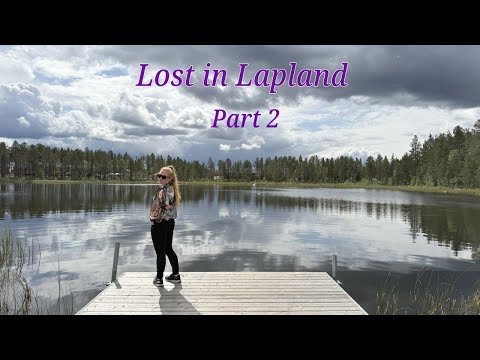 Lost in Lapland – Part 2 Arvidsjaur Town & Lake Rowing in Norrbotten is a 15-minute-14-second travel upload by Thomas and Ida Do the world, published on 28 September 2025. Its verified title and description identify two subjects: exploring Arvidsjaur and rowing on a nearby lake. That makes it the most personal, slow-paced perspective in this selection, complementing the municipal introduction and rail film. Treat it as a travel account, and confirm local access and conditions independently.