Luleå is a working northern city shaped by its meeting with water. The compact centre occupies a peninsula at the mouth of the Lule River, while the Bothnian coast opens into a broad island landscape. Statistics Sweden counted 49,646 residents in the statistical built-up locality, or tätort, on 31 December 2023. Its land area was 3,000 hectares (30 km²), with 1,655 residents per square kilometre. These figures describe the continuous urban locality, not the much larger municipality, and 2023 is the latest year in this five-year SCB table—not a current 2026 estimate.
A town that changed its harbour
The documented town story begins in Gammelstad. Luleå received town rights in 1621 around the medieval church there, at a time when fishing and the trade in fish and skins connected the coast with the inland. Land uplift gradually made the old harbour less suitable for shipping. In 1649 the town moved about ten kilometres toward the sea, to the peninsula where the centre stands today. The move is recorded history; it is not a local legend, though the changing shoreline can make the scale of that decision easy to overlook.
For centuries the new town grew slowly, then shipping, shipbuilding, timber traffic, rail connections and industry reshaped it. A devastating fire in 1887 destroyed much of the central built-up area. The street plan that followed gave the centre broad, tree-lined streets intended partly as firebreaks. The cathedral’s silhouette belongs to this later city: the new church was consecrated in 1893 and became a cathedral in 1904, when Luleå diocese was formed. The pattern today mixes that planned core with newer commercial, cultural and waterfront buildings.
Centre life and the northern waterfront
The centre is practical as well as historic: shops, cafés, accommodation and public services sit close to the station, civic buildings and cultural venues. Luleå Cathedral and the nearly two-hectare Stadsparken form a calm central pairing; the park was laid out after the 1887 fire and includes a statue of Gustav II Adolf, the town’s founder. From there, streets lead toward Norra hamn, where a waterside promenade links Kulturens Hus and the harbour with Gültzauudden. Kulturens Hus is a useful indoor stop for exhibitions and performance, and it also contains Luleå Tourist Center. Confirm programme and opening times before you go.
Water remains part of ordinary city life, not just a view. In winter the municipality prepares an ice route around the centre when conditions allow; it is a seasonal facility whose status depends on ice and weather. In summer, the port is a departure point for boat journeys into Luleå’s archipelago. The municipality counts 1,312 islands, but only some have scheduled visitor transport, and services vary by season. The 2026 municipal timetable lists M/S Symfoni routes from Södra hamnplan to several islands. Check the current timetable and landing arrangements before planning an island day.
Gammelstad: the earlier town and a living heritage place
About ten kilometres from the centre, Gammelstad Church Town preserves the setting from which Luleå began. The medieval Nederluleå Church stands amid more than 400 small timber cottages. For parishioners travelling long distances, a cottage made it possible to stay near the church for services and church weekends; the custom continued as a social and religious gathering, rather than an ordinary residential village. UNESCO added the church town to the World Heritage List in 1996. Nearby Hägnan open-air museum interprets coastal life from the eighteenth to twentieth centuries. Both are active visitor places, so guided tours, church access and museum opening vary.
Two municipal cycle itineraries make the historic connection tangible: a published 25-kilometre loop links the centre and Gammelstad, while an 11-kilometre ride circles the Skurholmsfjärden and Björkskatafjärden in the urban area. These are mapped routes, not guarantees of year-round surface conditions. Luleå works best when the visit is paced around its contrasts: rebuilt streets and harbour edges, a medieval church town, and an island coast whose access depends on season and weather. Confirm transport, opening hours, route surfaces and ice conditions before setting out.
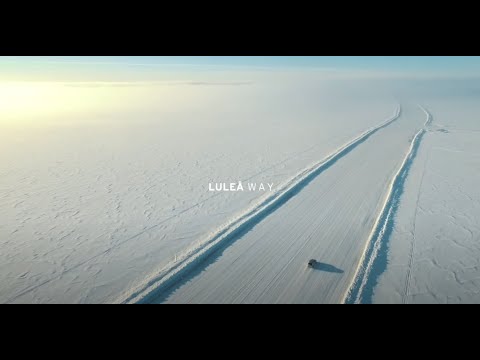 Three films on Luleå: all seasons, summer and Arctic winter
 Summer The Lulea Way is a 1-minute-18-second Visit Luleå film published on 29 July 2016. The official seasonal description frames summer around midnight light, kayaking, river bathing, archipelago cycling, forest walks and the medieval World Heritage setting. These are useful themes for planning a warm-season stay, but they do not confirm that a specific operator, route or activity is available on a chosen date. The short film complements the all-seasons introduction by narrowing the focus to the bright part of the year. Check local schedules, weather and access before travelling.
 Winter – The Luleå Way is a 1-minute-43-second film from Visit Luleå, published on 12 May 2017. Its verified description presents winter as part of local everyday life in a city close to the sea and natural surroundings. That perspective is valuable because it treats the cold season as lived experience rather than a guaranteed spectacle: ice, snow and daylight conditions vary. Alongside the general film and summer edition, it completes a compact seasonal set. Before planning an ice route or outdoor activity, check municipal updates, weather and safety notices.