Siikajoki is a municipality of connected but distinct landscapes: a river valley, farm villages, the railway centre of Ruukki and a northern coast where dunes meet wetlands. Statistics Finland counted 4,723 residents across the municipality on 31 December 2025. The figure covers the present municipal territory, not just Ruukki or the old church village. Siikajoki took its current shape in 2007, when the former Siikajoki and Ruukki municipalities joined. Ruukki is the administrative centre; Paavola, Revonlahti and Siikajoenkylä are other important village centres.
Ruukki began with a river-side industry
The name Ruukki may suggest an ironworks, but the local history begins with a different industry. In 1672, according to the municipality, Per Brahe established a potash factory beside Ruukinkoski. Birch ash could be transported along the Siikajoki River, and potash was used to make glass and soap. The river later carried timber floated to sawmills, linking the village to work well beyond its own banks. The old industrial setting remains part of Ruukki’s identity: today the former works area by the water houses Ruukin Yrityspuisto, while agriculture, forestry, manufacturing, public services and commerce share the local economy.
Strawberry growing has also left a mark on Ruukki’s self-image; the municipality calls the area a strawberry district because the crop has long been cultivated there. In the centre, the railway station, library, pharmacy, shops, restaurants, health services and other everyday amenities sit within roughly a kilometre of one another. That compact service area is useful to visitors as well as residents and makes Ruukki a practical base before setting out for the coast or the smaller villages.
Three churches, three village histories
A drive through Siikajoki can be planned around three wooden churches. The church in Siikajoenkylä dates to 1701, Paavola’s to 1756, and Revonlahti’s to 1775. All are cruciform wooden buildings, and the municipal heritage list notes the work of church painter Mikael Toppelius in each. Their settings differ: a village road, a historic parish landscape and the route along the coast all tell a little more than the buildings alone.
Paavola’s church stands amid a village street where older buildings still shape the centre. Nearby, the local-history museum occupies a grain-loan storehouse built in 1847. In Siikajoenkylä, the old rectory keeps a cannonball in its hall wall as a reminder of the Finnish War. The municipality also preserves a tale of a wandering “Harmaja aunt” at the rectory; it belongs to local folklore, not the documented history of the house. Revonlahti adds its own historic parsonage and a church known for Toppelius’s late altarpiece paintings. These places make a meaningful cultural route, but churches and museums may only open seasonally or by arrangement.
From bird towers to beach and river
Siikajoki’s natural attractions span more than one kind of water. Tauvo and Varessäikkä offer sandy coastal bathing areas; Hietamaa and several inland lakes provide other swimming and recreation sites. The municipality lists harbors, boat moorings and fishing opportunities along the sea, the Siikajoki and Luohuanjoki rivers, and smaller lakes. Birdwatchers can look to the Varessäikkä and Merikylänlahti observation towers or the Tauvo bird station, where research and ringing take place.
On land, the marked Joutsenreitti fat-bike trail links Siikajoenkylä toward Liminka. Its soft dunes and bog sections make it challenging, not a casual paved ride. Hangasneva near Paavola and the Kärkiniemi and Kreivinsaari nature trails near Ruukki offer shorter ways to experience the landscape. Fire and rest sites are spread across the municipality. In winter, access and services change; check current trail information and beach facilities before planning a trip around them.
Getting around by rail, road and bus
Ruukki lies on the main Ostrobothnian rail line. Its station is about one kilometre from the centre, and some long-distance trains between Helsinki and Oulu stop there several times a day. By road, Highway 8 runs through the municipality and Highway 86 serves the inland settlements. To reach Ruukki from the coast, the regional road branches from Highway 8 at Revonlahti. The municipal overview gives reference drives of about 45 minutes from Oulu and 25 minutes from Raahe; allow for traffic and confirm your route.
Buses connect Paavola, Ruukki and Revonlahti with Raahe, while other services run between Oulu and Raahe through Revonlahti or Siikajoenkylä, and from Oulu through Paavola toward Oulainen. The stop in Ruukki is behind Tervatupa; in Siikajoenkylä it is outside the grocery store. Some services are tied to school days, so check the live VR and Matkahuolto timetables before travelling. Siikajoki rewards a slower itinerary: take one village at a time, then follow the river out to the open shore.
 Siikajoki by river, coast and fishing line
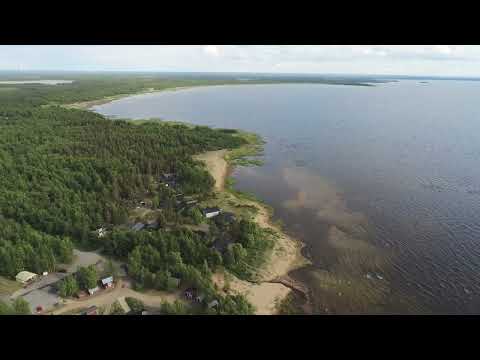 The short clip by patti ilma is identified as Siikajoenkylä and Tauvo, bringing attention to the municipality’s coastal side. It offers a dated visual record of two named places, while the municipal guide provides the broader context of Tauvo’s beach, bird station and shore environment. The video alone does not establish present conditions, public access or available services, so check local notices before making a trip.
 Savid’s video documents a personal fishing outing by the Siikajoki River. Fishing is one of the outdoor activities listed by the municipality, and this record gives the subject a local, first-person perspective. It should be read as an individual trip published in 2021, not as evidence of current catches, water conditions, permits or rules. Confirm regulations and access with the relevant authorities before fishing.