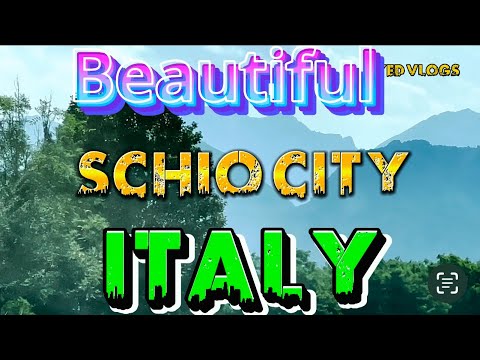
Schio, in the northern part of Vicenza province, is a city beneath the Prealps with a remarkable concentration of Italian industrial history. Fabbrica Alta, Lanificio Conte, the Roggia Maestra watercourse and Jacquard Garden show how wool production changed work, buildings and housing. A medieval centre preceded the great mills. Looking only at the nineteenth century would obscure the relationship between the valley, water and settlement.
From parish centre to town
The official Visit Schio guide places a turning point for today's centre in 1123, when the parish church of Belvicino was moved to the Gorzone of Schio after a flood affected the older settlement. This is evidence about medieval church and urban organisation, not proof of a Greek or Roman founding. Over later centuries the place followed the political fortunes of the Vicenza area under different lords and regional powers. The mountains supplied water, wool and minerals, resources that supported crafts long before industrial-scale manufacturing.
A central walk can begin at the cathedral and Piazza Alessandro Rossi, then continue through streets where civic buildings and traces of production can still be recognised. Distances are manageable, but a careful visit takes time because structures tell different stories: religious authority, business, services for workers and the movement of water. The official industrial heritage route helps interpret these places without mistaking a restored former mill for a factory still making cloth.
Wool, Tron and the Rossi family
The town council dates the founding of a wool mill by Count Nicolò Tron to 1718. He had been Venice's ambassador in London, and the English connection in the town's textile history involved actual techniques and contacts. Francesco Rossi founded his wool business in 1817; his son Alessandro expanded it on a far greater scale in the nineteenth century. Fabbrica Alta is the most recognisable building of the former Lanerossi site. Its importance is more than its size: it represents the gathering of stages of production and a large workforce into a new industrial system.
Lanificio Conte preserves another thread of the same story. Its early core beside the Roggia Maestra dates to the mid-eighteenth century, and part of the restored complex now houses exhibitions. The Roggia was useful industrial infrastructure, not a canal made solely for decoration. From 1860, Alessandro Rossi also developed Jacquard Garden before his mill, a green space connected to the factory and to the public image of the enterprise. Garden opening can be seasonal or event-based. The Vicenza-Schio railway opened in 1876, strengthening the connections of this industrial city.
What can be seen today
An industrial walk can link Piazza Rossi, Fabbrica Alta, Lanificio Conte, the Roggia and Jacquard Garden. Stop near the former Rossi site to compare the scale of its buildings with that of the older centre. Palazzo Fogazzaro houses the civic collection and has been used for exhibitions and talks. Its municipal listing, however, says the museum has been closed for restoration since February 2025. Check whether it has reopened before planning an indoor visit. The council also organises guided walks and cultural activities in other venues.
The nearby mountains provide a second perspective. Monte Novegno and the Val Leogra show the setting that supplied resources and routes for the city. Nature walks should be chosen for their climbing and season, separately from an easy urban circuit. Schio is a living city with industry, schools and neighbourhoods beyond its historic centre. The municipality counted 38,930 residents on 1 January 2025. This figure covers the whole municipality, not just the walkable central area.
Lodging, meals and access
Visitors can stay overnight in Schio. The official tourism portal lists local accommodation, and Schio Hotel confirms rooms within the city. Bars and restaurants operate in the centre and other districts; check hours and reservations for a chosen venue. Vicenza is the main nearby urban hub, and the Vicenza-Schio rail line is a practical approach, subject to temporary service changes. International visitors can connect through larger Italian cities to Vicenza and then check the local leg. Drivers should identify suitable parking before beginning a walk around the historic centre.