Säkylä is a municipality of two memorable lakes and a working countryside in southern Satakunta. Its 6,221 residents, recorded by Statistics Finland at the end of 2025, live across the municipality rather than in one compact resort village. The present municipality also includes Köyliö, which joined Säkylä on 1 January 2016. That expanded map matters to visitors: the shore of Säkylän Pyhäjärvi, the wooded ridge of Säkylänharju and the historic landscapes around Köyliönjärvi belong to one local itinerary, but they are separate stops and deserve their own time.
A lake that still shapes everyday life
Pyhäjärvi is the great northern edge of Säkylä’s identity. The lake is shared with Eura and Pöytyä, covers 154 square kilometres and has an unusually long, open stretch of water. Local fishermen, food businesses and tourism all depend in different ways on the lake, while swimming, boating and shoreline walks bring it into daily recreation. A municipal account in 2026 described its ecological condition as good but warned that eutrophication remains a pressure. That tension gives a visit more depth than a postcard view: the water is scenery, a livelihood and a shared responsibility.
At the municipal fish harbour and nearby Katismaa island, visitors find a practical point of contact with the shore. The municipality lists guest berths, sauna facilities, a swimming platform and summer theatre among the island and harbour attractions; some services are seasonal. In summer, local fish and other products may be available through harbour sales points, although opening days and stock can vary. The long lakeside road is another way to read the landscape, linking open water, farm fields and settlements. Allow time to stop safely rather than treating it as a quick drive-through.
From fishing villages to food production
The local history museum gives Säkylä’s economy a human scale. It was established in 1961 on the Pyhäjärvi shore and brings together farm and village buildings, including a loan granary built in 1833. The municipal museum history says such granaries lent grain to residents and that this one helped many through the famine years of the 1860s. The collections also recall fishing, tar burning, plank sawing and farming: successive ways of making a living in a place where water, forest and cultivated ground meet. The museum’s regular opening is seasonal; confirm access before travelling.
Today, the municipality describes a more varied economy built around specialized food production, agriculture, manufacturing, services and the Porin Brigade garrison at Huovinrinne. The military site is an active workplace, not a tourist attraction to enter without permission. The food and production businesses, meanwhile, show why Säkylä is not simply a summer cottage destination. Its visitor pages list everyday services, restaurants and accommodation options, while the municipal centre provides the most convenient base for errands and meals. Check individual businesses before making a special trip, particularly outside the summer season.
The ridge, the churches and a small museum circuit
Säkylänharju changes the experience from shoreline to sandy woodland. The municipality points to hiking and ski routes on the ridge, as well as a 22-kilometre nature route with about 30 interpreted stops. A separate 18-kilometre landscape route is fully paved and suitable for cycling or roller-skating. These are longer outings rather than short paths around the centre; check maps, surface conditions and any seasonal notices before setting off. The combination of lake and ridge is one of Säkylä’s distinctive advantages: visitors can move from broad water views to sheltered forest without leaving the municipality.
In the centre, the King Gustav III church dates to 1776 and the old church square retains a windmill that once served as a local emblem. Other municipal attractions include the Säkylä church, a memorial to millstone workers and several small museums and heritage sites. The local-history museum is the easiest place to understand how these fragments fit together. If you have more time, follow the municipal museum list and confirm which sites are open; several operate by arrangement or only in summer.
Kirkkokari: legend, memory and archaeology
The merger with Köyliö added a landscape that carries an unusually powerful Finnish story. On Lake Köyliönjärvi, the small islet of Kirkkokari is associated with the medieval tradition of Bishop Henry and the farmer Lalli. In the familiar account, Lalli kills the bishop on the frozen lake in the twelfth century. The Church of Finland itself describes the story as a legend whose truth has been debated; it should not be repeated as settled fact. There is, however, material evidence of a medieval chapel site on the islet. The Finnish Heritage Agency records a stone foundation revealed in early twentieth-century excavations and connects the site to Henry’s cult. The ruins show the importance of later devotion, even where the dramatic episode cannot be independently verified.
Kirkkokari makes the former Köyliö district more than an appendix to a Säkylä visit. The surrounding lake and cultivated shores form a cultural landscape best explored slowly, with respect for private property and local access arrangements. Municipal and regional guides offer themed visits in the area; ask ahead about routes and whether a boat or guided excursion is needed to reach particular sites.
Getting there and planning your days
Säkylä is reached by regional roads, with the municipal visitor information giving approximate distances of 75 kilometres from Turku, 65 from Pori, 50 from Rauma and 90 from Tampere. These are useful orientation figures, not journey-time promises. The municipality directs public-transport users to Matkahuolto’s route planner for current bus and rail connections; search for the exact date and destination, as services and stops can change. There is no need to race through the area: one day can focus on the main village and lakeside museum, while another combines the ridge trails with the Köyliö landscape. Check opening hours, water conditions and seasonal services before departure.
 Säkylä en tres miradas: naturaleza, oficio y empresa local
 This episode belongs to the municipality’s business-story series and is titled for Taidevalimo Sinisalo Oy. The title identifies an art foundry, bringing a production and craft perspective into a town profile otherwise easily reduced to lake views. It is a profile of a named local enterprise, not a visitor attraction or a general history of Säkylä. Anyone hoping to visit a workplace should contact the business first rather than assume public access.
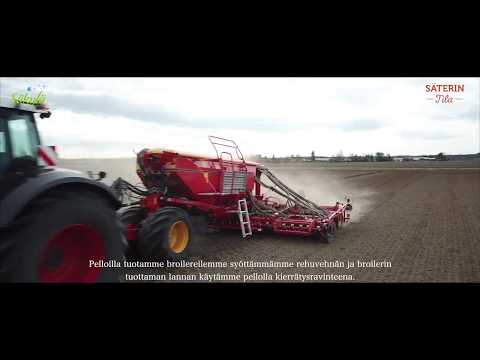 The fifth business-story episode is identified as a profile of Säterin tila Oy. It adds a rural-enterprise perspective to the municipal series and pairs naturally with Säkylä’s agricultural surroundings and food-producing economy. The available official listing confirms the company named in the video, not its current opening hours or visitor services. Treat the film as a window into local business life and verify directly before planning a visit.