a château, contemporary art and the traces of a meteorite
Rochechouart brings together two unusual stories: a viscount’s château and a meteorite impact whose altered rocks became building material. Above the Graine and Vayres valleys in Haute-Vienne, its centre combines Romanesque heritage, contemporary art and geological walks. These different layers reward a visit that extends beyond an exterior photograph of the castle.
| Municipal population, 2023 reference | 3,603 |
|---|---|
| Approximate geographical area of the commune | ≈ 53.85 km² |
Population at 1 January 2023, within municipal boundaries at 1 January 2025; official figure in force from 1 January 2026. The area covers the whole commune, not only the built-up centre.
A castle established around the year 1000
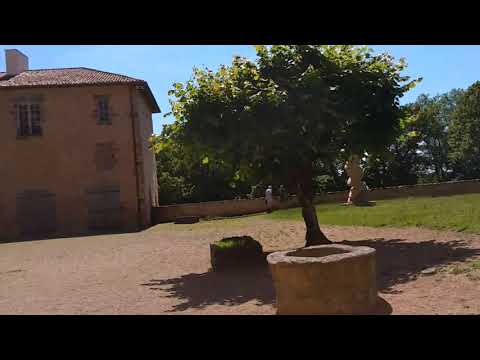
The first château occupied a rocky promontory around the year 1000; the museum connects the place name with Rocca de Cavardus. Most of today’s building comes from major reconstruction in the late Middle Ages and early sixteenth century. The keep and entrance retain thirteenth-century elements.
The courtyard and gallery show how the complex developed from defence towards a prestigious residence. The department bought the château in 1836. Its changing uses help explain why it now functions as both a historic monument and a cultural venue, rather than an untouched survival of its earliest form.
Renaissance painting and contemporary art
The hunting room and Hercules gallery preserve Renaissance wall paintings. One depicts hunting and a banquet in colour; the other uses grisaille to represent the exploits of Hercules. They express the status and ambitions of the people who commissioned them.
The contemporary art museum opened in 1985 and places modern creation in dialogue with this historical setting. History, landscape and imagination helped shape the collection, which also includes a Raoul Hausmann holding. Look for permanent works as well as current exhibitions. This is a different experience from moving through a sequence of rooms furnished to represent a single historical period.
Understanding the impact rocks
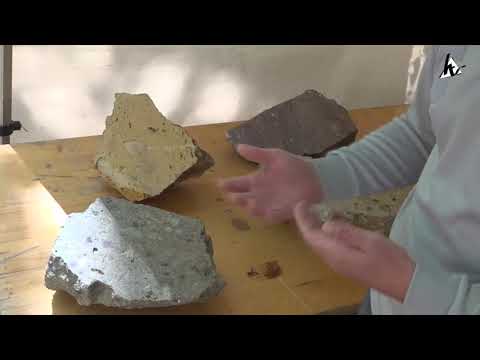
The French geological survey, BRGM, places the Rochechouart impact around 207 million years ago. Impactites are terrestrial rocks changed by the collision, rather than intact pieces of a meteorite subsequently used to build a castle. That distinction offers a more useful explanation than the idea of a perfectly preserved crater visible in the present landscape.
The Espace Météorite Paul Pellas on Rue Jean-Parvy explains the solar system, meteorites and the Rochechouart-Chassenon impact structure. Visit before examining building stones around town. This event belongs to Earth’s history long before human settlement; it is not a foundation date for Rochechouart.
Saint-Sauveur and an interpretation trail
Saint-Sauveur Church developed from a priory connected with Charroux Abbey. Consecrated in the eleventh century, it was altered in the thirteenth. Its twisted spire, added in the eighteenth century, gives the centre a distinctive landmark. Separate legends about that shape from the building’s documented architectural history.
The impact interpretation trail links five stations on a walk of about two kilometres around the château and town. It provides a manageable way to connect cultural visits with the landscape. Carry the plan and allow time to observe the stops rather than treating the trail only as a convenient route between indoor attractions.
A central hotel and restaurant
Hôtel de France provides rooms within Rochechouart itself. Its restaurant highlights regional ingredients including Limousin beef, Cul Noir pork, apples and chestnuts. The combination makes an overnight stay with a local meal possible without automatically returning to a larger town.
Confirm the services and restaurant days required for your stay. A central room suits a walking itinerary around the château, whereas a countryside rental involves a different arrangement for food shopping and evening meals. Compare the exact address, access and parking rather than relying only on the place name in an advertisement.
Connections and planning your time
Limoges and Saint-Junien are the main public-transport gateways to investigate. Haute-Vienne regional coaches serve the Rochechouart area; check the route, boarding point and connection for your date. The presence of old railway infrastructure in town should not be mistaken for a guarantee of current passenger trains.
Give the art museum a substantial part of the visit, then select the church, meteorite space and trail according to your interests. For a longer stay or possible move, also test everyday journeys towards services and neighbouring towns. The old centre and rural addresses within the commune do not offer identical independence on foot.
Sources
- Musée de Rochechouart : histoire du château
- Musée de Rochechouart : création et collections
- Musée de Rochechouart : fresques historiques
- Ville de Rochechouart : église et patrimoine
- BRGM : astroblème de Rochechouart, environ 207 millions d’années
- Ville de Rochechouart : Espace Météorite Paul Pellas
- Ville de Rochechouart : sentiers d’interprétation
- Hôtel de France : hébergement dans Rochechouart
- Hôtel de France : restaurant et produits régionaux
- Région Nouvelle-Aquitaine : transports routiers de Haute-Vienne
- INSEE: official 2023 reference population
- French administrative API: municipal geography and area