Puolanka is a large, sparsely settled municipality in Kainuu where the landscape shifts between forests, marshes, lakes and rounded highlands. The town centre gathers services around the church village, while the better-known outdoor destinations lie farther out: Hepoköngäs waterfall and the Paljakka tourism area are separate outings, not attractions in a single walkable core. Statistics Finland counted 2,322 residents in the whole municipality on 31 December 2025. That figure includes the villages and rural districts; it is not a count of the central settlement or Paljakka. The scale of the place is part of its appeal: visitors come for quiet trails, local culture and a chance to travel through a living northern community rather than a purpose-built resort alone.
A parish, a lake village and a church rebuilt after fire
The parish history offers a firm starting point. Puolanka was formed as a chapel community under Paltamo in 1764 and became an independent parish in 1867. Its present church, completed in 1954, stands beside the earlier one that burned after a lightning strike in 1949. Architect Olavi Sortta designed a towerless church of brick and wood whose steep roof drops close to the ground. Inside, the three-aisled hall, later altarpiece and organ show the post-war rebuilding of a community centre. The nearby old churchyard is a quieter remnant of the earlier settlement pattern; the present church also serves as a seasonal road church in summer, so access to the interior should be checked before a visit.
Puolanka’s literary memory is linked to Isa Asp, the nineteenth-century poet recognised as Finland’s first woman to write lyric poetry in Finnish. She was born in Myllyranta, in an area then belonging to Utajärvi, not in Puolanka. Her family later had a farm here, and the area became part of her youth and literary story. Kukkulan talo, built in 1899 by her brother Jaakko Asp, has since served as a family home, post office, savings bank and summer residence. It now hosts cultural displays and the Isa Asp Society when seasonally open. The house gives visitors a local point of entry into her work without turning the town into a false birthplace claim.
Hepoköngäs: water, rock and an accessible approach
Hepoköngäs is the best-known natural landmark in the municipality and one of Finland’s highest natural waterfalls, according to the local authority. The site sits within a nature reserve established in 1956. The appeal is not only the cascade itself: the Heinijoki moves through a rocky setting, and a 1.5-kilometre geological trail uses information boards to explain how the ground surface formed. From the parking area, a fine-gravel path leads to viewpoints above and below the falls. The upper level has a lean-to shelter, outdoor toilet and viewpoint; another accessible stretch leads toward a lower lookout. This makes the main viewing area easier to approach than many remote nature sites, although rain, snow and ice can still affect the path and the experience.
The name “Hepoköngäs” is attached to the landscape, but the visitor does not need an invented ancient origin story to understand its force. Water, rock and seasonal flow do the work. The municipality named it Finland’s outdoor recreation destination of the year in 2022. A visit can be brief, but combining the waterfall with the geological trail gives the place a stronger sense of scale. At other times of year, autumn colours or frozen edges alter the view; the surface conditions and parking access should be checked, especially in winter.
Paljakka’s outdoor network, with an important caveat
Paljakka sits about half an hour by road from the church village and around 35 kilometres away according to municipal recreation information. It offers a different set of experiences: trails, fishing, highland views, cycling, accommodation, saunas and guided activities. The Paljakka Nature Park route is a 6.5-kilometre loop through forest, wet ground and the Leililampi area. At Pirunkirkko, a short 600-metre path reaches a rocky gorge where the Louhenjoki runs below cliffs. A six-kilometre fishing trail circles Rakennusjärvi, the family-friendly 10-kilometre scenic route follows Louhenjoki and rises toward the ridge, while Ilveskierros extends to 14 kilometres and includes substantial elevation changes. The lengths suit different plans, but the longer routes demand suitable footwear, maps and attention to weather.
There is a crucial distinction for winter visitors: Paljakka’s downhill ski slopes have been closed since late 2022, according to a 2026 municipal planning document, and the resort’s own lodging FAQ also says the alpine slopes are not open. Cross-country ski tracks, winter walking, snowmobile and husky activities, fishing, sauna and accommodation are separate services, and their availability depends on snow and operators. Do not assume that a resort name means lifts are running. Paljakka’s businesses continue to list lodging and guided experiences, and Safari Kööki & Baari operates as a year-round restaurant, but hours change by season and some activities require advance booking.
A small cultural scene with a deliberately dry joke
Puolanka has made a distinctive local voice out of pessimism. Puolangan pessimistit is a registered cultural association whose productions turn the idea of rural decline into satire, songs and locally written musical theatre. The joke is part performance and part affectionate community portrait; it is not evidence that residents are actually gloomy. The association stages summer musicals at Pessimismitalo’s outdoor theatre, and the municipality says the scripts and music are made locally. The 2026 summer production and late-July festival have already passed, so visitors should look for the next programme rather than rely on last year’s dates. The municipality also runs Puolanka Kino, a small cinema with screenings roughly every three to four weeks, and local calendar listings are the practical way to find what is on.
Other traces of local culture appear in everyday places. The church village has Isa Asp’s statue, Kukkulan talo’s seasonal exhibitions and public services that serve both residents and visitors. Shops, a pharmacy, fuel and service stations, taxi connections and a health centre are listed in the municipal visitor information. Accommodation is spread between the centre, Paljakka and rural villages: options range from guest rooms and camping to cabins and small tourism operators. The mix reflects an economy of rural services, public provision, agriculture and forest-based livelihoods, with tourism and local enterprise adding seasonal activity. Puolanka’s municipal business pages also describe a biogas facility that turns municipal sludge into gas and electricity; it is one example of a practical infrastructure economy behind the landscape.
Getting there and planning a stay
Kajaani is the clearest transport gateway. Wiimax’s timetable, valid from 3 August 2026 to 6 June 2027, lists a school-year weekday bus leaving Kajaani Matkakeskus at 07:50 and reaching Puolanka at 09:35. A listed return leaves Puolanka at 06:00 and arrives at the Kajaani travel centre at 07:45. The sheet has school-day and Sunday or holiday markings, so these example times are not a promise of service every day. The municipality also identifies bus links toward Oulu, including connections that require a change; check the precise date and return journey before relying on them. To reach Paljakka, the official visitor route from Kajaani follows national road 5 toward Ristijärvi, then road 888 and Hoikanvaarantie. The local Paljakka site advises arranging railway-station transfers with accommodation or safari operators, and a local taxi is listed.
Build a visit around one or two areas rather than trying to cover every attraction in a single day. The waterfall pairs well with the geological trail; the church village works for Kukkulan talo, the church and local services; Paljakka rewards a longer stay, especially if booking a guided activity or sauna. Around forty shelters and day huts are listed across the municipality, but most are seasonal and maintenance or firewood responsibility varies. Check trail conditions, accessibility details, bus days, accommodation, restaurant hours and any event notices before departure.
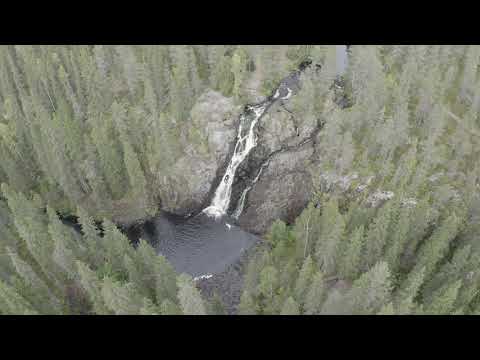 Puolanka on video: Hepoköngäs, Paljakka in winter and local satire
 Visit Paljakka's clip presents winter activities at the resort, but it was published in April 2020. Treat it as promotional footage from an earlier season, not as a current service notice. In particular, it does not show that alpine ski lifts or slopes operate today: municipal planning material and the resort's own FAQ say the alpine slopes have been closed since late 2022. Check each winter activity separately before arranging a trip.
 This brief excerpt from Karvanoppamusikaali shows Puolanka's local humour on stage. It was published by Puolangan pessimismipäivät in June 2025 and belongs to a season that has already ended. The clip offers a glimpse of locally made musical theatre and satire, but it is not an announcement of future performances; check the organisers' channels for the next programme.