Pleaux is a small market town in the north-west of Cantal, where a compact historic centre serves a much wider rural commune. INSEE counted 1,470 municipal residents in 2023 across the current territory, which includes Loupiac, Saint-Christophe-les-Gorges and Tourniac, associated with Pleaux in 1973. That distinction matters: the figure describes several settlements and countryside, not only the streets around the central square. The town’s appeal lies in that combination of a legible old centre and everyday services used by the surrounding area.
A church, houses and a cautious origin story
The mairie presents Saint-Jean-Baptiste as a Romanesque church with a fortified tower. Inside, its inventory includes 22 wooden statues, two protected as historic objects, and a 15th-century Pietà. The tower and the old houses tell different parts of Pleaux’s story: the former signals the church’s position in a defended town, while the turreted façades date mainly from the 15th and 16th centuries. The municipal account suggests a foundation near the end of the 8th century, but qualifies it as probable. It is a historical hypothesis, not a date visitors should treat as established fact.
Pleaux also grew through movement. The town records the 19th-century migration of people from the Auvergne to Spain, where some made fortunes in banking, baking and milling before investing in substantial homes back in the Cantal. Agriculture and livestock remain central to the identity of this rural territory, while the town functions as a service centre. The mairie lists shops, public services, schools, a medical centre and a twice-monthly market, as well as a heated swimming pool, campsite and cultural events. Check seasonal opening and current local listings.
From the square into a broad landscape
Start on foot in the centre, taking time to look at the church tower, the carved or timbered details of the houses and the market spaces. The Archistoire experience adds a digital layer to a heritage walk, helping visitors connect visible buildings with the town’s documented past. Beyond the centre, the modern commune reaches toward the Enchanet reservoir and the Dordogne valley. Those landscapes open opportunities for walking, cycling and water-based outings, but the distances between sites make a car useful for combining them.
Pleaux’s quieter value is as a functioning base rather than a single monument visit. Local services and a rural market make it a practical stop; nearby roads lead to smaller villages, viewpoints and the Cantal’s upland scenery. Ask locally about current events and services, since the visitor offer changes with the season.
Getting there
Road travel is the most flexible way to explore the dispersed commune. Cars Région lists a Pleaux–Mauriac service, with onward regional connections toward Aurillac; the municipality’s published 2025–26 timetable reached its stated end date in August 2026 and may be changing, so verify the current route, reservation rules and times before travelling. Do not assume a daily direct coach. In the centre, services are close enough for a walk once parked, but excursions to Enchanet and other hamlets require separate planning.
 Pleaux in three films: aerial views, a winter visit and a town project
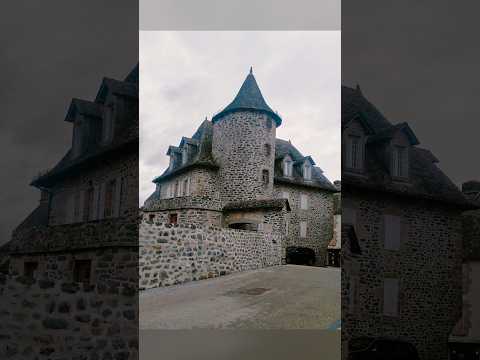 Cécile D’s film, uploaded in 2026 and titled with a December 2025 visit date, offers a more recent view of Pleaux. The seasonal perspective contrasts with the older aerial film and gives a sense of the inhabited centre. The winter date in the title gives this newer footage a distinct seasonal mood; opening days and services should still be checked separately.
 The 2023 Petite Cité de Caractère feature focuses on an architecture residency and public participation around the former Saint-Joseph college. It shows how the town’s heritage is part of current community projects, not only a preserved backdrop. The feature links architecture with civic participation, showing how the former college can serve as a setting for projects involving residents.