A city that reveals itself from the valley floor upward
Tulle is not laid out for a single, level stroll. The Corrèze runs through a narrow valley, and the older neighbourhoods climb away from the river in lanes and stairways. From below, the city can seem compressed between wooded slopes; from the upper quarters, rooftops and the valley open into a different view. The municipality names districts such as Alverge, Trech, Barussie and Barrière as places where this historic fabric is best explored. The change in elevation is part of the experience, and it also means visitors with limited mobility should plan their route rather than assume every lane is easy.
INSEE counted 13,401 municipal residents in the commune in 2023; the reference figure took effect on 1 January 2026. This is the whole municipality, not just the centre. Tulle is the prefecture of Corrèze and a service centre: INSEE recorded 11,791 jobs located in the commune in 2023, with public administration, education, health and social work accounting for 58.8 percent, and commerce, transport and services for 29.7 percent. Markets, shops, cultural venues and public services give the compact centre a working role beyond tourism.
Accordion, lace and an industrial past
Tulle’s identity is often introduced through music, but its cultural story is broader. The Cité de l’accordéon et des patrimoines opened in 2024 in the former Banque de France building. Its permanent routes connect three strands of local history: the accordion, the hand-made poinct de Tulle lace, and the arms factory. The Manufacture d’armes operated from 1690 to 2006 and shaped the city’s economy and population for generations. Its legacy is presented through objects and workers’ histories, not only through machinery.
The accordion remains a living craft rather than a museum label. The municipality describes Tulle as home to France’s last accordion factory; its December 2025 magazine documented the restart of Maugein under new ownership that March. That dated account is a meaningful sign of continuity, though the company’s current activity should be checked before making a visit around it. The Nuits de Nacre festival and the city’s music venues extend the instrument’s presence into public life. The Cité also gives visitors practical access to collections, an audio-guided visit and a programme that changes through the year.
A cathedral and two histories of wartime violence
Notre-Dame Cathedral stands in the old centre with a tall bell tower, but the building is also a record of upheaval. The municipality dates the beginning of construction to 1103 and notes that the abbey became an episcopal see in 1317. During the Revolution the cathedral was damaged and adapted for industrial use; an order to dismantle it in 1795 was abandoned after local protest, but the removal of structural elements led to the collapse of the dome, transept and choir. What survives is not an untouched medieval monument but a place shaped by decisions, loss and restoration.
Tulle’s history also demands a visit to its memorial landscape. On 9 June 1944, after German SS troops of the Das Reich division retook the town, 99 men were hanged in public. The municipal memorial account honours those victims and separately remembers deportees who never returned. These events should not be merged into a single figure or treated as a dramatic backdrop; the memorial and its interpretation ask visitors to pause and learn. The city’s civic memory is central to understanding the place, as much as the cathedral and its crafts.
Arriving, walking and making a thoughtful visit
Direct TER trains link Tulle and Brive-la-Gaillarde, around 28 kilometres apart; the fastest journey currently shown takes about 25 minutes. Services and times can change, so check the date of travel. The station gives access to the centre, while local buses and city facilities make Tulle a useful base for the Corrèze. A considered visit can pair the Cité’s three heritage routes with the cathedral and a walk through an old quarter, leaving time for the memorial sites if appropriate. The slopes, museum schedule and memorial access should all be checked before setting out.
 Tulle en trois regards : ville, savoir-faire et mémoire
 The City of Tulle introduces its Cité de l’accordéon et des patrimoines, a museum whose three permanent routes connect accordion-making, Tulle point lace and the former arms factory. The official presentation helps viewers understand why the collections belong together: they describe different forms of work and local identity. Use it as context for an in-person visit, then check the museum’s current hours and exhibitions.
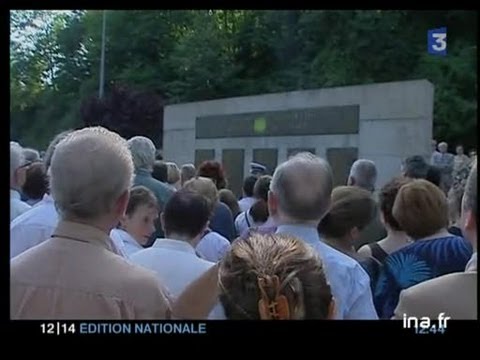 INA Histoire addresses the executions of 99 men in Tulle on 9 June 1944. This is a historical document about violence and loss, not a tourism promotion. The municipal memorial account provides essential local context and distinguishes the hanged men from deportees who did not return. Viewers should approach the footage and testimony with care and use the town’s memorial interpretation for a fuller understanding.