Pieve di Teco sits where the Arroscia and Arrogna streams meet, at a bend in the inland route between Imperia and the Colle di Nava. It has long worked as a gathering point for the villages of the Alta Valle Arroscia: today the arcaded main street still gives the impression of a place made for trade, conversation and stopping on the way through. ISTAT counted 1,333 residents in the whole municipality on 1 January 2025. That is the comune’s population, not just the historic centre. The town is small, but its identity is unusually layered: medieval porticoes, a tiny nineteenth-century theatre, a regional museum and a landscape shaped by olive terraces and mountain roads.
A planned settlement that became a valley crossroads
The Comune dates the foundation of the “new borough” of present-day Pieve to an agreement in 1233 between the valley communities and Antonio di Clavesana, the local marquis. The plan called for a settlement of roughly two to three hundred families beside a new castle. The municipal historical account also describes earlier activity around Monte Teco and a settlement near the Carpeneta plain, while treating some of those beginnings as probable rather than certain. This is a medieval story of a strategic valley, not evidence for a Roman foundation.
Pieve’s position helped shape its architecture and economy. The old route connected the Ligurian coast with the inland passes and smaller valleys; the arcades provided sheltered space for workshops and commerce. They began to take shape in the fifteenth century and were substantially complete by the first half of the sixteenth, according to the Comune’s reading of a 1533 cadastral map. Their arches are not identical: families built them to different dimensions, while civic rules created a coherent street. Walk along Corso Mario Ponzoni and look up as well as ahead; small openings above the vaults and variations in stonework tell more than a single uniform façade could.
The town’s history also includes conflict. In 1625, during the War of the Mantuan Succession, Savoyard forces took Pieve after fighting in the valley. The Comune records the destruction of the castle, the sack of the settlement and the burning of municipal documents. This helps explain why the visible centre is not simply a preserved castle town: it grew through commerce, religious institutions and later civic buildings. The Comune says the monthly antiquarian market fills the arcades on the last Sunday even when it rains, continuing their role as a public meeting place. Check the municipal calendar for any changes.
Churches, a small theatre and a museum of masks
The Collegiata of San Giovanni Battista anchors the central streets. The Comune says the present church was built between 1782 and 1806 to a design by Gaetano Cantoni, replacing an earlier Gothic parish church. Its neoclassical interior represents a later phase in a town whose religious buildings developed alongside its commercial fortunes. Other stops include the Oratorio di San Giovanni and the former church of Madonna della Ripa, now connected with local sacred-art collections. Some spaces remain places of worship, so visitors should respect services and confirm access rather than assume that every door is open.
Teatro Salvini offers a very different scale. Giuseppe Manfredi sought permission for a theatre in 1834, when local records already described a strong interest in music and performance. The hall has 99 seats and a 43-square-metre stage, with two tiers of boxes arranged in a narrow U. The Comune calls it the world’s smallest theatre; the more verifiable distinction is its remarkably intimate size. It hosted touring companies and local performers through the early twentieth century, then closed in the 1950s before restoration and reopening in 2005. Among its past visitors was Ligurian actor Gilberto Govi. Concerts, plays and other programmes continue on a changing schedule; check the theatre’s current notices and book ahead when events are announced.
Inside the former Augustinian convent, the S.A.A.C.S. Sebastiano Manfredi brings together an auditorium, exhibition space, public library and the Museo delle Maschere di Ubaga. The masks grew from a study of rural culture in Ubaga and were interpreted by 80 Italian and international artists. The museum presents them as symbols through which people think about nature, memory and communal life; its account links a performance ritual to midsummer and the fires of Saint John. This is a contemporary artistic interpretation of rural traditions, not proof of an unchanged ancient rite. Opening times can vary, so contact the Comune before making the museum a fixed part of the day.
Olive terraces, valley produce and routes outdoors
The streams and surrounding slopes explain why the town’s story cannot be read from its buildings alone. The Comune describes a valley-floor setting, with tributary valleys climbing toward villages such as Armo and Pornassio and the Colle di Nava. Cultivation once used small, difficult terraces as well as the limited flatter ground. Olive growing remains part of the landscape: the municipality’s nature guide identifies Taggiasca as the prized local variety and describes oil pressing at small mills, some of which continued into recent times. It also records cereals, legumes, vegetables and fruit as traditional products. These details help put the porticoes in context: Pieve was both a market centre and a service point for an agricultural valley.
Events still give that role a seasonal rhythm. The Comune’s Expo Valle Arroscia brings producers, crafts, food tastings, guided visits and performances into the town, while the autumn fair and monthly antiques market use the same covered streets. The programmes and dates change each year. Around the centre, the roads and paths toward the upper valley invite a longer trip to Pornassio, Nava or the smaller settlements; these are rural mountain routes, so check conditions and transport connections before setting out. Allow time to explore the arcades on foot, visit cultural spaces only when they are open and pause for local food rather than treating Pieve as a quick photo stop.
Getting there and planning your stay
Riviera Trasporti’s line 38 connects Imperia with Pieve di Teco and continues toward Nava, with stops including Pontedassio and Chiusavecchia. The line provides a practical public-transport approach from the coast, but services vary by day and season; check the current timetable, notices and return trip before travelling. By car, the SS28 del Colle di Nava follows the inland corridor between Imperia and the pass, with a route through the Arroscia valley. Road works or temporary diversions can affect the journey. Pieve is most rewarding when treated as a base for a half-day or longer: combine the arcades and church with a confirmed visit to the theatre or museum, then add a separate drive or bus connection into the upper valley.
 Pieve di Teco in three videos: the village, theatre and masks
 This 2-minute-47-second clip, uploaded by Andrea Picchiantano on 10 January 2011, is specifically titled Teatro Salvini di Pieve di Teco. Its description places it among short films on cultural properties of the Province of Imperia, produced by television maker Roberto Pecchinantano. The subject is unusually focused: it offers an archival audiovisual complement to the town’s intimate nineteenth-century theatre. It predates later restoration and programming information, so it is not a guide to present access or performance dates.
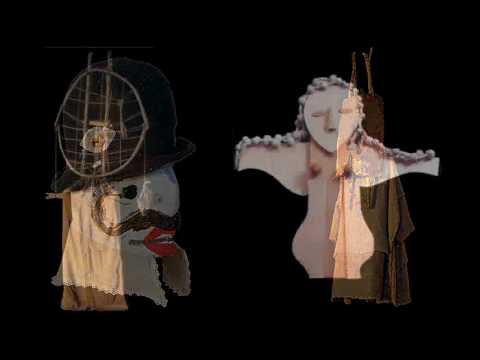 The 50-second video was published on 6 July 2010 by the locally named channel museidipievediteco and is dedicated to the Museo delle Maschere di Ubaga. Its description explains that the collection developed from research into rural culture and was interpreted by 80 Italian and international artists. This gives the third clip a different purpose from a town overview or theatre portrait: it introduces a specific museum project and its symbolic approach to memory and nature. The upload is old, so confirm the museum’s current opening arrangements with the Comune.