A village arranged along the water
Laigueglia is a compact coastal town in Liguria’s Baia del Sole, between Capo Santa Croce and Capo Mele. Its old centre does not sit apart from the beach: the narrow carruggi and small squares run along the shore, with doorways, churches and everyday streets opening toward the water. The result is a place whose maritime character is visible in its scale and layout, not only in its views. The resident population was 1,681 for the whole municipality on 31 December 2025, according to Istat’s provisional year-end balance; that figure is not a count of the historic centre alone.
From seafaring work to a living coastal economy
The municipality’s historical account places Laigueglia’s first written record in the twelfth century and records an oath of allegiance to Genoa in 1191. It describes a settlement of fishermen and sailors, followed by Catalan arrivals associated with coral fishing around Capo Mele. Archival research on Ligurian coral fishing documents Laiguegliese boat owners and seasonal expeditions in the seventeenth century, including journeys to Sardinian and Corsican waters. Maritime trade later carried goods such as oil, grain and wine; shipbuilding and the work of local shipwrights also became important. These are documented chapters in the town’s working history, not a claim that the present-day economy still rests on those trades. Municipal planning describes tourism as its principal economic sector today, and the shore, accommodation, food businesses, sailing and outdoor activities are central to the visitor offer.
One local origin story deserves a qualification. The name Laigueglia is sometimes linked to “Aquilia” and the Roman eagle, but the municipal history presents this as a proposal by some historians, not a proven derivation. The written record is medieval; it does not establish a Roman foundation for the present town.
Defences, church towers and a seafaring sanctuary
Sixteenth-century coastal raids prompted the construction of three defensive bastions. Only the Bastione di Levante, also called the Bastione del Cavallo, survives; it stands close to the seafront, while the other two were later lost to road and building changes. It gives the lanes around it a practical history: this was a settlement exposed to the sea as a source of livelihood and as a route by which danger could arrive.
The parish church of San Matteo dominates the low roofline with its late-Baroque presence and two slightly turned bell towers. Its parish status dates to 1531, while the current monumental building took shape between 1754 and 1783. On the headland, the small sanctuary of Madonna delle Penne is tied to a maritime devotion. Local tradition associates its name and a statue with Catalan coral fishers, but the account itself treats that connection as a possibility rather than certainty. A walk there adds a different view of the gulf and helps explain how religious landmarks also served a seafaring community.
Beach days, hillside routes and a new sea centre
The sandy beach and shallow seabed make the coast the easiest starting point for a visit; regional tourism services also list sailing, swimming, snorkeling, kayaking and other water activities, alongside trekking, cycling and walks in the Mediterranean scrub behind town. The promenade continues toward Alassio, while the hill paths lead toward Colla Micheri and the Andora side of Capo Mele. These are attractive extensions to a beach stay, but trail conditions and access can change, so check locally before setting out.
In June 2026 the restored former Gerolamo Guardone nursery reopened as SeaLab, a municipal centre devoted to marine culture and innovation. Its programme includes an immersive multimedia room, marine-science and educational workshops, a rooftop robotic garden and spaces for artists and researchers. It connects the old maritime economy to current public learning about the coast; check the official SeaLab site for visitor access and opening arrangements. Laigueglia also has a seasonal tourist information office at Piazza Cavour, so services and hours should be checked for the dates of a visit.
Getting there and useful links
Laigueglia has its own railway station on the coastal line, with regional services toward Ventimiglia and Genova Brignole. TPL Linea’s route 40 links Andora railway station with Finale Ligure, passing through Laigueglia, Alassio and Albenga. Train and bus timetables vary by date and day type; check the live operator information and confirm return connections before travelling.
 Laigueglia in video: paesaggio, santuario e memoria dei pescatori
 This short SeaLab Laigueglia video is specifically titled after the Sanctuary of Madonna delle Penne. It offers a concise audiovisual point of entry to one of the town’s maritime devotional landmarks, distinct from the broader landscape and fishing-history episodes. Check local information before planning a visit, since the clip itself does not establish current opening arrangements.
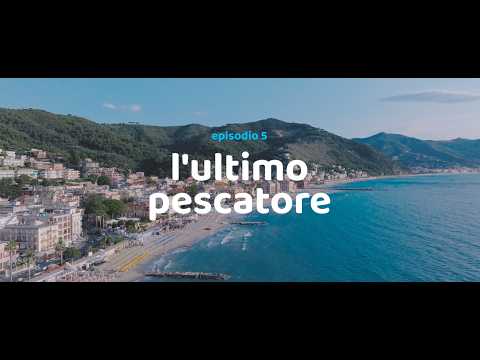 The fifth Deep Laigueglia episode, “La memoria dei pescatori” (“The Memory of the Fishermen”), turns the series toward the town’s working relationship with the sea. Its verified title and place in the municipal web series make it a useful complement to the landscape introduction and shrine portrait. It should be read as a cultural feature, not as a current account of the fishing economy.