Passignano sul Trasimeno is best understood through its slope. The historic settlement climbs from the northern shore to the Rocca; the newer waterfront follows the railway, ferry landing and promenade. The municipality extends well beyond this compact centre: Istat estimates 5,686 residents across the whole Comune on 1 January 2026, not just in the old lanes. Passignano is both a walkable lakeside town and a practical base for crossings, shoreline outings and trips into the hills between Umbria and Tuscany.
A fortified centre above a working shore
Along the water, cafés, restaurants, accommodation and the harbour connect everyday town life with visitors arriving for lake activities. Narrow lanes climb from there into the older fortified core. Surviving gates and towers mark the medieval enclosure; the Torre di Ponente still bears the municipal coat of arms. At the top, the Rocca gives a broad view over the lake and islands, while its position explains why a defended promontory mattered here.
The Comune describes the Rocca’s present form as medieval and traces an earlier stronghold on the site to the Lombard period, between the fifth and sixth centuries. That early dating is the municipality’s account; its visitor page does not detail the archaeological evidence, so it should be presented as a local historical attribution rather than a settled founding date. Tuscan marquises raised the walls, and Perugian control continued the fortification. The complex later underwent alterations and demolitions. Bombing in the Second World War caused severe damage; restoration preceded its opening to visitors in 2008. The settlement below grew particularly in the sixteenth and seventeenth centuries, so the Rocca and the streets beneath it represent distinct phases, not one untouched medieval village.
The Battle of Lake Trasimene in 217 BCE belongs to the wider corridor between Cortona and the lake. Umbria’s visitor account describes the constricted route between Tuoro and Passignano as part of the terrain used in Hannibal’s ambush of the Roman army. This helps explain the strategic landscape, but does not place the battle inside the modern town. A proposed derivation of the name from “Passo di Giano” is uncertain; it is not evidence of a documented Roman foundation.
Boats, fishing and the museum in the Rocca
The Museo delle Barche makes the lake’s working history tangible. Opened by the municipality in 2004, it documents traditional craft from Lake Trasimeno, Lake Piediluco and the Padule di Fucecchio, and includes a model of the Sardinian fassoi, made from marsh plants. A distinctive object is a monoxyl boat carved from one oak trunk. The Comune says it was recovered near Passignano during dredging and dates it to around the thirteenth century. Outside, a reconstruction of the barchetto del gorro recalls the large drag-net fishery used into the 1930s. Together, the displays show how boats were shaped by particular waters, materials and work, rather than treating them as picturesque scenery.
Pairing the museum with the Rocca tower creates a natural sequence: first look out over the lake’s routes, then see the vessels and equipment that supported fishing and travel. Official pages list seasonal and weekend access, but schedules can change. Check with the Comune or tourist office before travelling, especially outside the main season or if a guided visit or accessibility information is important.
Churches, a summer Palio and the hills
Below the castle, religious landmarks add another scale to a walk. Regional tourism information describes the Pieve of San Cristoforo, now associated with the cemetery, as predating the year 1000. The sixteenth-century sanctuary of Madonna dell’Oliveto is a short walk from the historic centre; works there include a sandstone Madonna and Child attributed to Ascanio da Cortona. These are historic buildings that remain connected to religious use, so access may depend on services and local arrangements.
The municipality reaches uphill to Castel Rigone, about ten kilometres from Passignano. The Sanctuary of Madonna dei Miracoli was built in 1494 with Perugia’s support as a response to plague, according to the regional heritage account. It makes a striking contrast with the ferry shore: the road rises into a smaller hill settlement and a major Renaissance church.
In summer, the Palio delle Barche brings lake and lanes into one event. Four neighbourhoods compete in stages on the water and on foot, carrying boats through steep streets. The Palio’s traditional narrative recalls a 1495 conflict between Perugia’s Baglioni and Oddi families. That is the story staged by the event; a guide should not add unsupported details. The annual re-enactment itself has a modern history: Italy’s cultural heritage register dates it to 1984. Its appeal lies in turning Passignano’s actual geography—shore, landing, climb and lanes—into a shared civic performance.
Planning a visit and getting around
Begin at the ferry landing, follow the promenade, then climb into the fortified centre for the Rocca and boat museum. Return to the water for a meal or an evening walk. When service is operating, Isola Maggiore is a natural outing from Passignano; its paths and churches reward more than a quick stop between boats. Crossings vary with season, weather and operating days, so confirm both departure and return. Tuoro and Magione follow the shore; Castiglione del Lago offers another historic centre beside the water. Castel Rigone is a hill-country detour within the same municipality.
Umbria’s tourism service lists hotels, residences, campsites, cafés and restaurants, as well as kayaking, windsurfing, boating and cycling. This gives Passignano the services of a small visitor hub, not just a viewpoint. The old centre has steep lanes and uneven surfaces; allow time for the climb and ask locally about accessible routes to the Rocca and museum.
Passignano has a railway station on the regional Trasimeno line, linking the town with Perugia and stops toward Terontola and the Valdichiana. Busitalia lists route E017 between Perugia, Magione, Passignano, Tuoro and Terontola. Departures vary by weekday, school calendar and season; check current timetables rather than relying on a past departure. By car, use signed parking outside the narrowest lanes. Before setting out, verify train and bus connections, ferry crossings, Rocca and museum access, and church opening times. Passignano is most rewarding when the lake is treated not only as a view, but as the route, workplace and meeting place that shaped the town.
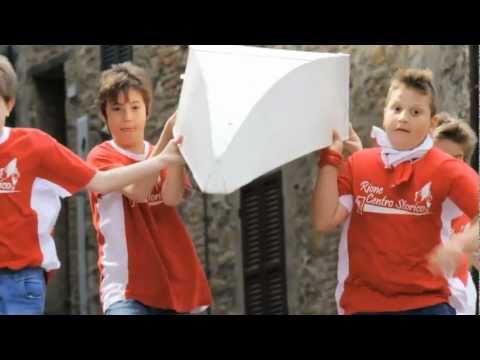 Passignano on film: the Palio, its lanes and lake life
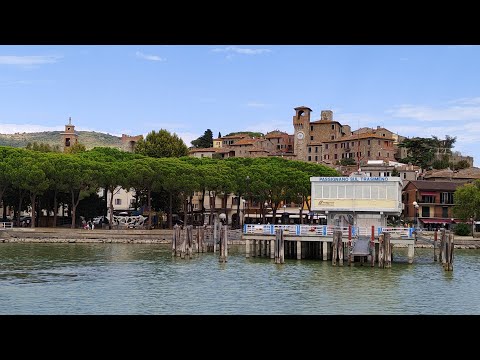 MOPEG’s 4K HDR walking tour is a slow visual route through Passignano, published on 24 September 2021. Its strength is spatial: the viewer can see how the waterfront, older lanes and rising ground fit together, helping plan an unhurried walk from the landing toward the Rocca. The footage is a creator’s travel film, not an official record, and it does not replace current information about opening hours, accessibility or transport. Use it to get a feel for the town’s scale, then check the Comune’s visitor pages before setting out.
 Rai’s Camper segment, uploaded on 22 June 2023 and titled for the 21 June programme, introduces Passignano as one stop in a broader journey through Umbria. Its broadcast format places the town in a visitor context and adds a national television perspective alongside the local Palio footage and the independent walking tour. The episode is a useful starting point for atmosphere and orientation, but a short TV feature cannot serve as a current directory. Check local sources for the Rocca, museum, ferry service and seasonal access before turning the scenes into an itinerary.