
Where the river reaches Vänern
Lidköping is a town of water, trade and easy outward routes. The Lidan runs through the centre before meeting Vänern, and the broad lake edge is part of daily life rather than a distant backdrop. In town, the old settlement east of the river and Magnus Gabriel De la Gardie's planned Nya staden west of it give the centre two different rhythms: intimate surviving lanes around Limtorget and a wide, ordered market square by the river. Shops, cafés and restaurants keep the centre useful between visits. The square still hosts a regular market, while a short walk north and west leads to the former Rörstrand works and the lakeside promenade. Statistics Sweden counted 23,585 residents in the statistical built-up locality, or tätort, Lidköping on 31 December 2023. That boundary is the continuous urban settlement, not the whole municipality; SCB separately counts Lidköping norra and the municipality publishes a different population total.
Two towns, then one city
The municipality records Lidköping's first known town privileges in 1446. Shipping on Vänern and trade in timber from the lake's surrounding forests helped turn the settlement at Lidan's mouth into a waterside trading town. A fire destroyed much of the old town in 1533, but the proposed relocation of its merchants did not happen. The older settlement was rebuilt and continued to trade from the river.
A second town began to take shape across Lidan after a land exchange in 1670. Magnus Gabriel De la Gardie planned straight streets, rectangular blocks and a conspicuously large square; building began in 1672. The old hunting lodge from Traneberg on Kållandsö was dismantled and carried by boat to the new square, where it became the town hall. The two centres were brought together under the Crown in 1683, although they kept separate mayors for a time. A later fire in 1849 reshaped the old town's medieval street pattern. These documented stages explain why the centre feels both formal and irregular, rather than the result of one founding moment.
Today's Gamla Rådhuset is also a layered object, not an untouched seventeenth-century building: a major fire in 1960 damaged it and it was reconstructed, with original stonework retained. Across the river, the small lanes near Limtorget preserve a remnant of the older urban fabric. On Nya Stadens torg, the municipality's bronze reliefs tell episodes from the city's growth, from De la Gardie's new town to work at the porcelain factory and engineering workshops.
From harbor commerce to ceramic memory
Trade has not disappeared; it has changed scale and form. Lidköping's working port handles bulk cargo, agricultural products and goods for the cement industry, linking regional producers with lake and land transport. Part of the West Harbor quay is currently closed because inspections found concerns about its load-bearing capacity, so the industrial waterfront should not be assumed to be open for walking. The municipality's harbor plan describes it as an active economic site as well as a landscape undergoing change.
Rörstrand is another strand of the town's identity. The porcelain company moved production to Lidköping in 1936 and stopped manufacturing here in 2005. Its former factory district now carries that history through the Rörstrand Museum, public art and the Porslinspromenaden. The museum's collections and the town's ceramic trail are a more accurate way to encounter the legacy than expecting to see a working porcelain production line. Near the square, Nya Stadens torg remains an everyday public room: the municipality lists market days on Wednesdays and Saturdays, with changes around public holidays.
Shore paths and a day out on Kållandsö
The town's visitor experience is easy to build as a walk. The Vänermuseet at Framnäs explores the lake's nature and the long relationship between Vänern and the people who live beside it. The Strandpromenaden runs from the centre toward Sjölunda; sections follow the bank and others use boardwalks through reeds, opening views across Vänern toward Kinnekulle. Framnäs Strandpark, completed in 2025, adds a beach, long pier, green space and year-round place to pause. The heated Framnäsbadet outdoor pool is nearby but seasonal, with a separate calendar from the lakeside bathing area. For a quieter nature outing, the accessible path at Östra Sannorna reserve is close to town. Check current water notices, path access and pool hours before setting out.
Beyond the centre, Kållandsö offers Läckö Castle, the fishing harbor at Spiken and island roads beside the lake. The official destination guide estimates the ride from Lidköping to Läckö at roughly 25–30 kilometres one way, depending on the route, mostly on asphalted rural roads; traffic and narrow sections call for care. The town also works as a base for trips toward Kinnekulle and other Vänern settlements. Trains on the Kinnekullebanan and regional buses serve the area, but onward connections and seasonal opening dates change. Check Västtrafik, museum and castle calendars, route maps and bathing conditions for your exact travel day.
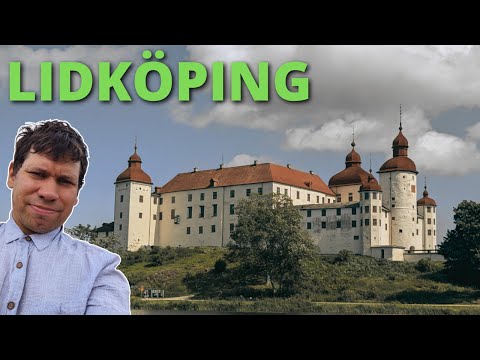 Lidköping in three views: Vänern, the market and Rörstrand
 The second selection is explicitly about market day in Lidköping. Its verified title points visitors toward the public square and local trading tradition, a useful everyday counterpoint to the destination overview and museum feature. The municipality currently lists market days on Wednesdays and Saturdays, with holiday exceptions; check that schedule before timing a visit. No unverified stalls, products or footage are assumed here.
 Karolina Hoff's verified title identifies this short video as a Rörstrand Museum vlog, giving the set a focused cultural stop rather than another general town view. The museum's own visitor information is the reliable source for collections, access and current hours. Check its calendar before travelling; this review does not infer exhibition details or scenes beyond the title.