Lacock's four principal streets form a compact village near Chippenham in Wiltshire. Visitors come for the abbey and the early history of photography, yet the settlement has a history independent of the camera. Its church, tithe barn, shops and houses explain why the place is more than the backdrop to a period drama. The question for a resident is different again: how to live in a protected historic village while relying on nearby towns for many everyday journeys.
A Saxon name and a planned medieval village
The National Trust traces the name Lacock to Saxon settlers beside Bide Brook, using a form that meant a small stream. This establishes an early place-name, not an exact foundation year. Settlement developed around the church, where the irregular line of Church Street survives. The other main streets were laid out as a medieval grid. The clear plan is easy to miss when the village is presented only as a collection of old cottages: the layout itself was a deliberate piece of town building.
Medieval Lacock also lived beside Melksham Forest. A fourteenth-century tithe barn and St Cyriac's Church show the agricultural and religious dimensions of local life. The village has changed, even though much of its appearance recalls earlier centuries. The National Trust notes a nineteenth-century coffee tavern and a shop that remained in the same family until the early 1980s. Such details connect the admired streets to trade and households rather than to film locations alone.
Population and what the figure covers
The Office for National Statistics estimated 1,093 people in Lacock civil parish in mid-2021. This figure belongs to the parish boundary used by the statistical release, not only to the four central streets or the area around the abbey gates. It is useful as a scale for the community but should not be compared with settlement-only counts from other places without checking the boundaries. The village is close to the larger towns of Chippenham and Melksham, whose services and rail stations play an important part in a Lacock resident's travel options.
Ela's abbey and its later owners
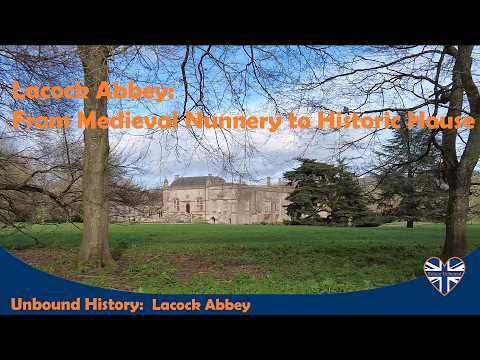
Ela, Countess of Salisbury, founded Lacock Abbey as a convent in 1232 on land she owned. She later entered the community and became its abbess. The surviving cloister is a direct reminder of this religious foundation. After the Dissolution the abbey became a private residence. Subsequent owners altered the rooms and gardens rather than freezing the building at one medieval moment. Elizabeth I stayed there in 1574; in the eighteenth century John Ivory Talbot added new interiors, including the Great Hall. A visit therefore moves between monastic, Tudor and Georgian history within the same site.
In 1835 William Henry Fox Talbot made an image of a window in the abbey's South Gallery. The National Trust identifies it as the earliest surviving photographic negative. That small experiment is more important to the history of photography than the size of the image suggests: it belongs to the development of a repeatable photographic process. The Fox Talbot Museum puts his work into a wider story and holds changing exhibitions. The abbey window, museum and surviving family rooms make a more coherent visit than treating photography as a detached attraction.
Walking, films and places to eat
A walk through Lacock can connect the church, tithe barn, old high street and abbey. The National Trust publishes a village walk and explains the use of local streets in productions such as Downton Abbey, Pride and Prejudice and the Harry Potter films. Screen recognition brings visitors, but those streets are also lived in. Follow marked visitor routes and use the designated parking rather than driving into the narrow centre merely to reproduce a camera angle.
There are cafés and food shops in the village. The National Trust operates the Stables Café and courtyard tea rooms when open. The Sign of the Angel is a restaurant with rooms on Church Street, so an overnight stay is possible inside Lacock itself; the National Trust also advertises a cottage at 2 High Street. Chippenham or Bath provide a larger hotel choice. Opening seasons, access to individual abbey rooms and restaurant availability should be checked before booking, especially in winter.
Connections to Chippenham, Bath and beyond
Chippenham is the principal nearby rail gateway and lies roughly 3½ miles from the National Trust property; Melksham station is about 3 miles away. The Faresaver X34 bus connects Chippenham and Frome via Lacock and Melksham, giving a practical way to arrive without a car. For longer journeys, Chippenham links the village with larger destinations including Bath, Bristol and London through the mainline network. Drivers from the M4 leave at junction 17 and use the A350 towards Lacock, following signs to the Hither Way visitor car park.
For a day trip, a bus and a short walk may be enough. For someone considering a home here, the same route needs checking against commuting hours, school journeys and the last evening service. The historic fabric also means that a house's appearance says little about heating, maintenance or available parking. No dependable official village-wide average rent was found in the sources used here; current offers should be compared address by address. Lacock's beauty is inseparable from its small scale, and that scale shapes everyday convenience as much as it shapes the visitor experience.