Lacaze is best approached as a small rural commune with a wide landscape around its village centre. In the Monts de Lacaune, the municipality describes a territory shaped by the valleys of the Berlou, Dadou and Gijou, with cultivated land, pasture and woodland. The Gijou valley gives the place its clearest geographic thread: it links hamlets, walking routes and neighboring communities rather than forming a single compact attraction. The municipal tourism office counts 318 residents across the whole commune in the 2023 census, not just in the village centre; the density was 6.9 people per square kilometre.
A château with a traceable history
The château is the natural landmark, but its story is more interesting when the dates are kept distinct. The municipality says its first written trace dates to 1420. In 1598 Henri II de Bourbon, Marquis de Malause, married the Lady of Lacaze; the family’s later presence is associated with the building’s Renaissance chapter. The local account says Henri’s son Louis lived there and restored it, and that descendants remained until 1741. The French Revolution brought partial destruction and fire. In 1805 the Castres merchant Louis Bernadou bought the property and soon sold it in separate parcels.
The château and its fountain entered the historic-monument inventory in 1927. After the building had been divided among several owners, the commune acquired the remaining parts in the mid-1990s. A long restoration returned the complex to public use in 2015 as a Centre d’Art & d’Histoire. It now serves as a cultural venue as well as a heritage visit: the municipal programme lists cinema, performances and events, while the local association Les Amis du Château helps run the cultural calendar. Opening hours and events change, so check the current notice before making a special trip.
Hamlets, faith and resistance memory
Lacaze’s heritage extends beyond the château. The municipality counts six churches and one temple within the commune, evidence of a religious history that cannot be reduced to one monument. Saint-Jean del Frech is especially prominent in local accounts. The tourism page associates it with Protestant “Assemblies of the Desert” around 1490 and describes much older origins; those early-origin claims are best treated as local heritage tradition unless supported by dated archaeological or archival evidence. A visit is also a way to understand how scattered hamlets and routes shaped life in this upland area.
Another layer is the Second World War. A stele on the road between Lacaze and Camalières commemorates losses suffered during the German attack of 8 August 1944 on the Lacado and Larroque maquis groups. According to the municipality, those resistance groups were protecting the “Virgule” parachute-drop area. The memorial gives the landscape a specific historical address: this is not only a walking country, but a place connected to local resistance networks.
Walking the old railway valley
The former Castres–Lacaune railway, nicknamed the Petit Train, was abandoned in 1962 and much of its route now serves walkers. The municipal tourism office describes a roughly 30-kilometre path through varied sections of the Gijou valley. It is a useful way to read the terrain slowly: old transport infrastructure has become a route for exploring woodland, fields and the linked villages. Other options include the woodland paths around Saint-Michel de Léon, where the municipality points visitors toward a waterfall and picnic area, and the hamlet of Camalières. Check trail maps, surface conditions and seasonal access before setting out; a route length that sounds modest on a map can still mean a full day in hilly country.
A living rural economy and practical services
Population figures help explain why Lacaze feels dispersed. INSEE counted 160 households and 373 dwellings in 2023; 42.4 percent of homes were secondary or occasional residences. The same statistical snapshot recorded 59 jobs located in the commune in 2023. At the end of 2024 it counted eight employer establishments active in the final week of December: agriculture, forestry and fishing, and trade, transport and other services each represented 37.5 percent. This is a small and seasonal-scale local economy, and those establishment figures do not include every self-employed worker or describe every resident’s job.
For visitors, the château entrance houses the tourist information office and a postal agency. The municipality’s current tourism listing includes Le Bercail, a group gîte with a restaurant and café, and Camping Le Jardin, alongside rural gîtes and guest accommodation in nearby hamlets. These options make Lacaze a possible base for walking rather than merely a quick photo stop, but services and availability should be checked directly, especially outside the main season.
Getting there and planning a visit
The most clearly documented public-transport approach is liO bus 766, Castres–Vabre–Lacaune. The regional tourism page lists a stop at “Lacaze – Village,” with service throughout the year from Monday to Saturday and departure from the Castres coach station. The page gives an indicative journey time, but actual departures, connections and seasonal changes must be checked against the current timetable. By car, use current navigation for the valley roads and allow time for a rural route; do not plan a tight connection around the bus.
Lacaze rewards a slower itinerary: the château and its cultural programme, the Gijou valley trail, a hamlet visit and the wartime stele each reveal a different part of the commune. It works especially well for travelers who want a village visit joined to walking and local history, rather than a long list of attractions packed into one afternoon.
 Lacaze in three films: village, aerial welcome and Gijou valley
 Drone SKG’s 2016 film presents itself as a welcome to Lacaze and identifies the village in the Tarn, using the older Midi-Pyrénées regional label in its title. It offers a second, separately produced introduction to the commune. The title and credit establish its scope, but do not make it an authoritative source for heritage chronology or visitor logistics; pair it with current municipal information when planning a stay.
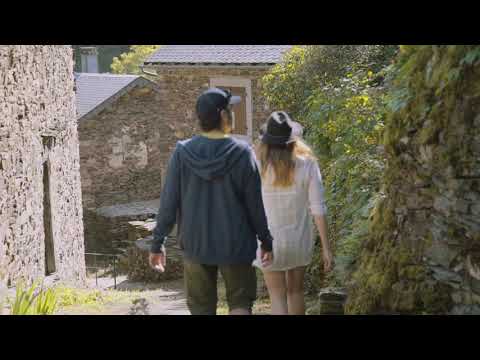 This Tarn Tourism film is about the Gijou valley and its connection to Lacaze. Its published description proposes a playful investigation at the château, a walk beside the valley and a visit to the building. That makes it useful for understanding how heritage and outdoor discovery can be combined here. It is a 2019 promotional piece, so it should not be read as confirmation of today’s château programme, trail conditions or transport timetable.