A town shaped by two industries
Carmaux grew as a coal and glass town in the Cérou valley, about 16 kilometres north of Albi. Its past is visible in more than a museum label: a railway station, workers’ quarters, civic squares and places of memory belong to a town that had to reinvent itself after mining declined. INSEE counted 9,872 municipal residents in the commune in 2023. It is a useful distinction: Carmaux is a small urban centre with everyday services, not a preserved industrial set.
The municipal history says the settlement probably dates to around the tenth century. It also proposes that the name may come from a Roman personal name, Caramantius. That is an etymological hypothesis, not evidence that Carmaux was founded as a Roman town. The city’s documented industrial story begins much later, with coal in the wider basin and the people who built work, trade and political life around it.
Coal, rail and the making of an industrial town
The municipality traces coal extraction in the Carmausin basin to the twelfth century. Mining expanded under the Solages family, and in the eighteenth century the coal itself helped attract a second industry: a glassworks. Gabriel de Solages received royal authorisation in 1752; the first glassworks was established in 1754. The connection was practical. Coal supplied the furnaces, while glass bottles could be sold beyond the valley.
The railway linked Carmaux to Albi in 1857, then carried people and goods along the basin. Glassmaking became a skilled trade with its own history of labour organisation. In 1895, the dismissal of a unionised worker led to a strike and lockout at the Sainte-Clotilde works. The workers, supported by Jean Jaurès and a national subscription, established the Verrerie ouvrière d’Albi, which began production in 1896. The cooperative was in Albi, but the dispute began in Carmaux and became part of its civic memory.
Jaurès, Calvignac and the miners’ strike
Carmaux’s most resonant political episode followed in 1892. Jean-Baptiste Calvignac, a mine worker, union leader and newly elected socialist mayor, was dismissed by the mining company. Miners saw the decision as an attack on their elected representative and stopped work. Municipal heritage material records that about 3,000 miners took part in the months-long strike; Calvignac was reinstated and the mine director resigned. Jean Jaurès defended the workers and came to represent Carmaux in Parliament in 1893.
A walk through the centre makes this history tangible without pretending that one monument can speak for every worker. Place Jean-Jaurès and its statue provide an obvious starting point; the municipal archives and cultural centre continue to organise exhibitions, walks and encounters around local history. The market square and central streets show the practical town that grew alongside the industrial one.
Glass heritage, with an important visitor notice
The former Royal Glassworks at the Domaine de la Verrerie became a glass museum in 1985. The site presents a striking link between industrial architecture and contemporary glass art, and its biennial gathering of glassmakers remains a cultural event. However, the museum and art centre are currently closed to the public for several years while the buildings undergo major work. The collection still appears in off-site programming, and the Biennale may take place independently of regular museum access. Check the current municipal notice before travelling to the domain; do not assume that an event means every gallery is open.
For the mining story, the departmental Musée-mine is in neighbouring Cagnac-les-Mines, not in Carmaux itself. It occupies an old nineteenth-century mine site and was created in 1989 by six former miners. Its reconstructed shaft and 350 metres of underground galleries make the working conditions and technical landscape easier to understand than a display case alone. Guided visits, exhibitions and opening dates change with the season, so reserve and verify the schedule.
What became of the mining landscape
Mining declined from the 1960s and the town’s pits closed one after another. A later open-cast operation altered the landscape again. Today Cap’Découverte, described by the municipality as a 700-hectare leisure and cultural area, has turned part of this mining terrain into a place for outdoor activities, sport, walking and family outings. Its scale is easier to grasp on site than from the town centre; facilities and opening periods depend on the season.
Another nearby escape is the Roucarié lake and leisure base, around three kilometres away on the commune of Almayrac. The local tourism office lists swimming, water activities, picnic areas and paths, but supervised bathing is seasonal. Carmaux is therefore a useful base for combining urban history with open-air time, while visitors should check which activities are operating on the day.
A working town today
The economy is no longer defined by coal alone. INSEE counted 3,445 jobs located in Carmaux in 2023: 1,787 in public administration, education, health and social work; 1,171 in commerce, transport and other services; and 217 in industry. Those figures describe jobs at workplaces in the commune, not the occupations of every resident. They help explain Carmaux’s present role as a service centre for the surrounding Carmausin-Ségala area.
INSEE’s 2024 equipment inventory lists seven primary schools, a collège, two lycées, two libraries, five general practitioners and four pharmacies. Shops, municipal services, cultural venues and the tourist welcome point add to the everyday infrastructure. The visitor office in the centre can help with local walks, events and connections to nearby heritage. The glass museum’s closure is the main limitation to plan around; Carmaux still offers its archives, civic landmarks, outdoor destinations and access to the mining basin.
Getting there and exploring nearby
Carmaux station sits in the town and has direct liO trains to Albi and Toulouse. SNCF lists an average journey of around 11 minutes to Albi-Madeleine and about 1 hour 9 minutes to Toulouse Matabiau; timetables and works can change, so check departures for your date. The road journey to Albi is also short, and the railway makes it possible to visit Carmaux without a car. Reaching Cap’Découverte, the museum in Cagnac-les-Mines or the Roucarié base may require a separate local connection, so confirm transport before setting out.
Carmaux rewards visitors who follow the sequence that shaped it: coal, glass, organised labour and the effort to build a life beyond extraction. Begin in the centre, allow time for the local archives or a heritage walk, then choose one of the surrounding sites according to opening hours. The story here is neither a legend of a Roman foundation nor a single industrial triumph. It is a documented town history, still visible in the places people use today.
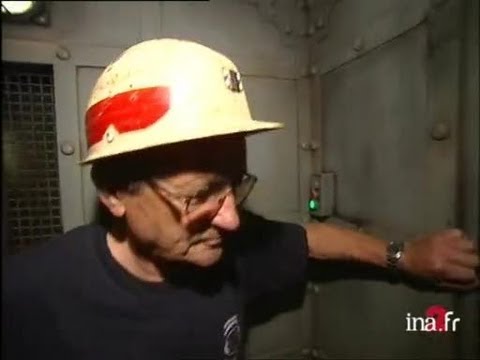 Carmaux en trois vidéos : mémoire minière, verre et ville d’aujourd’hui
 The Glass Museum’s 2017 Biennale video records one edition of Carmaux’s glassmakers’ gathering. It complements the town’s industrial history by turning attention from coal to the craft and contemporary art of glass. It is an event document, not a current museum-opening notice: the Glass Museum and art centre are presently closed for building works.
 The municipality’s film presents Carmaux as a town whose identity includes mining and Jean Jaurès, while also pointing to present-day public services, nature, culture, sport and solar energy. It provides a civic overview rather than a visitor itinerary, so use current tourism information for opening hours and activity schedules.