Kuortane is often introduced through its Olympic Training Center, but the municipality’s character is broader than a sports campus. Around Lake Kuortaneenjärvi, the centre, old farmsteads, small village roads and the Lapuanjoki rapids form a landscape shaped by work as much as recreation. A visit can move from a wooden church and a local history museum to a former tar economy, a Finnish War battlefield and today’s training facilities, without pretending that these are all concentrated in one walkable district.
A lake municipality with a long rural memory
Kuortane had 3,306 residents on 31 December 2025, according to Statistics Finland. This is the population of the whole municipality, not just its central village. The municipal centre lies by Lake Kuortaneenjärvi and Highway 66, within reach of Seinäjoki. The name Kuortane appears in a tax roll in 1557, the earliest written mention cited by the municipality; it is not a documented founding date.
In the 18th and 19th centuries, tar burning connected local forests and farms to wider maritime trade. The work brought wealth to some households, visible in the large two-storey Ostrobothnian farmhouses and enclosed yards that still distinguish parts of the landscape. A municipal visitor route around the lake is about 24 kilometres and can be followed by car or bicycle. Local tourism material counts around 140 preserved farmhouses along it, especially on the western shore and around Ruona. The route is a way to read the settlement pattern rather than a single attraction: allow time for village lanes, individual farm courtyards and stops along the water.
Church, battlefield and museums
In the centre, the wooden cruciform church built in 1777 by master builder Antti Hakola remains a clear landmark. The municipal attractions page dates its bell tower to 1837. Nearby, the Talomuseo brings together local buildings from the 16th to 20th centuries and a collection of about 2,500 objects. The museum’s grounds also host summer events; opening is seasonal, so check before travelling.
The adjacent Klemetti Museum turns attention from farm life to music. It occupies the former summer home of Armi and Heikki Klemetti and preserves material related to their work and Finnish choral history. Heikki Klemetti (1876–1953) was a choir conductor, composer and writer. On the other side of the municipality, Ruona recalls the 1808 fighting of the Finnish War. The old bridge, a memorial and an interpretation site make the episode tangible, but guided visits are arranged rather than guaranteed daily services. Kuortane’s connection to war history belongs to the documented events of the conflict, not to an invented ancient origin story.
Outdoor stops and present-day services
Sarvikkaan kosket, on the Lapuanjoki near Ylijoki, combine rapids with the remains of an old watermill. At Kaatiala, an open quarry produced feldspar and quartz from 1942 to 1968. The flooded pits now attract mineral enthusiasts and divers; the municipality notes that the smaller one is used locally for swimming but is not an official beach, while the larger pit is more than 40 metres deep. Treat it as an industrial and geological site and check current safety information rather than assuming it is a managed bathing place.
The Kuortane Olympic Training Center provides indoor and outdoor sports facilities, accommodation and services for training groups as well as visitors. The central village has everyday services, shops and places to eat; municipal tourism information also lists golf, fishing, hiking and cycling. Lodging and opening seasons vary. From Seinäjoki, travellers can use the confirmed Kuortane–Seinäjoki bus connection or Highway 66; operators and timetables change, so check the current journey planner. The lake circuit, farmstead landscape and cultural stops reward a slower itinerary, while the centre provides a practical base.
 Three Kuortane videos: an open-air museum, choral heritage and the Sarvikas rapids
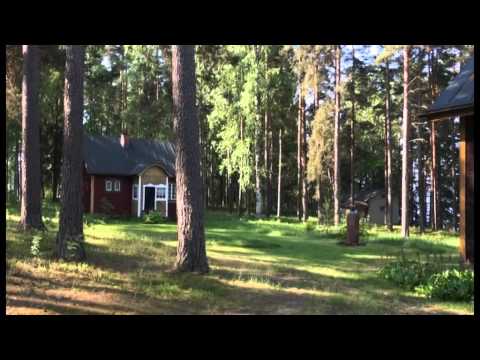 Mane Säli’s introduction to the Klemetti Museum offers a separate cultural stop, focused on Kuortane’s contribution to Finnish choral life. The museum occupies the former summer home of Armi and Heikki Klemetti and presents material connected with their work; Heikki (1876–1953) was a choir conductor, composer and writer. This makes the video a useful preview for visitors interested in music and local biography, distinct from Talomuseo’s buildings and objects. The museum is seasonal, so check access and opening hours with the local museum association.
 FinPappa’s video Sarvikkaankosket - Kuortane 2019 is a dated view of the rapids on the Lapuanjoki near Ylijoki. The municipality describes Sarvikkaan as a natural riverside stop where the remains of an old watermill can also be seen, making the clip a useful orientation before visiting this quieter landscape. Its title dates the footage to 2019; it does not establish current water conditions, access or safety. Check local conditions and use the municipal directions before setting out.