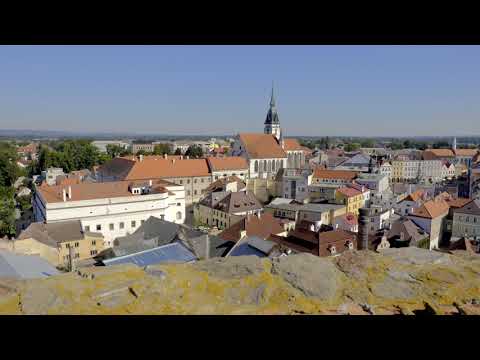
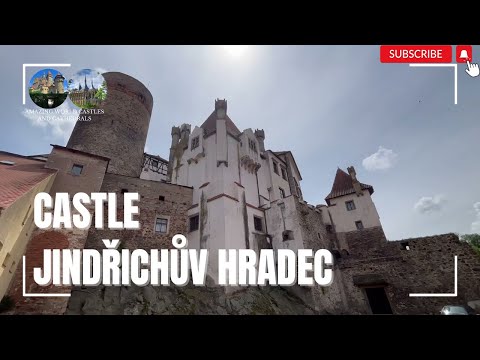
Jindřichův Hradec lies in South Bohemia where the Nežárka River, Hamerský Stream and Vajgar Pond shape the town centre. Its castle and château rise directly above the old streets; a visit can join the residence with the museum, main square and waterside walks. The site is older than the surviving town houses. Archaeologists have identified a Slavic fortified settlement on the castle site dating from the tenth century. This is evidence of early occupation, not of a Greek or Roman town or a precise founding day for modern Jindřichův Hradec.
Fortified settlement, castle and town
The early stronghold guarded a ford and a trade route. The state castle and château administration dates the first written report of the castle to 1220. Jindřich I of the Vítkovci family is associated with the lords of Hradec. A community of craftspeople and traders developed below the castle. Municipal historical material points out that the first written mention of the castle, the earliest recorded name of the settlement and formal town status were different events. Jindřichův Hradec is called a town in a document of 1293. These sources support a medieval urban history without requiring an invented ceremonial founding date.
The lords of Hradec expanded the stronghold into a major Gothic fortress. From the sixteenth century they remade it as a Renaissance residence. The arcades of the third courtyard, Adam's Building, the Spanish Wing and the garden music pavilion called the Rondel reflect their ambitions. The male line of the family ended in 1604. The estate passed to the Slavata family and later the Černíns. Fire in 1773 destroyed many Renaissance interiors and collections, and the buildings subsequently suffered years of neglect. Major restoration began in 1976; the complex reopened to visitors in 1993. A tour therefore explores a rescued historic site rather than a Renaissance building that remained untouched.
The castle, museum and old centre
Several château tours are offered, with the Black Tower and Black Kitchen among the separately advertised attractions. Some routes show the progression from medieval defences to the Renaissance arcades. Compare present tours, seasons and accessibility before making plans. Outside the residence, allow time for the main square, smaller historic streets and views across Vajgar Pond. The water and its edges are part of the town's identity, not merely a backdrop to the castle.
The Museum of the Jindřichův Hradec Region occupies a former Jesuit seminary on Balbín Square. Its best-known object is Krýza's Nativity, a large mechanical display built over more than sixty years by local stocking maker Tomáš Krýza. The museum describes it as the world's largest folk mechanical nativity scene. Other displays explore crafts, town culture and the singer Ema Destinnová. The municipal cultural programme adds cinema, theatre and concerts, though dates should be checked for the intended visit.
The difference between the residence and the streets below gives a walk its shape. Within the castle grounds, the sequence is one of courtyards, interiors and garden. Downhill, everyday town streets continue around the older centre. Vajgar Pond gives enough distance to see how the buildings occupy the site. The museum then adds the work and lives of local people to the story of the noble families.
Staying and getting there
Jindřichův Hradec is a district town with hotels, guesthouses, restaurants and cafés in town. Visitors planning an evening walk need not stay elsewhere. The municipal visitor centre on Panská Street can help identify current accommodation and places to eat; individual openings change. From České Budějovice, the I/34 road provides a direct approach, while the I/23 leads towards Telč and Brno. Rail and bus services also reach the town, but check connections for the specific travel date. Drivers should look up parking before entering the pedestrian historic core.