Greccio is not just a name attached to a Christmas story. It is a small hill municipality in the Rieti valley, where a compact medieval centre, a sanctuary in an oak wood and a living programme of religious, craft and walking visits sit within the same landscape. ISTAT recorded 1,459 residents in the whole municipality on 31 December 2024. The historic village stands at about 705 metres on the slopes of Monte Lacerone, above the Valle Santa Reatina. The Franciscan sanctuary lies separately, around two kilometres from the village, on a rocky spur at about 635 metres. That distinction matters when planning the visit: the old town and the shrine are close, but they are not the same stop.
A fortified village above the plain
Start in the old centre and let the steep lanes set the pace. The settlement still follows the shape of a medieval castrum: remains of the castle, a surviving gate and sections of the old defensive line can be read in the fabric of the village. The seventeenth-century bell tower of San Michele Arcangelo was built over one of the earlier wall towers. The parish church crowns the hill; its history includes medieval foundations, rebuilding in the sixteenth century and later restoration after the French sack of 1799. Inside are works linked to local artistic traditions, including decorations attributed to Gregorio Grimani and an organ made in Terni in 1831. Access to churches is not guaranteed by their presence on a map, so visitors should ask locally before planning an interior visit.
At the lower edge of the centre, the Baroque church of Santa Maria del Giglio gives Piazza Roma another architectural layer. The municipality currently says it remains closed and unusable following the 2016 earthquake. Around the squares and lanes, the Sentiero degli Artisti turns old house walls into a contemporary open-air collection: the municipal tourism office counts 26 frescoes by international artists, each taking up a Franciscan theme. It is a genuinely local way to encounter the town’s religious identity without treating the entire place as a museum exhibit.
What the records establish, and what they do not
Greccio’s official tourism material repeats a possible ancient Greek-colony origin, but it does not supply evidence that establishes that story. The archival inventory for the municipality describes medieval origins: it notes an earlier ninth-century reference to a place called Grecce or Grezze as local historiography, while identifying 1091 as the first certain mention of the castle, in a donation to the Abbey of Farfa. The sounder account is therefore a documented medieval settlement, not a proven Greek, Roman or other ancient foundation. Municipal history describes growth around 1100, destruction by forces of Frederick II in 1242 and a further sack by French troops in 1799. These events help explain the fortified form and the layers of rebuilding visible today.
Greccio’s best-known chapter is the Christmas scene associated with Francis of Assisi in 1223. The town’s account cites the narrative of Thomas of Celano, an early Franciscan biography, and describes a staged Nativity with a manger, hay, an ox and a donkey. That is a specific devotional event in a particular place; it is more careful than claiming that Francis invented every later form of the Christmas crib. A separate local story says a child threw a burning brand that marked the place for the sanctuary. The municipality itself presents that as tradition, not as a verifiable historical episode. The modern public reenactment has been organized by the local Pro Loco since 1972, giving the story a civic and seasonal life of its own.
The shrine and a museum of many traditions
The Franciscan Shrine of the Nativity sits below the village amid evergreen oaks, with views over the Rieti basin. Its first small chapel is dated by the sanctuary to 1228. An early fresco, restored in 1952 and again in 2016, sets the Greccio Nativity beside the Nativity at Bethlehem; the complex also preserves early friary spaces, including the refectory, a narrow old dormitory and the cell associated with Francis. A wooden dormitory dates to the thirteenth century, while the larger modern church was built in 1959. This is an active sanctuary as well as a heritage site, so modest dress and quiet are part of a respectful visit.
About 200 metres from the historic centre, the International Nativity Museum occupies a restored church of Santa Maria, dated by the municipality to the thirteenth century, and an adjoining historic building. Its collection brings together nativity scenes made in different places and artistic traditions; it is not limited to a single local style. The museum reopened in December 2025. The current municipal notice, effective 15 September 2026, says it is open every day except Monday; seasonal and special-event changes are possible, so check the museum’s latest notice and ticket information before setting out.
Walks, food and the life around the pilgrimage
For a short visit, follow the fresco path through the old town. For a longer outing, the municipal walking guide describes a moderate route from Greccio to La Cappelletta on Monte Lacerone, taking around one and a half to two hours through woodland and viewpoints. Local tradition connects the chapel on the summit with Francis’s retreat, but visitors can enjoy the landscape without treating that account as proven biography. Greccio is also a stop on the Cammino di Francesco, a wider network linking Franciscan sites across the Rieti valley. Nearby sanctuaries at Poggio Bustone, Fonte Colombo and La Foresta make a natural multi-day or driving itinerary; check route markings and current conditions, especially after rain.
The visitor economy is visible in the services the municipality lists: a tourist office, accommodation, places to eat and local guides. A camper stop at Case Rossi is managed privately, so availability and terms need to be checked directly. The official food page points visitors toward dishes such as cannelloni alla Francescana, duck prepared in the style of Nonna Gilda and wild boar cooked with red wine. They are local suggestions, not a promise that every restaurant serves them every day. The annual “Greccio… il Presepio” craft market links the town’s Nativity identity to artistic production and tourism; the municipality has scheduled its 28th edition from 28 November 2026 to 6 January 2027. Event dates, stalls and services can change from year to year.
Getting there and making the most of a day
Rieti is the closest practical city and lies roughly 15 kilometres away according to the municipal tourism portal. By car, the municipality’s directions approach from the A1 at Orte via Terni, or from Rome Nord and the Salaria via Rieti, then use the Terni–Rieti link road and the Greccio exit. From Terni, follow the route toward Rieti. Regional trains stop at Greccio on the Terni–Rieti–L’Aquila line, but the station is separate from the hilltop centre and sanctuary; arrange a connecting ride or check local buses before relying on rail alone. COTRAL and Autolinee Troiani are among the operators listed by the municipality. RFI’s timetable and service notices change, and holiday periods can affect the last connection, so check the exact travel date and return journey.
Greccio works best when the visit is paced around the terrain: the village lanes, the shrine and the museum each deserve their own time. The municipal tourist office can confirm current access, guided visits, parking and transport, while the sanctuary can advise on religious services and group visits.
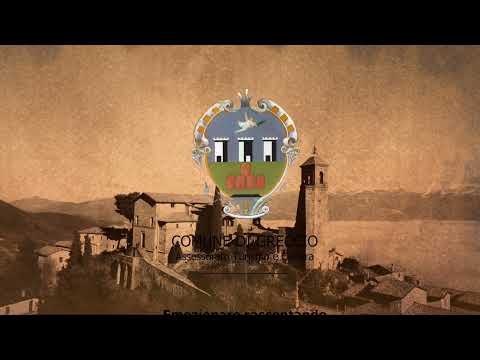 Greccio in three films: a narrated village tour, the surrounding territory and the Nativity museum
 The municipal tourism channel’s film on Greccio and its territory gives the wider landscape a place beside the famous shrine. It works as a regional orientation piece and complements a walk through the compact historic centre. Because it presents the municipality as a whole, the film helps viewers look beyond the sanctuary when planning a longer stay in the area.
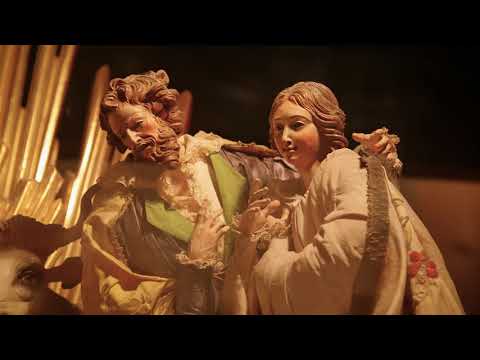 This film focuses specifically on the International Nativity Museum. It is the clearest choice for viewers interested in the collection itself, while the municipality’s current page remains the source for visiting hours, tickets and access. Its dedicated focus helps a visitor decide whether to reserve a separate stop for the collection during an itinerary in the Rieti area.