a reused medieval castle, art and the landscapes of the dehesa
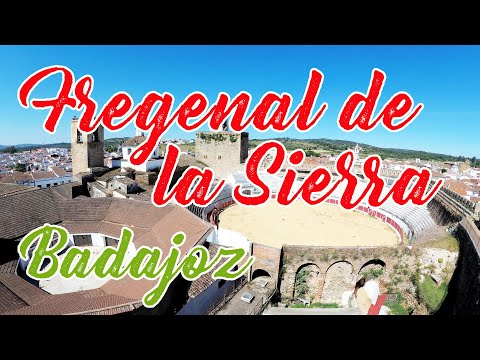
Fregenal de la Sierra lies in southern Badajoz, close to Huelva province and the routes connecting Extremadura with western Andalusia. Its medieval fortress contains a bullring and a market, a striking example of a community adapting inherited buildings. Churches, family mansions and the restored San Francisco Convent extend the visit, while the archaeological site of Nertóbriga introduces a much older history beyond the present town.
| Municipal population at 1 January 2026 | 4,767 |
|---|---|
| Area of the municipality | ≈ 236.65 km² |
INE Annual Population Census, reference 1 January 2026, released on 24 November 2026. The IGN area covers the whole municipality, not only the built-up centre.
Nertóbriga beyond the town
Around six kilometres south, Nertóbriga occupies a site in the Sierra del Coto. Archaeology records occupation before Rome and substantial Roman development. Nertobriga Concordia Iulia became a municipality in the province of Baetica.
Surviving structures include defences, water storage and a monumental area with temples above a podium. Later Islamic occupation is also documented. The archaeological designation of 2013 distinguishes established finds from questions that need further investigation.
The ancient city requires a separate excursion. Its presence in the surrounding territory does not make the present streets Roman. Ask tourist information about admission and visiting arrangements before heading to the site.
A medieval fortress with later lives
The present settlement developed within the medieval organisation of the region. The first documented references to its castle date to the thirteenth century, when it was entrusted to the Templars. Following the order’s departure and changes in ownership, Fregenal became associated with the council of Seville.
The fortress retains seven towers. The belfry on the keep is an eighteenth-century addition, illustrating how its appearance evolved. A bullring was built within the enclosure from the late eighteenth century, and the food market followed in the early twentieth. Santa María Church adjoins the castle.
These later functions explain the unusual layout and alterations to the walls. Visiting the complex reveals everyday uses layered over a defensive structure rather than a single, unchanged medieval building.
Santa María, Santa Ana and Santa Catalina
Santa María contains Baroque altarpieces beside the fortified enclosure. From this area, walk towards the Santa Ana and Santa Catalina neighbourhoods, following the changing scale of streets and open spaces.
Santa Ana is particularly associated with its sixteenth-century sculpted high altarpiece, depicting the life of Mary and the Passion. Tourist information records its attribution to Antonio de Auñón. The church also contains Juan Bravo Murillo’s mausoleum. At this update, the municipal opening information lists the church as temporarily closed, so an interior visit should not be assumed.
Santa Catalina has medieval origins and a Mudéjar-style timber roof. Its Virgin and Child and Pietà are important parts of the town’s religious art. Tourist information coordinates the details of guided admission.
The restoration of San Francisco
San Francisco Convent was founded in 1563 and altered substantially in later periods. Nineteenth-century suppression and confiscation changed its role. Public uses followed, but eventual abandonment left the building severely damaged.
Restoration beginning in 1995 brought the complex back into use. Today it combines historic architecture, the municipal library and cultural activities. Church, cloister and sacristy form part of its architectural visit.
Allow enough time to appreciate the recovered spaces as well as the exhibitions. The convent’s history explains a transition from religious use through public occupation and neglect to an active cultural role within the town.
Contemporary painting and a European humanist
The Museo de Arte Contemporáneo de Fregenal, or MACF, exhibits works acquired through the Eugenio Hermoso International Painting Prize, established in 1981. It has permanent and temporary exhibition spaces and a workshop room. This adds recent painting to an itinerary otherwise rich in older art.
San Francisco also houses the Centro Europeo del Humanismo Arias Montano, CEHAM. Its interpretation introduces the Fregenal-born scholar, his travels and intellectual connections in sixteenth-century Europe.
Audiovisual and interactive resources offer an accessible introduction to humanism. Educational and cultural programming gives the centre a continuing role beyond its displays. Check which spaces and activities are available on the intended day.
Houses, fountains and the Remedios sanctuary
Heraldic entrances and historic family houses enrich the predominantly white streets. The town hall and former Jesuit college add civic and educational layers to the religious buildings. Looking at courtyards, doors and street patterns rewards a slower walk between the principal sites.
La Fontanilla, a sixteenth-century fountain, and the María Miguel fountain offer landmarks outside the museums. They help build an itinerary around water and neighbourhood meeting places, with something to see between interior visits.
The Virgen de los Remedios sanctuary stands roughly six kilometres from town. It is a separate rural excursion with its own opening arrangements, rather than another church within the historic centre.
Dehesa landscapes and ordinary life
The surrounding dehesa and Iberian pig production help explain the regional economy and food. Cultural tourism adds activity to a town that also provides services for its rural surroundings.
A municipal birdwatching route draws attention to nesting birds on towers, churches and other historic buildings. Observe from a distance, particularly during the breeding season, rather than approaching nests to take photographs.
For a longer stay, investigate practical needs alongside weekend attractions. Fregenal has a health centre and accommodation within town, while journeys to larger cities require attention to the available transport. The daily rhythm outside festival periods may differ considerably from a short visit.
Accommodation and regional food
Hotel Cristina provides rooms, parking and shared spaces in Fregenal. Its La Dehesa restaurant emphasises Iberian pork, alongside the El Álamo café and seasonal terrace. It offers a way to combine a local hotel with dinner without travelling to another town.
The municipal directory also lists Hotel Sierra Fregenal with a restaurant, as well as apartments and houses for independent stays. For a countryside property, confirm its location and whether a car is needed for meals and shopping.
Booking a meal around a guided visit makes the day easier to organise. Check current menus and prices directly. Open squares and streets provide a useful part of the itinerary when museums or restaurants are between opening periods.
Roads and transport from the larger cities
The EX-101 provides the approach from Zafra. The N-435 serves the Badajoz–Huelva corridor, while municipal guidance identifies the EX-201 through Bodonal de la Sierra for an approach from Seville. Choose the actual route according to the starting city and road conditions.
Municipal transport information lists bus operators and the railway station, but its service details are dated May 2024. Verify the specific departure, return and boarding point with the operator or Renfe. The same page describes the bus station as closed, making the current pickup location particularly important.
A wider journey can also include Portugal, using roads west towards Jerez de los Caballeros and crossings into the Alentejo. The border is relevant to trip planning, although proximity does not establish a direct public transport connection.
Sources
- BOE: protección y secuencia arqueológica de Nertóbriga
- Ayuntamiento: castillo y transformaciones
- Ayuntamiento: Santa Ana y su retablo
- Ayuntamiento: catálogo de monumentos
- Ayuntamiento: convento de San Francisco
- Ayuntamiento: Museo de Arte Contemporáneo
- Ayuntamiento: Centro Europeo del Humanismo Arias Montano
- Ayuntamiento: horarios y cierres de monumentos
- Turespaña: patrimonio y santuario de los Remedios
- Ayuntamiento: aves del conjunto histórico
- Ayuntamiento: alojamientos y servicios
- Hotel Cristina: alojamiento y restaurante La Dehesa
- Ayuntamiento: carreteras y operadores de transporte
- INE: Annual Population Census, 2026
- IGN: municipal area