tapestry workshops, wool and industrial heritage beside the Creuse
Felletin is a town where workshops matter as much as monuments. Near Aubusson and the Millevaches uplands, its old centre preserves turreted houses, fountains and churches. Wool production and a former diamond-cutting industry add an unexpected depth to a visit. The heritage here concerns working skills and people as well as attractive buildings.
| Municipal population, 2023 reference | 1,577 |
|---|---|
| Approximate geographical area of the commune | ≈ 13.73 km² |
Population at 1 January 2023, within municipal boundaries at 1 January 2025; official figure in force from 1 January 2026. The area covers the whole commune, not only the built-up centre.
Two centres shaped the medieval town
Medieval Felletin developed from a feudal settlement on the Beaumont hill and a religious settlement in the valley. In the twelfth century, monks from Chambon-sur-Voueize founded an establishment around which the lower centre grew. Access to the Creuse and important routes helped this part of town prosper.
Stories connecting the name Felletin with an ancient deity belong to legend, rather than proving a Roman foundation. The surviving streets, river crossings and buildings provide a firmer starting point. Their arrangement helps explain the relationship between travel, settlement and production that shaped the town.
Older houses and two churches
Fifteenth- and sixteenth-century houses punctuate the centre around its squares and Grande Rue. Sainte-Valérie du Moutier and Notre-Dame-du-Château are two principal landmarks. Discovery routes available from the tourist office help visitors find smaller architectural details and fountains as well as the main buildings.
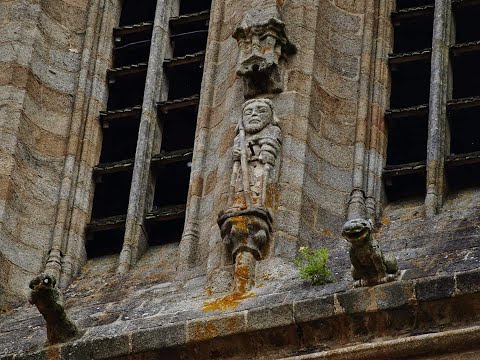
Notre-Dame-du-Château, a fifteenth-century Gothic church, hosts tapestry exhibitions within the programme organised by Felletin Patrimoine Environnement. Check exhibition dates: it does not operate as a permanently open museum. Henri Guérin’s stained glass adds another element to the encounter between the historic building and artistic creation.
From wool to a finished tapestry
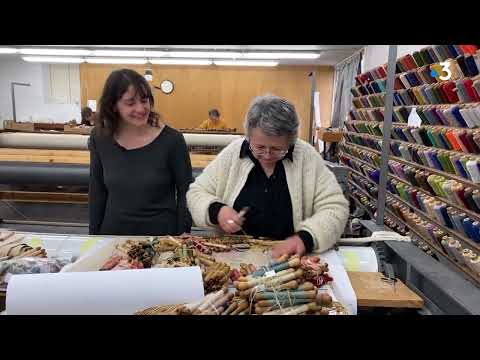
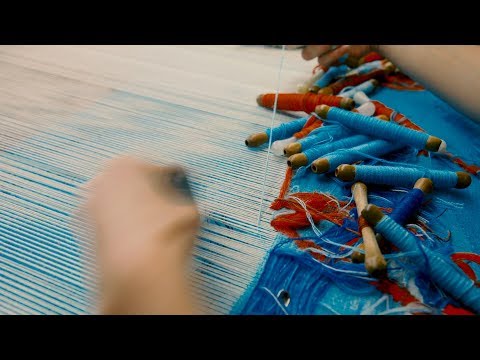
Visits to the Pinton workshops explain low-warp tapestry production, from the initial design through choices of colour and materials to weaving and finishing. Advance booking is required because the venue remains a working business. A staircase without a lift also limits access along the visitor route.
The Terrade wool mill has occupied its riverside site since 1912. It adds the processing and dyeing of wool yarn to the story. The two visits complement each other: one explains the material, the other its use. Both have organised departure times, so reserve before building a day around them rather than expecting to enter workshops whenever you arrive.
The diamond-cutting story
The former La Felletinoise cooperative, built in 1912, preserves the memory of almost a century of diamond cutting for jewellery and later industry. Following restoration, it became the setting for L’Épopée diamantaire, a visitor experience devoted to that working history.
It provides a useful counterpoint to the textile sites and shows why Felletin cannot be reduced to tapestry alone. Documentary and interactive elements help bring the former workshop to life. Individual visits follow a seasonal calendar, with other arrangements available for groups. Check current access rather than assuming that summer opening hours apply in winter.
Friday market and an overnight base
The weekly market takes place on Friday morning. It is a good opportunity to see the centre working as a place for ordinary shopping rather than only as a heritage setting. Fit reserved workshop visits around it if you want time for both.
Au Relais du Parc de Millevaches offers rooms, furnished studios and apartments in Felletin. The operator specifies that its restaurant and bar are reserved for hotel guests. Day visitors should therefore not assume they can simply stop there for lunch. Select accommodation according to the degree of independence you need, and confirm meal arrangements when booking rather than after arrival.
Connections and further exploration
Regional express coach route 204 connects Felletin with Limoges through Aubusson and Bourganeuf. Route 210 provides another corridor towards Guéret and La Souterraine, useful for rail connections. Check actual stops and operating days, particularly when your final destination lies outside the centre.
For a first stay, allow a realistic combination of old streets, one working-site visit and the diamond museum. Aubusson is a natural extension for a deeper exploration of tapestry, but deserves its own time. Longer trips into the Millevaches landscape need separate planning from journeys between town centres. This helps preserve the pleasure of discovering the area without treating every attraction as part of a hurried single-day circuit.
Sources
- Ville de Felletin : formation médiévale de la ville
- Felletin Patrimoine Environnement : parcours et monuments
- Felletin Patrimoine Environnement : visites des ateliers Pinton
- Felletin Patrimoine Environnement : filature Terrade
- Felletin Patrimoine Environnement : Épopée diamantaire
- Felletin Patrimoine Environnement : Notre-Dame-du-Château et expositions
- Ville de Felletin : marché du vendredi
- Au Relais du Parc de Millevaches : hébergements et restauration
- Région Nouvelle-Aquitaine : réseau de cars en Creuse
- Région Nouvelle-Aquitaine : lignes express 204 et 210
- INSEE: official 2023 reference population
- French administrative API: municipal geography and area