Chablis is a small town in the Yonne, set in the valley of the Serein among the limestone slopes of northern Burgundy. The name is known worldwide through wine, but a visit makes more sense when the vineyards are read alongside the town that grew beside them: a riverside settlement, a medieval religious centre, a place of trade and a living community with shops, restaurants and visitor services. Its scale encourages a slow itinerary. The old streets, church precinct and wine slopes can be explored on foot, while nearby villages and the abbey at Pontigny extend the day into the surrounding countryside.
INSEE’s 2023 reference population, in force from 1 January 2026, is 2,139 municipal residents for the whole commune. The figure is not a count of the central built-up area alone: Chablis merged with Fyé, Milly and Poinchy on 1 January 1973, and the current municipal boundary includes those former communes. The distinction matters in a landscape where the name Chablis can mean the town, the commune, or a wine-producing area that reaches beyond its boundary.
A documented medieval town, not a proven Roman foundation
Local wine-history accounts tell an appealing story of Roman vines and an early settlement, but those claims should not be treated as proof that the present town was founded by Rome. A firmer documentary milestone belongs to the ninth century. Local accounts date an important royal transfer connected with Chablis to 867, during the period when monks of Saint-Martin of Tours sought refuge in Auxerre amid Viking raids. The surviving charter record is more complicated: a scholarly edition discusses a lost diploma dated between 872 and 877 and explains that the sequence of events is uncertain. These references point to early monastic and royal ties; they do not establish a precise foundation date for the town.
The Cistercian abbey of Pontigny was founded nearby in 1114. It received vines in the Chablis area, and the monks helped develop winegrowing into an enduring part of the local economy. A 1455 record documents a sale of Chablis wine to a merchant from Maubeuge, evidence that the trade already reached beyond the immediate region. In 1405, the lower town’s ramparts were financed through a levy that asked winegrowers for a portion of their harvest. The town was attacked in 1568 during the Wars of Religion, when the upper suburb was burned and the fortified lower town was plundered after a siege. The vineyard later endured phylloxera, mildew and severe frost; its recovery in the twentieth century came through replanting, grafting and changes in cultivation. That history helps explain why wine remains both an economic activity and a way residents interpret the landscape, rather than a decorative theme for visitors.
Churches, cellars and a working wine landscape
The Collégiale Saint-Martin gives the centre much of its architectural presence. The Chablis wine-history guide dates its first construction to 1160 and says rebuilding began in the 1220s; medieval wall paintings survive, while the present spire dates from 1852. On its south portal, horseshoes attached by pilgrims recall Saint Martin’s association with travellers and animals. Beside the church, the Obédiencerie was held by the canons of Tours and retains a large old wooden wine press. The site is a reminder that medieval religious institutions were also landholders and producers.
Nearby, Saint-Pierre preserves another layer of the town’s religious history. The former cellars of Petit Pontigny, built up between the fifteenth and eighteenth centuries, now adjoin the Cité des Climats et vins de Bourgogne. Its interpretation, cultural programme and tasting workshops explain the vineyards of Chablis, the Grand Auxerrois and the Châtillonnais. The town’s wine identity is unusually specific: Chardonnay is the grape associated with Chablis, but the appellation and its different classifications cover a wider group of communes, not only the streets of Chablis. Around town, vines, woodland paths and the Serein valley make the landscape legible without requiring a car.
Walk the slopes, then look beyond the town
The Aire des Clos is a useful starting point for understanding the vineyard. Its orientation table looks over the Serein valley and the slopes of the Grands Crus. The official Chablis route guide describes an eight-kilometre Sentier des Grands Crus loop from this point, through vineyard tracks and forest paths. Other marked routes range from shorter walks to longer circuits; the Sentier des Gueux, for example, has 14- and 27-kilometre options and passes near named Premier Cru slopes. The tourism office also describes two easier family walks on the Grands Crus hill, estimated at about an hour and an hour and twenty minutes. Check route markers, ground conditions and any seasonal restrictions before setting out, and carry water in hot weather.
Chablis is also a base for short regional excursions. Pontigny Abbey, a few kilometres away, offers a striking contrast between the working wine village and a major Cistercian church. Auxerre is the nearest larger city and provides additional rail connections, museums and services; Tonnerre and the smaller vineyard villages make natural stops in the same itinerary. The local tourist office can advise on guided visits to wine estates and bicycle rental. Chablis has accommodation and restaurants, but opening days and tasting appointments vary, so arrange them ahead rather than assuming every cellar is open to drop-in visitors.
Getting there and planning the day
From Paris, regional trains run to Auxerre Saint-Gervais; the Mobigo LR804 coach links Auxerre and Tonnerre via Chablis. At the time of research, the Ecole/Mairie stop in Chablis was suspended because of works through 31 December 2026, with passengers directed to the stop on rue Bretauche. That is a temporary notice, not a permanent route change. Recheck the operator’s current timetable and disruption notices before travelling, especially when connecting with a train. By car, Chablis sits between Auxerre and Tonnerre in the Serein valley; the surrounding vineyard roads are narrow in places, so allow time and park before exploring on foot. A day here can combine the church quarter, a meal, a vineyard walk and a scheduled visit, without trying to cover every appellation in one trip.
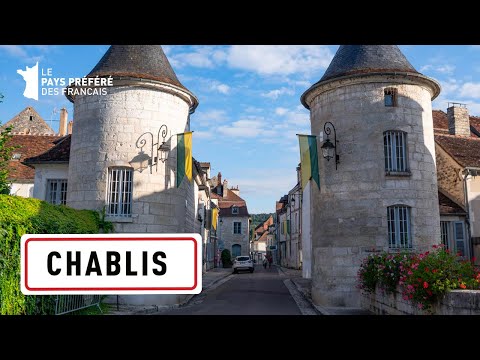 Chablis in three films: vineyard town, wine festival and Chardonnay
 France 3 Bourgogne-Franche-Comté reports on the 70th Chablis wine festival in October 2018. The item captures the event as a local gathering around growers, tastings and regional wine culture, and is valuable as dated reporting on how the festival was celebrated that year. It is not a current event notice: the edition, programme and dates shown belong to 2018, so visitors should consult the town or tourism office for the present calendar.
 No Sediment’s wine-focused episode introduces Chablis through Chardonnay, the appellation’s classifications and the way soil and place shape the wine. It suits a visitor who wants some context before a tasting or a conversation with a grower. The video is an independent wine discussion, not a municipal guide or a walk through the vineyards, so it should complement rather than replace a visit to the town, its interpretation centre or a producer.