Sancerre is easiest to understand from its ridge. The town sits above the Loire valley, with the river to one side and vineyard slopes folding across the other. Stone lanes climb and turn between old houses, cellars and small squares; the view changes at each opening in the walls. Wine is part of daily work here, but the hilltop is not merely a tasting-room backdrop. Sancerre is a commune with schools, public services, shops and a surrounding rural territory, as well as one of the best-known names in the Loire wine world.
INSEE’s 2023 reference count is 1,269 municipal residents across the whole commune, with 28 people counted separately and a total population of 1,297. The reference figures were published in December 2025 and took effect on 1 January 2026. The municipal count fell from 1,541 in 2012, a reminder that a celebrated destination is also a small community managing the practical questions of work, services and population change. Chavignol, closely associated with its goat cheese, is part of the commune today; its identity remains distinct in the landscape and in local food culture.
What the archaeology can and cannot say
The Sancerrois has a much longer human story than the present town’s streets, but the evidence needs to be located carefully. The Cher heritage account places the main Gallo-Roman archaeological evidence at Saint-Thibault, below the hill, where remains point to a settlement, public buildings, craft activity and river transport. It says the idea that the ancient oppidum stood on Sancerre’s hill is plausible, but the key archaeological evidence does not establish that point. It would therefore be misleading to call the modern hilltop town a confirmed Roman foundation.
The hill became a stronghold by the tenth century, according to the departmental history, and the seigneurie of Sancerre is recorded in written sources by 1116. It was raised to a county in 1152 under Étienne, count of Champagne, before joining the French crown in 1234. The Counts of Sancerre were influential in Berry and their location near the Loire made the territory strategically important. During the Wars of Religion, Sancerre was one of the principal Protestant strongholds; a major siege and capture in the early 1570s left a lasting mark on the town’s memory. The dates in popular accounts vary between 1572 and 1573, so the safest description is the siege of 1572–73 rather than a single-day event.
The tower and the surviving medieval town
The Tour des Fiefs is the most visible remnant of the counts’ castle. Its dating is described differently across tourism and heritage pages: the national architectural inventory places the principal building campaign in the fifteenth century and associates the tower with Jean III de Sancerre, while the monument’s own visitor information dates it to the late fourteenth century. The defensible conclusion is that it belongs to the later medieval castle complex, not that every part has a single certain construction year. The rest of the castle was dismantled in the 1620s; the tower was repaired in 1856 and listed as a historic monument in 1927.
After restoration works, the tower reopened to visitors in April 2026 with an audio guide and a new reception area. Its 193 steps lead to a broad panorama over the town, vineyard slopes and Loire valley. The climb is steep and the tower is not accessible to visitors with reduced mobility, so the lower viewpoints along the ramparts and at Porte César are important alternatives. A café now operates at the foot of the tower. The Tourist Office’s independent “Fil d’Ariane” walk follows 28 points of interest through the streets, connecting buildings and viewpoints with local interpretation. The Beffroi, Notre-Dame church, the remains of Saint-Père-la-None and the old houses around the central squares add detail to a walk that otherwise might rush straight to the tower.
Wine, cheese and a working countryside
The Sancerre appellation is a regional wine area, not simply the town’s municipal boundary. Its official growers’ body describes centuries of viticulture on the slopes and identifies Sauvignon Blanc and Pinot Noir as its emblematic grapes: the former is used for the familiar white wines, while Pinot Noir supplies the red and rosé styles. Different underlying soils and exposures shape the vineyard mosaic; terms such as caillottes, terres blanches and flint soils refer to real geological contrasts, not just marketing language. The Maison des Sancerre, founded by local growers, is the visitor centre for learning about the appellation through interpretation, displays and tasting opportunities. Visits to working cellars and growers can add a human perspective, but bookings and tasting availability should be checked directly.
Chavignol adds another strand to the local economy. The French agriculture ministry describes the Crottin de Chavignol as a goat’s-milk cheese rooted in the village of Chavignol, now included in the commune of Sancerre, and protected as an AOP since 1996. Goat keeping and vines historically shared the same mixed farms; the region’s vineyard crisis after phylloxera also shaped the growth of cheese production. Today the town’s restaurants, wine shops, tasting rooms and visitor services sit alongside viticulture and agriculture rather than replacing them. INSEE counted 224 non-agricultural economic establishments in the commune in 2023, including 69 in trade, transport, accommodation and food services. Because that statistical category excludes agriculture, it does not measure the vineyard sector itself.
Plan a visit around the hill, not only the tasting
A rewarding first visit begins at Porte César, then follows the marked town walk through the squares and lanes before reaching the Tour des Fiefs. Leave time for the Maison des Sancerre, and consider going down toward Saint-Thibault or Chavignol to see how river, hill and vineyards fit together. The Grand Sancerrois Tourist Office can arrange guided heritage and food visits; opening dates and tasting schedules vary, so check the current calendar. The hillside streets are steep and some old lanes are uneven. If you have limited mobility, plan a shorter route around the accessible streets and public viewpoints rather than assuming the tower climb is possible.
From Paris, the official tourism route advises the A6 and A77 toward Nevers, then exit 24 marked “Sancerre – Aire des Vignobles” and the D4. By rail, the visitor office lists TER trains from Paris-Bercy toward Nevers, with stops at Cosne-Cours-sur-Loire, about 15 kilometres away, or Tracy-Sancerre, about 5 kilometres away. A taxi or a checked shuttle connection is needed for the last leg. Rémi regional bus line 110 is listed between Bourges or Cosne-Cours-sur-Loire and Sancerre. Timetables and service days can change, so confirm the latest TER and Rémi information before booking a connection. Sancerre works as a day trip, but a night here allows time for the town at quieter hours and for nearby Chavignol, Saint-Satur and the Loire-side paths.
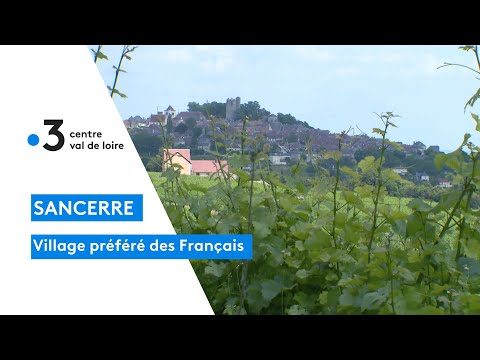 Sancerre on film: the hilltop town, its wines and a changing market
 Wine educator Julien Miquel frames Sauvignon Blanc through Sancerre and the wider Loire Valley, including conversations with local producers Catherine Corbeau-Mellot and Jean-Marie Bourgeois. The interviews make this a useful introduction to how growers explain grape variety, place and soil, rather than a neutral technical survey of every estate or viewpoint. The appellation spans several communes, so the film’s regional wine story should not be mistaken for the economy of Sancerre town alone. Tastings and cellar visits need to be arranged directly with producers.
 France 3 reports on a 2026 surge in attention for one Cher winegrower after a Sancerre bottle appeared in a Taylor Swift documentary. The story is revealing as a case study in how international culture can affect demand for a named wine, but it concerns one producer and should not be read as proof that all Sancerre estates experienced the same sales change. It complements the broader wine landscape by showing a contemporary commercial angle. The report is news from a particular moment, not a forecast or a guide to buying availability.