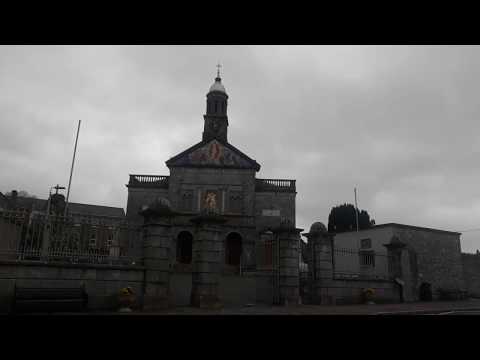
Cashel stands in County Tipperary’s Golden Vale, with a dramatic ecclesiastical complex above an established town. The Rock is the best-known sight, but the streets below contain their own medieval and later history. A visit becomes more rewarding when the hilltop monuments, town trail and surrounding agricultural landscape are considered together. Cashel has accommodation and restaurants in the centre, making it possible to stay after most day visitors have left.
| Residents | 4,805 |
|---|---|
| Area counted | Cashel, Co Tipperary — census built-up area |
A royal site transformed by the church
The Rock was a seat of the kings of Munster before its transfer to the church in 1101. Stories linking St Patrick with the conversion of King Aenghus belong to the site’s legendary tradition and should be read as such. The surviving buildings chiefly express the power and resources of the medieval church.
The round tower, cathedral and Cormac’s Chapel do not all belong to one construction campaign. The chapel’s Romanesque architecture and surviving painted decoration offer a contrast with the larger cathedral ruins. Looking at those differences helps explain a complex built and adapted over centuries, rather than a single castle. The familiar name and commanding position can otherwise obscure its primarily ecclesiastical character.
The town below the Rock
Cashel’s urban settlement developed below the older royal and religious site. Archaeological research at Friar Street places the chartered medieval town in the early thirteenth century. The town trail identifies the role of the archbishop and the later religious houses, including a Dominican foundation in 1243. The Rock’s ancient associations and the town’s urban charter therefore describe different stages of development.
Follow the trail through streets and surviving wall fragments to see more than the hilltop skyline. Medieval plots, religious sites and later façades coexist in a centre still used for shopping and daily business. Georgian buildings add another layer, including the former archbishop’s palace. A town walk is especially useful for recognising how a major religious centre supported activity beyond its own enclosure.
Planning the monuments
Heritage Ireland operates the Rock of Cashel and publishes current booking arrangements. Cormac’s Chapel has its own guided-access restrictions, so do not assume every admission provides unrestricted entry to every interior. The exposed hilltop can feel different from the sheltered streets below. Allow time for the approach as well as the monuments.
Hore Abbey in the landscape below the Rock offers a separate perspective on the religious setting. Combine it only when the available route and conditions suit the group. Seeing the Rock from outside its enclosure can be as useful for understanding the site’s position as another close photograph of the stonework. The town trail provides a natural continuation when the hilltop visit finishes.
Food, hotels and the Golden Vale
Cashel Palace occupies the former archbishop’s residence and offers hotel accommodation in town. Its dining options include the Bishop’s Buttery and the more casual Mikey Ryan’s Bar & Kitchen on the adjacent grounds. They are distinct venues, with different menus and booking arrangements. Sadler’s, another restaurant promoted by the same hotel, is in Fethard rather than Cashel itself.
The Golden Vale’s agricultural setting gives a wider context to local food and the town’s service role. A meal and overnight stay can make room for a fuller town walk, rather than squeezing Cashel into a motorway break. Choose accommodation for the access and setting you want: central streets, the approaches to the Rock and the surrounding countryside are different locations, even when all are marketed under the town name.
Dublin, Cork and local connections
Bus Éireann route 245X links Dublin and Cork via Cashel. This makes both cities relevant gateways; the current timetable should be used for the actual stop, direction and travel day. Cashel has no passenger railway station, so a rail-based itinerary needs an onward connection rather than a direct train into town.
By road, Cashel is reached from the M8 corridor, with the N74 and local roads providing other regional approaches. For a longer stay or possible move, test the connection to the particular workplace rather than relying on a motorway journey to a city centre. The town offers everyday shops and visitor services, but the census population is a built-up-area measure and does not describe the entire surrounding farming district.
Sources
- Office of Public Works: Rock of Cashel history and visiting
- Tipperary Studies: archaeological research on medieval Cashel
- Cashel Town Trail: streets and monuments
- Cashel Palace: building history and hotel
- Cashel Palace: dining venues and their locations
- Bus Éireann: Dublin–Cashel–Cork
- Central Statistics Office: Census 2022 population, built-up areas