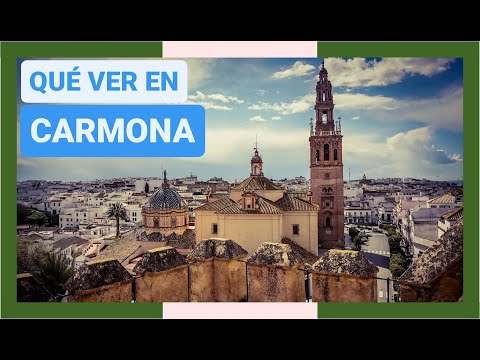
Carmona rises above the plain east of Seville. Its position helps explain why successive communities fortified and occupied the hill. The town’s heritage is not confined to one era: ancient burial chambers, Roman gateways, later Islamic and Christian structures, and inhabited streets all remain part of a visit. The views from the edge of town make its strategic setting immediately clear.
A long, visible history
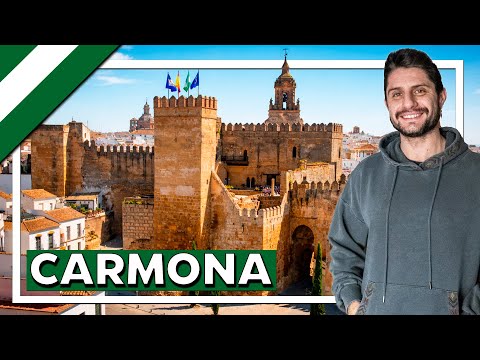
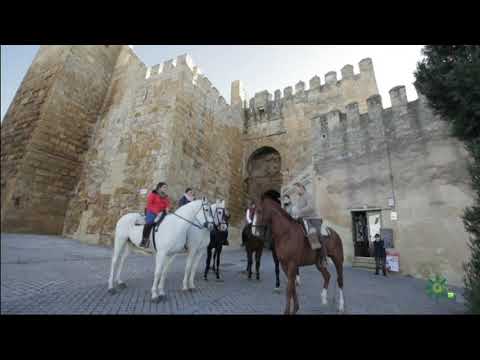
The local tourism office traces occupation to the first millennium BCE. That is evidence of an ancient settlement, not a single certain founding ceremony. At the western entrance, the Alcázar de la Puerta de Sevilla incorporates work from several periods. The tourism office describes the gate as a structure whose fabric records successive changes, while its Roman components remain visible. At the opposite side, the Puerta de Córdoba marks another historic entry point. Walking between them follows the broad line of the old town.
The Roman necropolis and amphitheatre were rediscovered in the nineteenth century. Rock-cut tombs show a different side of Carmona from its defensive monuments. A Roman family mausoleum near the former Via Augusta is another reminder that burial grounds lay outside the walled city. The city museum adds context for finds from several periods. These sites are best treated as distinct chapters rather than a generic collection of ruins.
Visiting from Seville
Seville is the closest major-city starting point and the local tourism office places Carmona about thirty kilometres away. Check current bus services or road conditions for the day of travel. The town has hotels and restaurants, including accommodation in historic buildings; an overnight stay makes the quiet streets and evening views easier to enjoy. Begin at the tourism office near the Puerta de Sevilla to confirm opening days for the necropolis, museum and Alcázar. The hilltop centre is walkable, but some lanes and gradients are steep.