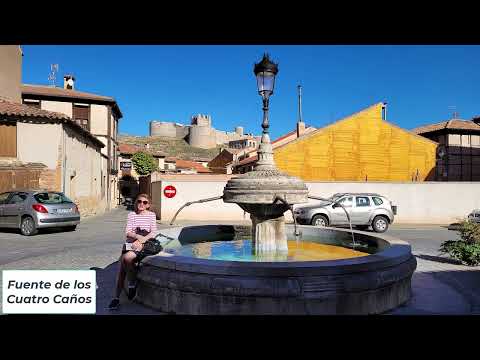
an artillery fortress, a grand collegiate church and the Escalote valley
Berlanga de Duero gathers beneath its castle beside the Escalote gorge. The scale of the defences and collegiate church contrasts with arcaded streets and the everyday life of a small rural service centre in Soria. The legacy of the Tovar and Velasco families, Tomás de Berlanga and excursions towards San Baudelio provide several different routes through the town and its surroundings.
| Municipal population at 1 January 2026 | 803 |
|---|---|
| Area of the municipality | ≈ 220.18 km² |
INE Annual Population Census, reference 1 January 2026, released on 24 November 2026. The IGN area covers the whole municipality, not only the built-up centre.
From frontier stronghold to Renaissance town
Earlier occupation preceded Berlanga’s medieval prominence as a stronghold on the Duero frontier. Ferdinand I captured it in 1059. Subsequent settlement consolidated a centre for a community of town and territory, linked with the Tovar family from the late fourteenth century.
During the sixteenth century its lords promoted a transformation involving castle, palace, gardens and collegiate church. That period explains much of the monumental profile. Later losses also shape the visit: fire in 1811 ruined the palace and other houses. A surviving façade helps visitors imagine a complex once much larger than its present remains.
Two defensive systems on one hill
The complex distinguishes a fifteenth-century seigneurial castle from a sixteenth-century artillery fortress. The keep combines family prestige with medieval defence. The outer enclosure introduces thick walls, artillery towers and casemates responding to the development of firearms.
María de Tovar and Íñigo Fernández de Velasco promoted the Renaissance adaptation, carried out by Lope de Isturizaga. It remained incomplete. A visit allows the two defensive approaches to be compared while providing views over the town. Entry is organised through the former palace tower in Plaza del Mercado, where the tourist office is based.
A church with a unified interior
Santa María del Mercado has three aisles of similar height supported by large columns. Their continuity creates a different spatial impression from a church with a much taller central nave. Ribbed vaults retain Gothic forms while other elements show the introduction of Renaissance design.
The Baroque high altar, walnut choir and side chapels add later layers. Juan Ortega Bravo de Lagunas’s tomb, paintings and altarpieces connect the overall structure with particular patrons. Allow time to go inside: the exterior conveys the church’s volume, but the unified space and variety of collections are best appreciated through an interior visit.
Tomás de Berlanga and the famous reptile
Tomás Martínez Gómez, better known as Tomás de Berlanga, was born in the town around 1487 and became bishop of Panama. His life connects Berlanga with American voyages and the Galápagos Islands. Streets, memorials and a chapel continue to recall that association.
The collegiate church preserves the taxidermied animal popularly called the lagarto or ardacho. Local tradition associates it with the friar and has generated fantastic stories. These belong to the town’s folklore. Visitors can enjoy that cultural memory while distinguishing legends from established biography and avoiding an unqualified claim about where the specimen originated.
Arcades, gateways and the Escalote
Plaza Mayor, its arcades and Calle Real return the walk to a domestic scale after the major monuments. Puerta Aguilera preserves a recognisable entrance through the former enclosure. Houses, coats of arms, hermitages and other stops on the municipal itinerary extend the visit within the settlement.
The Escalote adds another perspective on the defensive position and countryside. Ask for a specific route before setting off towards viewpoints or tracks. The district contains small settlements and rural roads. Allowing for distances and the return section matters particularly when combining a walk with transport that runs only on selected days.
Planning a visit to San Baudelio
Berlanga’s interpretation centre introduces the architecture and paintings of San Baudelio through visual material. The hermitage itself stands at Casillas de Berlanga and requires a separate journey. Admission and access arrangements for the two places should be checked individually.
The National Archaeological Museum publishes research into the building and its ownership. Paintings dispersed among different museums explain why today’s hermitage does not contain its entire original decoration. Establish the opening of each site before travelling. Access to the interpretation centre is arranged through the tourist office, making it useful to begin enquiries there.
Rooms and restaurants within the town
Hotel Fray Tomás occupies a former palatial house in Calle Real and is associated with Casa Vallecas restaurant. Hotel Rural Villa de Berlanga, in Plaza de San Andrés, includes Casa Tanis on its ground floor. Hostal Ainoa provides another option in the historic centre. Visitors therefore have accommodation and meal possibilities within Berlanga itself.
Compare room arrangements, accessibility and dining service before booking. Municipal listings help locate properties, but confirm current hours and menus directly, particularly in quieter seasons. If a particular meal or facility is essential to the stay, establish that detail with the chosen business rather than assuming it from the building’s historic character.
Agriculture and everyday rural life
The municipality describes an economy supported by dry and irrigated farming and by sheep and pig husbandry. Tourism has gained importance, particularly in summer. Shops and services in the main settlement link it with smaller communities in the district.
A possible move calls for checking which needs can be met daily and which require a journey. The pharmacy and shops provide starting points, alongside actual transport timetables and available housing. A home in the central settlement and one in another municipal village may involve very different routines. Visit the particular location before judging it through the general profile of Berlanga.
Soria, Madrid and limited-frequency transport
The district map places Berlanga on the CL-116 corridor, linked with Almazán and the A-15/A-2 approach towards Madrid. Local and regional roads provide alternatives from Soria. El Burgo de Osma is another useful reference when combining nearby heritage with services elsewhere in the district.
Therpasa publishes the Berlanga–Soria line with departures marked for Mondays and Fridays; confirm dates and current times before travelling. Rural demand-responsive transport needs advance booking and does not operate like a frequent urban bus. A car-free stay therefore requires explicit arrangements for arrival, excursions and the journey home.
Sources
- Ayuntamiento: itinerario, historia y patrimonio urbano
- Ayuntamiento: evolución de la fortaleza
- Ayuntamiento: arquitectura y colecciones de la Colegiata
- Ayuntamiento: dependencias y obras de arte
- Ayuntamiento: Fray Tomás y el lagarto
- Oficina de turismo: visitas y centro de interpretación
- Museo Arqueológico Nacional: estudio de San Baudelio
- Diputación y Ayuntamiento: comarca y mapa de accesos
- Ayuntamiento: agricultura, ganadería y turismo
- Ayuntamiento: Hotel Fray Tomás y Casa Vallecas
- Ayuntamiento: Hostal Ainoa
- Ayuntamiento: Hotel Villa de Berlanga y Casa Tanis
- Ayuntamiento: comercios y farmacia
- Therpasa: conexión con Soria
- Ayuntamiento: reserva del transporte comarcal
- INE: Annual Population Census, 2026
- IGN: municipal area