Sunne is a small Värmland centre shaped by a narrow water passage. Its older streets gather beside Fryksundet, the strait linking Övre Fryken and Mellan-Fryken, while the church rises above a low, green centre of shops and wooden houses. The result feels more like a meeting place between lake country and wooded inland routes than a planned resort: daily services, a station and historic buildings sit close to the water.
Population figures need a boundary. Sunne Municipality reported 13,384 residents in August 2025. That figure covers the whole municipality, including several settlements and rural districts; it is not a head count for the built-up town of Sunne alone. The municipal heritage material describes Sunne as the market place and church village that became the area's centre.
A settlement at the strait
The municipal history places people beside the strait for more than 5,000 years. At Kolsnäs, a burial ground dates to the middle Iron Age, around 200–400 CE. Archaeological work at Hasselbol, the old parsonage, indicates occupation in the 9th to 11th centuries. Written records add firmer dates: the parish name Swnde appears among Fryksdal's four parishes in the 1220s, and a 1332 document points to a church at Kyrkberget. These clues document long settlement and a medieval church community; they do not prove every later story told about the valley.
The market helped turn the church village into a regional meeting point. Sunne's local-history timeline dates the market Evi Gläja to 1754, while the municipality's cultural-environment programme says it is mentioned by 1756. Both place its early gatherings at Åmbergsheden, but their chronology differs: local history says the market moved to Stora torget in 1870, while the heritage programme says it had been held more centrally since 1891. The sources agree on a long market tradition, not on one uncontested sequence of dates. Sunne's timber-built commercial centre expanded in the 19th century. Slottet, one of its oldest buildings, was completed in 1849 and successively housed a shop and pharmacy among other uses. The theatre building has served as a theatre and cinema since 1914.
The church visible across town today is also part of that documented sequence: after the predecessor burned in 1886, the current neo-Gothic building was erected on the same site in 1887–88. By contrast, a popular book about a supposed female-led prehistoric culture and worship of Frigga or Freja is identified by the municipality itself as a non-scientific interpretation. It may be read as one author's hypothesis, not as established archaeological fact.
Work, culture and time outdoors
Sunne's economy connects rural production with industry and visitor services. The municipality counts more than 700 companies and names graphic and print expertise, paper, construction, agriculture, forestry and tourism among the area's business strengths. That mix is visible in the town's role: it is a service centre for the surrounding Fryksdal communities, not only a base for sightseeing.
Start on foot in the compact centre. The cultural-environment route through the older streets shows shopfronts and homes in the same timber buildings, the green public spaces, the church landmark and Teatertorget. The municipal tourist information is housed at the library on Storgatan, alongside a gallery and lecture hall. Shops, cafés and restaurants are concentrated in the centre, and lakeside walks make a simple break between visits.
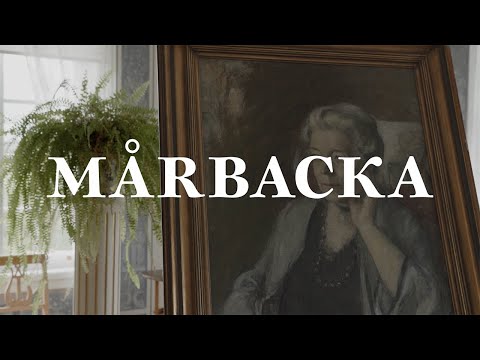
Two major cultural destinations lie in the surrounding countryside. Mårbacka, Selma Lagerlöf's home, is a memorial estate; the house interior is entered only on a guided tour, and its calendar changes with the season. Rottneros Park combines designed gardens and a large sculpture collection, including works by Nordic sculptors. The municipality lists a six-kilometre paved cycling route to Rottneros, with hills; check its map for the current alignment and surface conditions. Neither attraction should be treated as an anytime stop: confirm admission, booking requirements and opening hours directly with the operators.
Getting there and planning
Sunne has a bus and rail travel centre beside the town, and the Fryksdalsbanan connects it with Torsby to the north and Kil, Karlstad and Kristinehamn to the south. Engineering work can replace trains with buses or change particular departures, so check the operator's live information before setting out. E45 is the principal road corridor through the area. For visitor orientation, the municipal tourist service is at the library; ask there about current information points and local route maps. Opening seasons, transport, ticketing and route conditions can change, so confirm details close to your visit.