A working town beside Vattudalen
Strömsund sits on the shore of Ströms Vattudal in northern Jämtland, about 100 kilometres north of Östersund. It is the administrative centre of a large, forested municipality, but the town and municipality are not interchangeable in population statistics. Statistics Sweden (SCB) counted 3,590 people in the statistically delimited Strömsund locality, or tätort, on 31 December 2023. That dated figure describes the continuous built-up place, not the entire municipality and not a 2026 estimate.
The town’s appeal is practical and unvarnished: a small service centre framed by long water views, wooded slopes and roads that lead into a sparsely settled region. Storgatan and Vattudalstorget give visitors shops and everyday services, while the waterfront and bridge make the geography visible. The bridge is a striking landmark, but this is a living town rather than an open-air historic quarter; the surviving older buildings sit among post-war streets and later development.
Documented growth, not a made-up origin story
The municipal planning history describes Strömsund as a rural church village until the late nineteenth century. Forestry helped drive a sharp expansion in the 1880s, when the main street and buildings for commerce and public life took shape. The population grew by more than half between 1880 and 1900, and the settlement became a municipalsamhälle around the turn of the century. The railway arrived in the first decade of the 1900s, bringing renewed trade and construction. Grand Hotell dates from 1909; Tingshuset, designed by Frans Wallberg, opened in 1911.
Much of the older timber townscape was later lost when redevelopment reshaped central Strömsund in the 1960s and 1970s. The local heritage yard helps recover what the street grid alone cannot show: around thirty buildings stand beside Vattudalen, with exhibitions on the community, local boats, clothing, church history and the town’s annual market. One local story belongs to imagination rather than civic chronology: Jätten Jorm, the giant associated with Beppe Wolgers and Per Åhlin’s film Dunderklumpen, is now a familiar figure at the yard, not a documented historical person.
Work, local culture and short outings
Strömsund serves as a centre for municipal administration, schools, shops and other services. The municipality’s business programme describes a wider economy shaped by manufacturing, forestry and trade, with tourism also growing in the years it covers; it is useful context, not a current sector-by-sector census. Just south of the centre, the Hissmofors area carries a separate industrial history tied to sawmilling and hydropower. Today the town also makes a convenient base for regional crafts and outdoor stops.
For a short visit, the heritage yard brings together architecture, local objects and a view across the water. The small geological garden near the school and swimming pool is free and open to the public. About ten kilometres east, rock paintings overlook Fångsjön. Farther along Vildmarksvägen, the Frostviken district offers larger excursions such as Hällingsåfallet, a powerful waterfall above a deep ravine with a prepared trail. That is a separate journey through the municipality, not a nearby town-centre walk; check seasonal road access, trail conditions and facilities before setting out. Museum events, cafés and other attractions can be seasonal, so confirm opening times directly.
Getting here and crossing the water
E45 is Strömsund’s principal north–south road and normally crosses Ströms Vattudal on Strömsundsbron, the cable-stayed bridge inaugurated on 27 September 1956. At 332 metres long, with a central span of 182.6 metres, it replaced the organised ferry crossing documented here since the seventeenth century. The bridge is also a reminder to check current conditions: the municipality’s update of 16 October 2026 reported it still closed after damage on 29 September. The signed vehicle diversion runs by roads 795 and 345. A temporary ferry was being planned, but its timetable and access arrangements had not yet been finalised in that update. Check official traffic notices before driving; for regional buses, use the current Länstrafiken planner rather than relying on an old schedule.
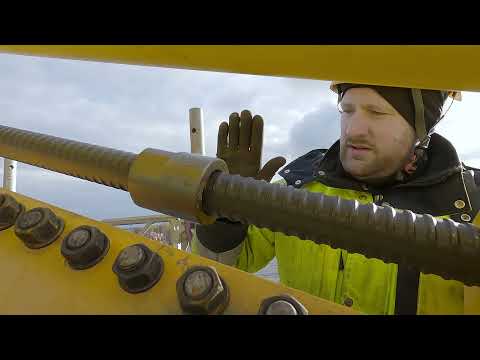 Three Strömsund videos: bridge engineering, a local gathering and a heritage stop
 Radio Strömsund’s short time-lapse centres on the Cruising Strömsund car exhibition held at Ströms hembygdsgård on 9 August 2025. The station’s description says the association holds the exhibition at the heritage yard in August each year; the upload itself is 1:35 and was published on 7 September 2025. This is a dated snapshot of a community event at a place whose permanent appeal is its outdoor museum and local-history displays, not a guide to the collection. Event dates and access can change, so check the organisers’ current information before planning around it.
 Sharanys-Reisen’s 4:03 German-language video describes a motorhome stop beside Strömsund’s heritage museum and says it also visits the museum. Published on 2 February 2021, it offers a visitor’s practical perspective on that particular stop rather than an official, current service listing. The municipality describes the yard as a central open-air museum with around thirty buildings and seasonal activity. Since the footage is several years old, confirm present parking arrangements, museum access and opening times directly before travelling.