saffron, a Norman castle and gardens in north-west Essex
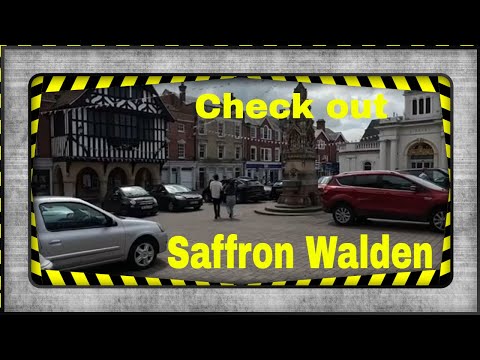
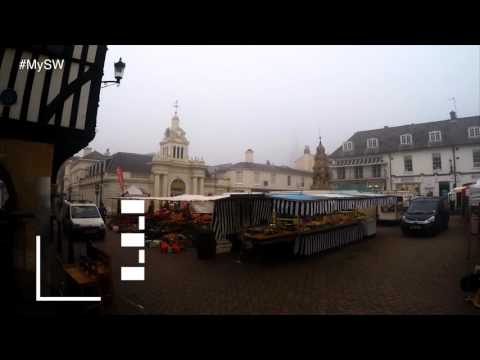
Saffron Walden occupies an undulating corner of north-west Essex, close to the Cambridgeshire border. Its market square, decorated timber-framed houses and large parish church give the centre a different character from the commuter settlements along the main railway. The ruined castle, museum and two very different mazes can all fit into a town walk. Audley End adds a substantial country-house visit nearby, but deserves time of its own. The town is also a practical place to stay for travellers who want shops and restaurants around them rather than an isolated rural base.
| Usual residents, Census 2021 | 17,022 |
|---|---|
| Statistical area | Civil parish; December 2022 boundaries |
Census date: 21 March 2021. This parish count is distinct from the built-up area or a wider urban district.
From Walden to a saffron town
Walden was already a substantial settlement by the time of the Domesday survey in 1086. Its medieval development gathered around a castle, church and market. The castle is documented in 1141 in the possession of Geoffrey de Mandeville II, although its precise construction date and builder remain uncertain. Surviving masonry belongs to the lower levels of a Norman keep. The ruin therefore records a particular phase of medieval power, rather than the foundation of the whole settlement.
Its later appearance also needs a little interpretation. The small round turret above the keep is a much later addition, not part of the original Norman design. Conservation work stabilised the walls and allowed the castle to reopen in 2021. Look for the remains of the staircase and the thickness of the masonry, then compare the defensive site with the domestic scale of the streets below.
Saffron cultivation eventually gave the town its distinctive name. The crop linked a small agricultural area with a valuable traded product, and the saffron crocus remains part of the town’s identity. Markets, craft production and commerce left another legacy in the buildings around the square. A walk along Church Street and into the smaller lanes reveals timber frames, plaster decoration and later brick fronts accumulated over several centuries.
Museum, church and market streets
Saffron Walden Museum stands beside the castle and gives the town a much broader historical setting. Its collections range from archaeology and local social history to natural history and objects from other parts of the world. That variety makes it a useful stop for families with different interests, as well as for visitors seeking the background to the streets outside. The museum and castle have separate visiting arrangements; allow time for both rather than assuming the ruin is the whole museum visit.
St Mary’s Church dominates the skyline above the centre. The approach through surrounding streets is as much a part of the experience as the interior, with close views of historic houses and small passages. From here it is easy to return to the market square for cafés and shops. This is a functioning town centre, so deliveries, market activity and ordinary shopping share the space with visitors. Staying into the evening gives a different impression from a quick photograph of an empty square.
Two mazes and a country-house excursion
The turf maze on the Common and the hedge maze in Bridge End Garden are separate places. The former is a pattern cut into open ground; the latter belongs to a designed garden with distinct enclosed areas. Bridge End offers paths, planting and a change of pace close to the centre. Its main garden and the walled garden or maze do not necessarily share identical opening arrangements, so check the area you particularly want to see.
Audley End House and Gardens lies outside the town centre. English Heritage manages the country house and estate as a separate attraction, with interiors, grounds and visitor facilities that can occupy much of a day. Combine it with Saffron Walden over two days if you want to enjoy both without rushing. The house, the railway station called Audley End and the centre of Saffron Walden are three different locations; the name alone is not a guide to walking distance.
Accommodation, food and everyday life
The Cross Keys, at the junction of High Street and King Street, offers bedrooms and a restaurant in the historic centre. It is convenient for an evening on foot and an early start around the market streets. Its own website provides room details and current menus. Book meals and accommodation separately as needed, especially when a weekend or local event concentrates demand.
For a longer stay, the centre’s shops and services are useful, but the railway connection requires an additional journey. Test the route from the particular house or accommodation to the station before treating the town as a simple walk-to-train commuting base. The local economy includes retail, hospitality and services, alongside activity across the wider district; the historic saffron story does not describe today’s employment structure. Housing costs vary by property and date, so an old asking price would be a poor substitute for a current rental search.
Arriving from London, Cambridge and the airport
Audley End station, in Wendens Ambo, is served by Greater Anglia on the route between London Liverpool Street and Cambridge. From the station, arrange the final leg to Saffron Walden by a suitable bus or taxi. Cambridge is an important nearby city for onward rail and bus connections; Stansted Airport is another regional arrival point. Check the actual connection for your travel date rather than assuming every service runs late at night or on Sundays.
English Heritage gives separate directions for reaching Audley End House, including an approach from the station. Those directions lead to the house, not automatically to Saffron Walden’s market square. Drivers should choose town-centre parking for a town walk and the estate’s visitor arrangements for a house visit. This small distinction makes it much easier to plan luggage, walking and a return train.
Sources
- Historic England: Walden Castle conservation and history
- Saffron Walden Tourist Information: town guide
- Saffron Walden Museum: collections and visits
- Town Council: Bridge End Garden
- Friends of Bridge End Garden: visiting information
- English Heritage: Audley End location and transport
- Greater Anglia: Audley End station
- The Cross Keys: rooms and dining
- Saffron Walden Town Council: market history and current operation
- University of Cambridge: saffron cultivation and trade
- Office for National Statistics via Nomis: Census 2021, PP002
- Nomis: parish boundaries and population methodology