a village green, a restored guildhall and the working history of rural Essex
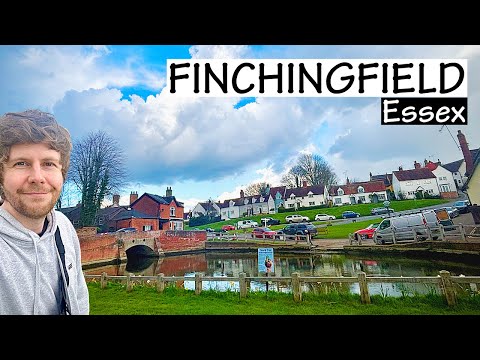
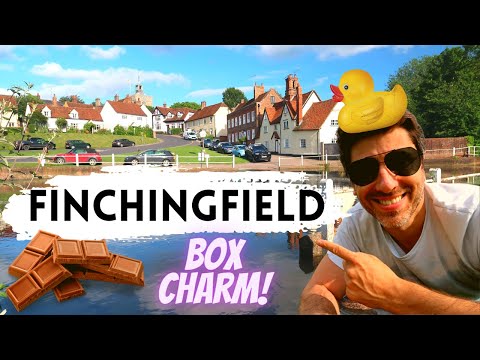
Finchingfield gathers around a pond, a green and a bridge, with cottages climbing towards the church and a windmill above the roofs. This much-photographed view is only the beginning of the village. The Guildhall preserves the history of work, education and local families, while the lanes lead into an agricultural landscape with a long connection to the Spains Hall estate. Finchingfield is in the Braintree district of Essex, away from a mainline station, and rewards a visit planned around its small heritage sites rather than a hurried roadside stop.
| Usual residents, Census 2021 | 1,443 |
|---|---|
| Statistical area | Civil parish; December 2022 boundaries |
Census date: 21 March 2021. This parish count is distinct from the built-up area or a wider urban district.
An older settlement behind the familiar view
The village’s history reaches beyond the surviving cottages. Archaeological objects displayed locally include prehistoric material and Roman pottery, while the conservation appraisal records settlement in the area before the medieval village took its present form. These finds reveal successive periods of activity, without establishing one precise founding date for the streets around the pond.
The late medieval Guildhall gives a much firmer date. Built around 1470 by the Guild of the Holy Trinity, it accommodated a religious guild and a schoolroom. Its position at the entrance to the churchyard connects learning, worship and community life in a remarkably compact space. The village bought the building in 1630, and its uses changed over time, including accommodation associated with local welfare. The structure is an important part of Finchingfield’s social history as well as its architecture.
Inside the Guildhall
The restored Guildhall contains a small museum and library alongside rooms used by the community. Its objects include agricultural and domestic material, straw-plaiting equipment and works by local artist Arthur Legge. Straw plaiting was an additional source of income for women and children in the area, supplying material for hats and bonnets. These small-scale trades help explain village life more fully than a view of the green alone.
The building’s survival involved a substantial modern rescue. Earlier repairs had concealed or damaged architectural details. A trust formed in 2008, restoration work began in 2011, and traditional skills and materials were used to recover the fabric. The restored rooms bring the medieval building back into public use rather than leaving it as an empty historic shell. Museum displays also explore writers associated with the area, including Dodie Smith and Norman Lewis. Check the museum’s visiting dates before travelling specifically to go inside; a working community building does not keep the same access arrangements as the open green.
Church Hill and the post mill
St John the Baptist’s Church rises above the pond, reached by the slope of Church Hill beside the Guildhall. The churchyard and surrounding houses make a good continuation of the walk through the centre. The change in height gives the village several quite different views, from the familiar water-level scene to the cluster of roofs below the church.
Finchingfield Post Mill, also known as Duck End Mill, is another reminder of the agricultural economy. Explore Essex dates it to around 1756. A post mill turns its timber body to face the wind, a different mechanism from the later tower mills familiar elsewhere. The surviving mill is no longer evidence of a commercial milling industry still operating on this site. Internal visits require the current arrangements published by its custodian, including organised group visits; seeing the exterior and finding the doors open are different prospects.
Public paths around the village offer a way into the surrounding farmland. The Spains Hall estate belongs to this wider landscape, but estate land, bookable experiences and public rights of way have different access rules. Choose a signed walking route and respect occupied houses, livestock and private entrances. Muddy field paths can make a countryside circuit substantially slower than a stroll around the pond.
Staying and eating in the village
The Finchingfield Lion offers rooms as well as a pub, providing an overnight option within the village. Its own booking information is the place to check room types, availability and current food service. Staying locally leaves time for the Guildhall, the church and a longer walk without compressing everything around a single bus connection. Visitors who require step-free access should discuss the particular room and approach with the operator before booking.
Finchingfield’s present-day visitor trade sits alongside its residential and agricultural character. Small shops, pubs and places for tea serve residents as well as day visitors. For someone considering a longer stay, the crucial questions are the everyday ones: access to larger shops, the actual public-transport timetable and the journey to work or school. A photograph taken on a quiet weekday gives little indication of weekend parking pressure around the green.
Getting here and making time for the village
Finchingfield has no passenger railway station. Braintree is a regional starting point for planning an onward road or bus journey, while Saffron Walden and Thaxted provide other destinations for a wider north Essex itinerary. Check local bus services for the precise day and both directions of travel; a weekday route does not guarantee an evening or Sunday return.
The best first circuit begins by the pond, continues up to the Guildhall and church, and leaves the mill or countryside walk for a separate part of the visit. Drivers should use lawful parking and keep entrances and passing places clear. Several of the most attractive viewpoints are beside routes used by local traffic, so pause where it is safe rather than stepping into the road for a photograph. An overnight visit allows the village’s quieter morning and evening hours to become part of the experience.
Sources
- Braintree District Council: conservation-area history and landscape
- National Lottery Heritage Fund: Guildhall restoration and collections
- Historic Houses: Guildhall history and restoration
- Finchingfield Guildhall: village history and trades
- Explore Essex: Finchingfield Post Mill
- Finchingfield Parish Council: neighbourhood plan
- The Finchingfield Lion: accommodation
- Office for National Statistics via Nomis: Census 2021, PP002
- Nomis: parish boundaries and population methodology