Ranua is a large, sparsely settled municipality in southern Lapland where the sense of distance is part of the experience. Its centre sits beside Lake Ranuanjärvi, while villages, peatlands, forests and lakes spread across a territory much wider than the compact service hub suggests. Statistics Finland counted 3,530 residents in the whole municipality on 31 December 2025. Ranua’s municipal overview describes more than 60 percent of its area as mire, and calls the place Finland’s cloudberry country: the bogs are not an empty backdrop but part of local identity, seasonal food gathering and the way the landscape is read.
The municipality’s best-known visitor attraction is Ranua Wildlife Park, opened in 1983. It is a year-round destination for northern and Arctic animal species, but it is only one way to understand the area. The wooden church by the lake, the seasonal parish and school museums, village landscapes around Simojärvi, and the marked routes through forest and mire reveal a quieter Ranua beyond the zoo gates. A visitor can make the wildlife park the centre of a family day, then extend the trip into a two- or three-day stay among lakes and rural communities.
What gives Ranua its character
Ranua’s scale is striking: the municipal area is close to 3,700 square kilometres, yet the population is about 3,500. The municipality describes itself as one of Lapland’s nature-rich rural communities and highlights the close relationship between its businesses and the natural environment. Forestry and wood harvesting are identified in the municipal economic programme as the largest local business sector. Tourism, services and food production also matter in the development plans. The cloudberry name is both a landscape reference and a local food identity; in summer, visitors may see berries offered in shops and cafés, but the bogs themselves require suitable clothing, knowledge of access and respect for private land and protected areas.
The surrounding settlements are not interchangeable. The centre concentrates municipal services, food shops and the wildlife park; Impiö and the Simojärvi villages are starting points for a different kind of visit, shaped by open water, fishing, boating and longer rural routes. Ranua’s own history page describes the postwar rebuilding of the municipality after the Lapland War and the continuing importance of nature-related livelihoods. Rather than inventing a single founding tale, the local museums and landscapes let visitors see how work, schooling, parish life and mobility changed across the twentieth century.
The wildlife park: a forest walk with a conservation focus
Ranua Wildlife Park is set in northern conifer forest, where its enclosures are arranged along an outdoor route. The operator currently lists around 50 Arctic and northern species and about 150 individual animals, including polar bears, brown bears, wolves, lynx, wolverines, otters, owls, reindeer and moose. The park is open every day of the year, so the visit changes with the season: winter snow, bright summer evenings and autumn colour each make the same wooded paths feel different. Allow time to move slowly. Animals may be resting or out of sight, and the park asks visitors to keep noise down and give them space.
The polar bear area has recently been renewed, with viewing points at different heights and interpretive material about sea ice, habitat and climate change. Ranua Resort says it works with conservation partners on education and participates in European species programmes for a number of animals. Those programmes and welfare commitments are the operator’s stated work; visitors can encounter the related interpretation in the park and decide what they want to learn in more depth. Keepers’ talks and feeding times are seasonal and can change, so check the programme near the date of your visit rather than planning around an old schedule.
Ranua Resort is more than the animal park. Around the entrance area are a restaurant, shops, accommodation, camping facilities and bookable activities; glass igloos sit by Lake Ranuanjärvi, and holiday villas are located near the park. This makes an overnight stay practical, especially for families or visitors arriving by bus. Check which services operate on your dates, since some activities and food offerings vary by season.
A lake church and two small windows on local history
In the centre, Ranua’s wooden cruciform church stands beside Lake Ranuanjärvi. Designed by Jarl Eklund and consecrated in 1914, it is a modest, human-scale building rather than a monumental landmark. Its altar painting, “The Second Coming of Christ,” was made by Matti Visanti in 1951. The church remains part of parish life and opens to visitors only at certain times in summer and on event weekends; check with the parish before setting out. The lakeside setting makes the church an easy stop on a short walk through the centre.
The Pappila and parish museum offers another kind of visit. In a former rural parsonage built in the early twentieth century, rooms present the working and domestic life of a country pastor’s household in the 1930s and 1940s. The attic exhibition widens the story to Ranua’s local history, including farming, craft traditions and Stone Age finds from the municipality. At Saukkojärvi, a former school built in 1898 holds a school and local-history museum. Its classrooms and objects evoke rural schooling in the 1930s–50s. These are seasonal museums; the 2026 summer opening dates have passed, so confirm the next season’s schedule instead of assuming the doors are open.
Simojärvi, Simojoki and the trails beyond the centre
South of the centre, Simojärvi gives Ranua a second landscape identity. The municipality describes it as a large, clear lake with islands, beaches and a long history of fishing and travel; local information records Stone Age traces of human presence in the area. A familiar saying speaks of “a hundred islands and a thousand names,” a poetic expression of the intricate shoreline rather than a formal count. In summer the lake invites boating, canoeing, swimming and fishing; in winter, the same district becomes a setting for skiing and snowmobile routes, subject to conditions and local rules.
At Simontaipaleen harbour, on the southern end of Simojärvi, visitors can launch a boat from the ramp and use a free pier. The municipality also lists a maintained fire site and the possibility of overnight stays by tent or camper, but facilities and access should be checked before relying on them. The harbour is a practical starting point for the lake, not a staffed marina with guaranteed services. Impiö is the nearby village gateway to the Simojärvi–Soppana routes.
The Soppana trails bring together rocky outcrops and varied mire landscapes. The municipality and Metsähallitus improved route markings and boardwalks in 2024–25; Paaso has more than ten kilometres of paths, including a route to a viewpoint. These are outdoor walks in a remote setting, not urban promenades: check the current trail map, the condition of bridges and boardwalks, and the daylight and weather. Other marked routes around the centre include the Ranuanjärvi path and routes near the wildlife park, while Litokaira offers a more remote protected landscape. Choose only routes that match your time, equipment and experience.
Getting there and choosing a base
Rovaniemi is Ranua’s nearest airport and railway station; the municipal overview lists it 82 kilometres away. Ranua Resort confirms daily bus connections from Rovaniemi, with a stop beside the wildlife park parking area, and says the number of departures varies by season. Kutilan Liikenne also lists Ranua on its Rovaniemi–Pudasjärvi–Oulu corridor. For a visitor arriving by train or plane, the bus makes the main attraction reachable without a car, but departures and onward connections can be sparse. Check Matkahuolto and the operator close to travel, including whether the airport connection is direct on that date.
By car, Rovaniemi provides the most straightforward northern gateway; the municipal page also lists Kemi and Oulu among nearby regional cities. Reaching the wildlife park and centre is different from reaching Simojärvi or the Soppana and Paaso trailheads, which are spread across rural roads. A car gives more flexibility for those separate excursions, while resort transfers may be available by arrangement. There is no reason to rush across the map: a first visit can focus on the park and the lakefront centre, with a second day reserved for Simojärvi and its villages.
Ranua is especially rewarding when a visitor matches the itinerary to the season. Winter brings snowbound paths and the possibility of seeing northern animals against a white landscape; summer allows longer days, open-water activities and cloudberry season; autumn adds colour to forest and mire. The reliable plan is to check opening hours, keeper programmes, bus times and trail conditions shortly before departure. Then the place’s main attractions can be enjoyed without treating its wild landscapes or animals as predictable scenery.
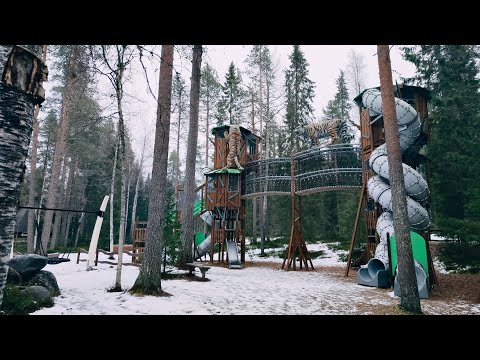 Ranua on video: a winter park tour and two close looks at polar bears
 This brief Ranua Resort clip is centred on a polar bear sniffing the air. At 37 seconds, it is a small moment of close observation rather than a complete portrait of the species or a demonstration schedule. The appeal is in the animal's alert, sensory behaviour and in the chance to pause over a detail that a longer walk might pass quickly. It pairs well with the park's interpretive material about Arctic habitat, but it should not be treated as a substitute for that context or as a promise that a bear will be active at a particular time.
 The third clip shows polar bears at play in the pool at Ranua Wildlife Park, as its Finnish title describes. The spring date and short format make it a bright seasonal glimpse, distinct from the quiet sniffing moment in the previous video. It lets viewers notice movement and water in the renewed polar-bear setting, without claiming to explain a full behaviour pattern from a few seconds of footage. Visitors can use it as a preview of one possible scene; the animals' routines change, and the park's current keeper programme is the place to check for talks or feeding times.