Portmeirion looks across the Dwyryd Estuary in Gwynedd, but its colourful buildings should not be mistaken for the surviving centre of an ancient Italian or Roman town. It is a twentieth-century architectural village in Wales, created by Clough Williams-Ellis to test an idea about building within a beautiful landscape. The piazza, terraces, woodland and shore form one designed experience. Knowing that history makes the place more interesting than a quick photograph of its painted façades.
What a population figure can and cannot say
Portmeirion is a managed visitor village, not a separate civil parish with its own published census total. It lies within the wider Penrhyndeudraeth community, for which the Office for National Statistics estimated 1,994 residents in mid-2021. That number includes other places, notably Penrhyndeudraeth and Minffordd; it must not be presented as Portmeirion's population. Hotels and holiday cottages bring temporary guests to the site, further separating its daily number of people from a resident count. Anyone considering a home in the area should look at the surrounding settlements rather than assume the tourist village is a conventional residential town.
An architectural project begun in 1925
Williams-Ellis bought the Aber Iâ estate in 1925 after looking for a place to build his planned village. The estate already had a house, gardens, woodland and cliffs above the tidal estuary. He wanted development to enhance rather than damage that setting. The original house became the Hotel Portmeirion, which opened in 1926. The project's main construction phases ran from 1925 to 1939 and from 1954 into the 1970s; the village reached the form associated with its completion in 1976.
Architecture here is deliberately varied. Classical and Mediterranean references, brightly coloured fronts, colonnades and buildings rescued from other sites were assembled into a coherent walk. Some structures are older objects reused in a new setting, but that does not make the village itself medieval. The history of the site before Williams-Ellis also deserves care: the estate and the nearby Castell Deudraeth had earlier stories, yet the visitor village's origin is clearly documented in the twentieth century.
Exploring the village and estuary
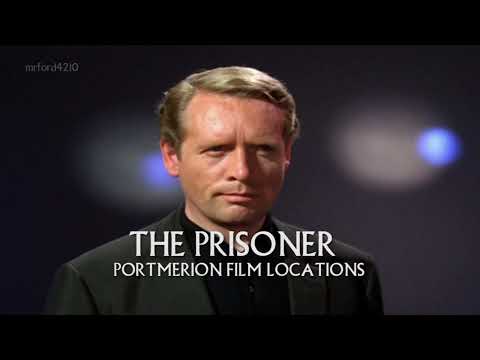
The central piazza is the most recognisable space, but the sequence of arches, terraces and viewpoints is best experienced on foot. Woodland gardens lead away from the busier centre and frame changing views of the Dwyryd. The shore is tidal; broad sand at low water is not an invitation to walk out without local information. Portmeirion also served as the setting for the 1960s television series The Prisoner. That association adds a layer of cultural history to the architecture, though the village was created decades before the programme.
A visit can be short, but staying longer reveals how the design relates to its landscape as light and tides change. Ticket rules, opening times and any restrictions on paths or access should be checked on the official site. The outdoor setting is exposed in poor weather, and some paths climb or descend sharply. An excursion to nearby Porthmadog, its harbour and the Ffestiniog Railway can turn Portmeirion into part of a wider day in this area of north Wales.
Porthmadog, Minffordd and longer journeys
Porthmadog is the closest larger town for shops and regional services; Penrhyndeudraeth and Minffordd are nearer settlements on the approach to the estate. The official address is at Minffordd, Penrhyndeudraeth. Portmeirion's directions give a walking route from Minffordd and identify its railway station as roughly 1½ miles from the village. The Cambrian Coast line serves Minffordd, while the Ffestiniog Railway links Porthmadog with Blaenau Ffestiniog by heritage rail.
From Bangor or Llandudno Junction, travellers can use rail and onward connections; the operator also describes journeys from London Euston with a change, or a taxi from Bangor. A hotel guest can ask about collection from Minffordd, but a day visitor should check the current public timetable and the walk from the station. Drivers use the published LL48 6ER address and follow signs to the visitor entrance. The mountainous and estuary landscape makes the last part of a journey more important than the straight-line distance on a map.
Where to sleep and eat
Portmeirion has accommodation on site: the Hotel Portmeirion, Castell Deudraeth and self-catering cottages. Its restaurants, cafés and shops make a meal possible without leaving the grounds. Castell Deudraeth, a nineteenth-century building adapted as a hotel and restaurant, serves a brasserie menu; the Hotel Portmeirion also has a restaurant. Availability and access arrangements depend on booking and may differ for overnight guests and day visitors. Porthmadog offers further accommodation and restaurants for those who prefer a conventional town base.
Portmeirion's local economy is built around visitors, hospitality, retail and landscape management. It should not be used as a model for ordinary housing prices in Gwynedd. No separate official rent or population series for the village is established in the sources used here. For a possible move to this area, compare actual homes in Minffordd, Penrhyndeudraeth or Porthmadog, their school and transport connections, and the costs of the exact property. Portmeirion itself is best understood as an unusual designed destination within that wider region.
Sources
- ONS: mid-2021 community population estimates
- Portmeirion: history of the village
- Portmeirion: the architectural idea
- Portmeirion: exploring the village
- Portmeirion: The Prisoner
- Portmeirion: directions and rail connections
- Portmeirion: hotels, cottages and restaurants
- Portmeirion: Castell Deudraeth restaurant