Polcenigo is best understood as a meeting of water, foothill and settlement. The Gorgazzo stream runs past the historic centre, while springs at the edge of the plain feed the Livenza system. The municipality is spread across a main borgo and smaller localities, including Coltura, San Giovanni, Gorgazzo and the hillside hamlet of Mezzomonte. The Friuli Venezia Giulia region counted 3,099 residents in the whole municipality on 1 January 2025; that figure describes the comune, not only the old centre. Polcenigo rewards a slower visit: a walk through stone lanes and Venetian-era palaces can lead into a landscape of springs, wetland and rural paths within the same day.
A wetland with a long, carefully documented past
At Palù di Livenza, on the boundary with Caneva, waterlogged ground preserves traces of a Neolithic stilt-house settlement dated by archaeological investigations to about 4500–3600 BCE. The site is part of the transnational prehistoric pile-dwelling series inscribed in 2011. Much of the evidence remains protected in the basin rather than presented as a reconstructed village above ground; this is a landscape to understand through the archaeological record, not a row of visible prehistoric huts. Finds from the later Sottocolle necropolis, below San Floriano, extend from the Iron Age into the late Roman period, but they do not prove that the present-day borgo began as a Roman town.
Written history around the castle is medieval. The Comune identifies 963 as the first documentary attestation of the castle and associates it with the rise of the da Polcenigo family. A local historical account adds a useful qualification: the 963 charter concerns lands around the stronghold, while later documents make the castle itself explicit. The familiar story that Charles the Bald granted the territory to a French count in 875 belongs to local tradition, not established fact. A settlement developed below the hill in the thirteenth century; its growth brought merchants, craft workers and religious institutions into a compact centre.
Palaces, a castle on the hill and a village shaped by water
From Piazza Plebiscito and the lanes nearby, visitors can read successive layers in the façades. Palazzo Scolari-Salice, Palazzo Fullini-Zaia and Palazzo Manin-Zaro belong to the town’s sixteenth- and seventeenth-century architectural landscape. Their stonework, arches, mullioned windows and masks are best appreciated from the street; private ownership means that an exterior view does not imply entry. On the hill, the medieval fortification was transformed in the eighteenth century into a Venetian-style villa, usually attributed to architect Matteo Lucchesi. The residence was abandoned in the 1840s, suffered wartime and earthquake damage, and was consolidated after the 1976 Friuli earthquake. The Comune’s visitor page lists access information, while local tourism material also notes work on the hill’s retaining walls: check current access and stay outside any closed or unstable area.
Water gives the town a second itinerary. The Gorgazzo spring emerges from a limestone karst system; its vivid colour and changing level depend on light and weather, and the stream then passes through the historic centre. At the Santissima, a perennial spring issues from the Carnic Prealps and feeds the Livenza. Beside it stands the Sanctuary of the Holy Trinity, rebuilt and enlarged in the sixteenth century; its wooden altarpiece by Domenico da Tolmezzo is dated 1494. The story that the Trinity appeared to Emperor Theodosius in 473 explains the site’s devotional tradition, but remains a legend rather than a verified event.
Rural life, local craft and time outdoors
Polcenigo’s historical economy was broader than its present tourist image. Local accounts describe medieval textile work, shops and taverns, agricultural markets, mills, sawmills and silk-spinning activity. Today, the rural park on San Floriano hill offers a concrete way to encounter farming and landscape: its documented work includes orchards, conservation of local fruit varieties, livestock and beekeeping, alongside educational activities and visitor accommodation. The small church of San Floriano crowns the hill and preserves thirteenth- and fourteenth-century frescoes. In the centre, the former cinema-theatre hosts cultural programming and houses the Museum of Culinary Arts; check opening times or event dates before planning an indoor visit. The annual Antica Fiera dei Cesti, also called the Sagra dei Sest or Thést, celebrates basketry and related handcrafts. Its dates and programme change, so consult the municipality’s current calendar.
For an active day, the official Anello delle Sorgenti begins at Santissima, passes Coltura and Gorgazzo, crosses the old centre and returns beneath San Floriano. The published route is 7.2 kilometres, with about 80 metres of ascent and an estimated two and a half hours; much of it uses gravel tracks and paved roads. Conditions and accessibility vary, so check the route map and weather. Mezzomonte, at about 477 metres, offers a very different scale of settlement: stone houses step up the slope above the plain.
Getting there and planning a visit
TPL FVG’s current extra-urban timetables list line P33 between Polcenigo, Sacile and Pordenone, as well as line P11 between Aviano, Polcenigo, Fontanafredda and Sacile. For a rail-and-bus journey, check trains to Sacile or Pordenone and match them with the bus that serves your chosen stop. Timetables include different weekday and school-day patterns; verify the outbound and return services before travelling. The centre, springs and rural park are not one compact indoor attraction: allow time for walking, confirm any church, museum or castle access, and use the local visitor directory to check current food and accommodation services.
 Polcenigo in three videos: landscape, Palù archaeology and the Gorgazzo spring
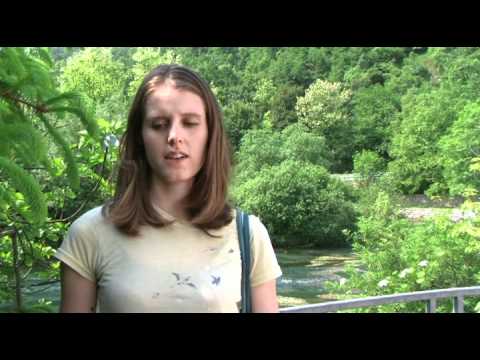 Published on 29 July 2011 by Memoria Immateriale, this 9-minute-16-second video is titled “Polcenigo (PN) - Martina Janes - Area archeologica Palù del Livenza.” Its description identifies Martina Janes as explaining the archaeological area by the Livenza spring. The focused subject makes it a useful historical companion to a visit to the wetland, whose Neolithic evidence is largely preserved in place. The upload is an older documentary contribution, not a current guide to paths, conservation rules or visitor services; check local notices before setting out.
 “Immersione nel Gorgazzo” was published by Divulgando SRL on 26 February 2026 and runs for 9 minutes and 3 seconds. Borgo Creativo Polcenigo linked this video from its 2026 event information as an immersive view to open on a mobile phone; the same initiative offered virtual-reality viewers at the spring. It is therefore a distinctive, site-specific complement to the other two clips. The YouTube description field is empty, so this review does not invent a shot list or claim what viewers see at each moment. Use it to orient curiosity, then verify present conditions and access locally.