Fagagna rewards visitors who look beyond the castle silhouette. The municipality spreads across the meeting point of Friuli’s glacial hills and the open plain, and its identity is made from several layers: a medieval seat of local government, a network of small settlements, working dairies and farms, and a wetland landscape where conservation has become part of everyday place-making. The Friulian name is Feagne; the municipal statute explicitly commits to protecting Friulian language and culture. In the latest official demographic balance used here, the whole municipality had 6,048 residents and 2,844 households on 31 December 2024. Those figures describe the comune, not only the old centre.
A castle that shaped a community
The earliest securely dated written reference in the local historical account is 11 June 983. A diploma issued by Otto II confirmed Fagagna’s castle and its surrounding rights to the Church of Aquileia. That record establishes the castle’s importance by the tenth century; it does not establish a Roman foundation for the village. The local tourism history places Roman and earlier activity in the wider area, but the dated evidence used here begins with the medieval stronghold.
The castle hill still sets the direction of a walk. The oldest visible remains are dated at least to the twelfth century, with later additions and alterations. The fortress was gradually abandoned during the fifteenth century. In 1511 it was burned during the Shrove Thursday peasant revolt and damaged again by an earthquake a few days later. Below the hill, the Palazzo della Comunità gives the ruins a civic counterpart. Built between 1490 and 1505, it housed the Council of Twelve, which governed Fagagna’s community from the late fourteenth century and exercised civil and criminal jurisdiction over nineteen surrounding villages until 1797. The loggia and the relationship between the palace, enclosed settlement and castle make this more than a scenic ruin: together they show how authority was organized in the Friulian countryside.
Fagagna also contains a second, very different castle at Villalta. The municipality dates it to the twelfth century and notes its national-monument designation in 1974. It remains one of the area’s most prominent medieval residences, but access arrangements should be checked rather than assumed. Churches, lanes and viewpoints across the old borgate complete a visit that works best on foot, with time for the uphill sections and the changing views over the plain.
From the castle to the work of daily life
At Cjase Cocèl, history leaves the walls and enters a farmhouse. The museum of rural life occupies a historic stone house and presents tools, domestic rooms, crafts and practices from the nineteenth century into the first half of the twentieth. Its collection is tied to the memory of local families and to a world in which farming, animal husbandry and household production shaped the calendar. The museum also preserves the story of lace-making and a school founded in 1892 through the initiative of Cora Slocomb and local collaborators. It is a useful counterpoint to the castle: one tells the story of institutions and landholding, the other of labor, skills and domestic life. The museum is run as a local cultural institution, so check its current opening days and arrangements before travelling.
Food remains another way to read the local economy. Fagagna is associated with dairy production and its own cheese tradition; the visitor service lists local dairies and places to eat. The Slow Food Foundation documents Pestàt di Fagagna, a seasonal preparation made by artisans from lard, vegetables, herbs and spices. It is used as a flavorful base for other dishes, not eaten like a cured sausage. These products make most sense in context: farms, small producers, kitchens and seasonal work rather than a single “food attraction.” Ask local shops or eateries what is being made and served when you visit, since producers, menus and availability change.
Wetlands, birds and the edge of the plain
North-west of the centre, the Oasi dei Quadris offers a contrasting landscape of ponds, reed edges and open water. The local tourism portal describes an area of about seven hectares. Its square-edged pools—quadris, or “squares”—are linked to historic clay extraction; today the wetland supports birdlife and environmental education. A white-stork reintroduction project began here in the late 1980s, and later conservation work has also involved the northern bald ibis and Konik horses. The point is not simply to watch a conspicuous bird: the oasis connects Fagagna’s rural history with the care of habitats and species.
Access is seasonal and can depend on volunteer management, events and wildlife needs. Older opening calendars should not be treated as current; consult the oasis or local tourism service before setting out. A quiet visit rewards patience, especially around ponds and nesting sites. Keep to marked visitor areas and follow the reserve’s guidance. The lowland landscape is also suitable for cycling and gentle excursions, while the castle hill and surrounding uplands add steeper walks. Choose a route for the day’s weather and your own ability rather than relying on a video’s estimated time.
A September race with a documented date
Fagagna’s best-known annual gathering is the Corsa degli Asini, locally called Corse dai Mus. The Pro Loco dates its beginning to 6 September 1891 and describes the traditional race as part of the September festivities, usually held on the first Sunday of the month. Donkeys pull small carts with drivers, competing through heats and a final. The event has become a public expression of neighbourhood identity, with the borgate and their supporters shaping the atmosphere around the square. It is a living custom, not a medieval survival: its documented starting date is nineteenth-century. Dates, ticketing and the surrounding programme vary by edition, so use the current Pro Loco notice.
Getting there and making a day of it
For rail travellers, Udine is the practical gateway; from the station area, TPL FVG lists extraurban buses on the Udine–Fagagna–Rodeano–San Daniele corridor, including line 352. The operator’s 2026 service page also lists related lines serving the area. Check the live planner for your travel date, stop, school-day calendar and return journey: the published network does not mean every connection runs throughout the day. By car, Fagagna is a useful base for linking the hill villages and the wider Friulian Collinare area. San Daniele del Friuli is connected on the bus corridor, while Udine supplies rail, museums and larger visitor services.
A thoughtful visit can pair the castle and civic palace with Cjase Cocèl, then reserve another period for the Oasi dei Quadris or a countryside ride. The municipality also has a library, visitor information, places to eat and local accommodation, but service hours and availability change. Fagagna’s appeal lies in the way these parts remain connected: the old administrative hill is still visible above a working community, the countryside is both productive and protected, and local language, food and annual traditions are carried forward by residents.
 Fagagna in three scenes: wetlands, village lanes and the donkey race
 Cammino Friuli’s 4:24 footage records the 121st Corsa degli Asini, or Corse dai Mus, in 2011. The crowd, square and race give a direct archival impression of a custom that remains closely tied to Fagagna’s neighbourhood identity. It is valuable precisely as a record of a past edition, not as an announcement of the next one. Dates, rules, access and the surrounding festivities change; consult the current Pro Loco programme before planning around the race.
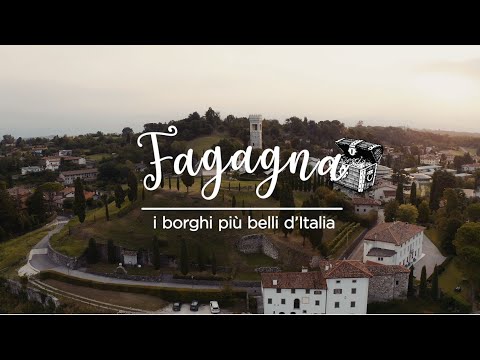 The regional tourism channel’s 58-second Fagagna portrait, credited to Quasar Video, is a compact introduction to the village’s lanes, historic architecture, rural museum and local atmosphere. It gives viewers a quick sense of why the visit is not limited to the castle hill: craft traditions and everyday places also belong in the picture. Its edited promotional format offers no full route or reliable practical details, so use it as a preview and check opening times and access with local services.