A railway city with a wide rural hinterland
Pieksämäki is easiest to understand from its station: tracks meet here, and the city grew around the movement of people, goods and work. Yet the present municipality extends well beyond the urban centre into a landscape of forests, fields, ridges and lakes. Statistics Finland counted 17,124 residents across the full municipality on 31 December 2025; the figure includes the former centres of Jäppilä and Virtasalmi and is not a count for the central town alone. The contrast between a compact railway district and a broad rural territory gives Pieksämäki two rhythms. The station, market square, cultural centre and shops can be linked on foot, while nature destinations and historical villages call for a separate trip.
The railway junction still shapes arrival. The Savo line opened in 1889, and a transverse line followed in 1918, helping turn Pieksämäki into a significant connection point. Today, VR lists long-distance trains and the Pieksämäki–Joensuu–Nurmes railbus route; services vary by date, and replacement buses may depart in front of the station. By road, Highway 23 crosses the region and links the city with other Central and Eastern Finnish centres. Check VR and regional bus timetables for the day you travel rather than assuming every train or bus runs daily.
From parish landscape to a planned city
The city's own history separates the age of human presence in the area from the age of the present municipality. Archaeological research, it says, points to settlement in the wider landscape for more than 5,000 years. The Pieksämäki parish was established in 1574, with the old parish territory once covering a much larger area than today's city. This long background belongs to the broader lake district; it should not be mistaken for a claim that the modern town was founded in prehistoric or ancient times.
The decisive change came with the railway. Before the Savo line, the older church-village area formed one focus; the station brought trade, workshops and new homes to another. The urban settlement became a market town in 1930 and received city status in 1962. In the post-war years, railway administration, a depot and workshops reinforced its reputation as a rail town. The municipality took on its present wider form in 2007, when Pieksämäki joined Pieksänmaa, itself created in 2004 from the rural municipality, Jäppilä and Virtasalmi. Those former centres remain meaningful places to explore, rather than distant footnotes to the main town.
Architect Otto-Iivari Meurman designed the town plan. On the central ridge, the water tower is a landmark; parks and green spaces soften the street grid, and Pieksäjärvi brings a public shoreline path close to the centre. These details make a useful walking loop between the station, the old station area, the market square and Poleeni. The city is not a preserved open-air museum: it is a working regional centre whose twentieth-century growth is still visible in the layout and the railway buildings.
Engines, exhibitions and the culture centre
The Savo Railway Museum occupies a former station building completed in 1889. Its permanent collection includes nearly 300 objects and around 100 photographs, and two restored locomotives stand outside. The display gives scale to the railway story that shaped the city: it moves the visitor from timetables and junctions to the equipment and labour that kept the line working. The museum is seasonal, so confirm its current opening days before planning a visit.
At the other end of the city's cultural life, Poleeni Cultural Centre brings a theatre and concert hall, library, exhibition space, café and ticket service together under one roof. The centre opened in 1989 and continues to host a changing programme of performances, talks and exhibitions. Nearby, the restored Veturitallit—former engine halls—have been adapted for businesses and events. The covered Veturitori offers a large indoor setting for fairs and concerts, while the old railway architecture keeps the building's industrial character in view. A look at the floor's turntable motif makes the former use legible even when the halls are busy with contemporary activity.
Other visitor stops spread beyond the centre. The old vicarage at Iso-Pappila, small local museums in Jäppilä and Virtasalmi, and rural heritage sites offer different windows onto education, parish life and work. Many have summer hours or open by arrangement. Plan around confirmed opening times rather than trying to fit several small sites into an unverified schedule.
Lake country and the Vedenjakaja routes
Pieksämäki's natural character is not a single landmark but a network of water and land. Visit Pieksämäki counts 417 lakes and ponds in the area and points visitors to the Vedenjakaja trail network for walking and cycling. The city's nature listings include an accessible trail at Partaharju, a lakeside route beside Pieksäjärvi, and destinations in the wider districts. The paths cross the moraine ridges and drumlin landscape that gives this part of Finland its rolling profile. Choose a route to suit the season and your experience; some sections are suited to bikes, while wetlands, shore paths and shorter nature loops invite slower exploration.
Jäppilä Kivikuru is a striking glacial boulder field, a chaotic sweep of stones left by ice rather than a constructed ruin. Nearby, Linnakivi in Mataramäki has boardwalks around a large erratic boulder. These places make good excursions from the urban centre, but they are not adjacent to the railway museum: allow for the drive and check access conditions. The same is true of the former municipal centres. Their village streets, church sites and local museums help visitors see how the modern city is connected to a wider rural region.
Haapakoski and the work behind the landscape
At Haapakoski, near the boundary with Suonenjoki, a preserved ironworks complex brings industrial history into the countryside. A founding privilege was issued in 1842, and the blast furnace first fired on 30 December 1844. The buildings and machinery retain the marks of successive periods of production, from the early ironworks through later manufacturing. The site is privately owned and visits are arranged as guided tours by reservation; it is not an always-open museum. That arrangement rewards advance planning and lets a local guide explain the work history recorded in the complex.
Pieksämäki today combines public services, retail, health and education with manufacturing, technology businesses, forestry and wood processing across the city and region. The visitor economy adds accommodation, food, events and outdoor services. City and regional documents also discuss potential energy and industrial investments, but proposals are not completed visitor attractions. For a traveller, the practical picture is straightforward: the central area has restaurants, cafés, shops and lodging, while the outer districts require more careful planning. Check meals, museum hours and transport before leaving the station area.
A visit that joins the centre to its districts
A first day can stay mostly on foot: follow the station story through the old station and railway museum, visit Veturitallit, check the programme at Poleeni, and finish along Pieksäjärvi. A second day can be devoted to one chosen outdoor route or to Haapakoski, Jäppilä or Virtasalmi, with opening arrangements confirmed in advance. For rail travellers, the station is a genuine asset, but each connection should be checked against the current timetable. For visitors with a car, the road network makes the outlying places easier to connect.
Pieksämäki's appeal lies in the way its railway identity meets a quiet, lake-rich countryside. It offers the services and cultural programme of a regional centre, traces of the work that built its junction, and rural destinations that reward a slower pace. Treat the centre as a starting point rather than the whole story, leave room for the distances between districts, and verify schedules, tours and seasonal opening before travelling.
 Pieksämäki en tres videos: ciudad ferroviaria, ferrería y rutas Vedenjakaja
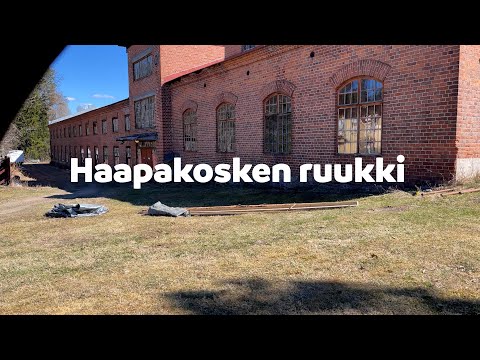 This Visit Pieksämäki film is explicitly titled around Haapakoski Ironworks in 2024. The site is one of the region's most distinctive industrial heritage places: a founding privilege dates to 1842 and its blast furnace first operated in 1844. The complex is privately owned and visits are arranged as guided tours by reservation. The video provides a local audiovisual introduction to that industrial story; it should not be read as evidence that the buildings are open for unannounced entry. Contact the operator about tours before making the trip.
 Mountain-bike creator Tuomas Vuolle titles this ride around the Vedenjakaja route network and names Kypäräkangas and Kukkarojärvi. It gives the three-video selection an outdoor angle, distinct from the city introduction and the Haapakoski industrial site. Pieksämäki's visitor information promotes the wider Vedenjakaja network for walking and cycling, but this creator's video is not a live trail report or a replacement for current maps. Check route conditions, access and the suitability of the chosen section before setting out.