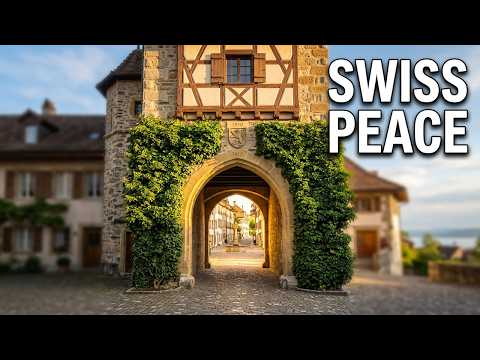
Murten, or Morat in French, stands above its lake on the German-French language boundary of the canton of Fribourg. Arcades and a walkable town wall make the compact old centre easy to explore, but its history extends well beyond the attractive streets. The municipality counted 9,502 residents at the end of 2025 across 36.48 square kilometres, including settlements beyond the old town.
Fire, siege and a rebuilt town
Murten was a medieval border town whose alliances and rulers changed over time. Municipal history records a destructive fire in 1416; rebuilding in stone helped shape the streets that survive. In 1476 Charles the Bold’s Burgundian army besieged Murten. The Swiss Confederate victory outside its walls became a decisive episode in the Burgundian Wars and remains part of local memory. The museum and interpretation along the ramparts explain the event more carefully than the familiar battle date alone.
Start under the arcades, then climb to the accessible sections of wall for a view over tiled roofs, castle and lake. The castle, churches and lakeside paths add different perspectives. The regional tourism office describes the defensive wall and marked interpretation points; its history pages help place the battle within a longer civic story. A boat trip on the Three Lakes waterways or a walk towards the Vully wine-growing area can extend the visit beyond the old town.
A multilingual town with several approaches
Murten is not isolated: the regional visitor office describes road approaches from Fribourg, Bern and Neuchâtel in a little over twenty minutes under normal conditions, and rail connections from these larger cities. Seasonal boat services link the lake region with Biel/Bienne and Neuchâtel. The town’s bilingual name is useful when reading signs and timetables, although German is the majority language in the municipality.
Hotels and restaurants are available in Murten, including addresses near the station and in the historic streets. Staying here lets a visitor enjoy the centre after day trippers leave and reach the lake in the morning. Check ferry seasons and museum hours before planning a boat-centred day; the wall and streets remain rewarding independently of a timetable.