Lille layers several identities: a medieval market settlement by the Deûle, a town shaped by Flemish culture, a French fortress and an industrial capital. Insee counted 238,246 residents in the commune in 2023. The municipal boundary includes Lomme and Hellemmes, so the figure describes more than the historic core. Lille is large, but the central visitor route can be shaped around walkable neighbourhoods and frequent public transport.
Read the city through its streets
The first written references to Lille date from the tenth century, and its documented medieval history develops under the counts of Flanders. The municipal account presents a settlement whose importance grew through waterways, trade and changing political rule; it does not establish a precise ancient founding date. The Vieille Bourse, built in 1652–53, reflects the city’s mercantile confidence. Its enclosed courtyard still hosts bookstalls and offers a pause between streets. Nearby, the Opera, the Chamber of Commerce belfry and the Grand Garde make a compact sequence of civic architecture.
Vieux-Lille rewards a slower walk. Rue de la Monnaie, place aux Oignons, the Hospice Comtesse and the rank of Beauregard preserve distinct urban layers in brick and pale stone. To the south, nineteenth-century expansion brought broad avenues and public landmarks such as the Palais des Beaux-Arts. Vauban’s citadel, built after Lille became French in 1667, anchors the greener edge of the centre. Museums, churches, courtyards and restored streets offer more than a quick photograph of the main square.
A city that works as well as it welcomes
Lille’s economy has moved beyond its textile and trading past. Insee recorded 24,414 economically active market units in 2023; commerce, transport, accommodation and food, professional services, public administration, education and health all feature. Euralille concentrates offices and retail beside the high-speed rail hub, while the city also identifies health and digital-technology clusters. Central districts bring cafés, restaurants, shops and cultural venues; Wazemmes adds a neighbourhood-scale market atmosphere.
Arriving and exploring
Lille-Flandres and Lille-Europe sit close to the centre and serve different rail services; check the station shown on your ticket. From Rihour, the municipal Vieux-Lille shuttle reaches the historic quarter, while Ilévia’s metro and buses connect wider districts. The shuttle route and operating days may change. A first day can pair Grand’Place and Vieux-Lille on foot, then continue by metro to the Palais des Beaux-Arts or citadel. Nearby Roubaix and Tourcoing make the wider textile heritage easy to explore by public transport. Check museum openings and live service notices before travel.
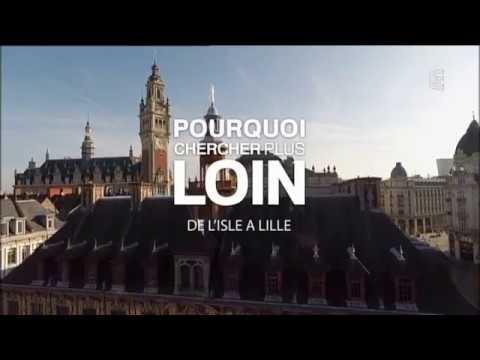 Lille through its layers: medieval streets, history and nightlife
 Kamini visits the Hospice Comtesse in Vieux-Lille and speaks with a guide about its history. The report focuses on one museum and its historic setting, complementing a broader walk through the old quarter. Check current museum hours before visiting.
 TF1’s Lille l’extravagante looks at the city after dark, including nightlife associated with Wazemmes and other lively districts. It offers a contemporary social angle alongside the historical reports. Venues and events change, so use it for atmosphere rather than current practical advice.